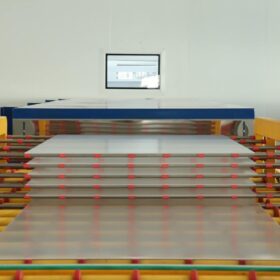
India imposes antidumping duties on solar glass from China, Vietnam
India’s Ministry of Finance has applied antidumping duties on solar glass imports from China in the range of $673 to $677 per metric ton and for imports from Vietnam at $565 per metric ton.

Stable GPM polysilicon prices post-antidumping duty rates, optimism on firm demand
In a new weekly update for pv magazine, OPIS, a Dow Jones company, provides a quick look at the main price trends in the global PV industry.

Scientists reveal factors for morphology control in organic solar cells
An international research team has fabricated organic solar cells using non-toxic solvents. The researchers identified interactions between the acceptor material side chains and the solvent, along with interactions between donor and acceptor materials, as key factors for controlling morphology in organic solar cells.
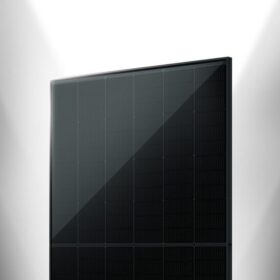
Trina Solar launches 760 W TOPCon module with 24.5% efficiency
The Chinese manufacturer said its new i-TOPCon Ultra panel is part of the Vertex N family and is intended for applications in utility-scale projects. It plans to begin mass production of the new modules in the second quarter of 2025, with an initial annual capacity of 10 GW.
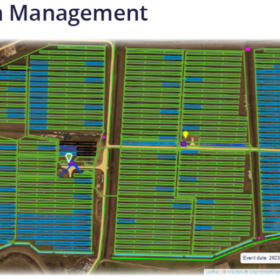
Solargain digital twin integrates condition monitoring, quality assurance
Above Surveying, a U.K.-based services and software company, announced adding large-scale PV condition monitoring to its Solargain digital twin tool as a result of its partnership with Kiwa PI Berlin and 2DegreesKelvin.

Ten reasons why small-scale, non-utility solar is important
Behind-the-meter solar for homes, businesses, and communities comes with numerous benefits, said a paper from Stanford engineering professor Mark Jacobson.
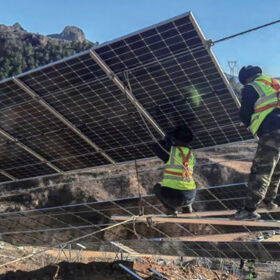
DAS Solar introduces flexible mounting system
DAS Solar has unveiled a new, flexible PV mounting system. The company claims the system, now installed over a fishery in China, has already withstood a particularly strong typhoon, demonstrating its reliability.
Malaysian developer to construct 100 MW of solar
Malaysian solar specialist Founder Group Ltd. has secured a conditional letter of award to build 100 MW of solar in Malaysia. It says the energy will help to power an AI data center.

UN invests $700,000 in 120 kW hybrid solar plant in DR Congo
The United Nations Development Program (UNDP) has invested nearly $700,000 to build a 120 kW hybrid solar plant in Mambasa, Democratic Republic of the Congo. The community PV project will supply power to more than 300 users, including six health centers, 224 small businesses, and 89 households.

Germany could deploy 10 million heat pumps by 2030
Scientists have used open-source models to simulate heat pump rollout scenarios for the year 2030. Additional investments of around 54 GW to 57 GW of solar PV capacity in a least-cost solution would allow the installation of 10 million heat pumps by the end of the decade.
