
Reliance Industries acquires 100% stake in REC Group, plans new manufacturing bases
India headquartered multinational Reliance Industries, through its subsidiary Reliance New Energy Solar Limited, yesterday announced the acquisition of Norway headquartered module manufacturer REC Group. The move comes as Reliance pushes forward with its US$10 billion plan to move in on the renewable energy industry, having also this week announced acquisition of a 40% share in EPC provider Sterling & Wilson.
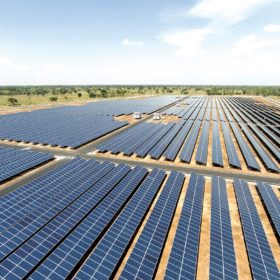
Reliance Industries’ new energy arm to acquire 40% stake in Sterling and Wilson Solar
The acquisition gives Reliance New Energy Solar access to Sterling and Wilson Solar’s PV plant engineering and project management skills as it aspires to become a global leader in green energy based on the latest and most cost-competitive technologies and development capabilities.

Chinese PV Industry Brief: New solar glass production lines and a new big wafer deal
Luoyang Glass is planning to deploy two solar glass production lines with an annual capacity of 1,200 tons each and wafer maker Wuxi Shangji has secured a big supply agreement from Longsheng New Energy. Furthermore, Tongwei has reported increasing profits driven by its polysilicon business.
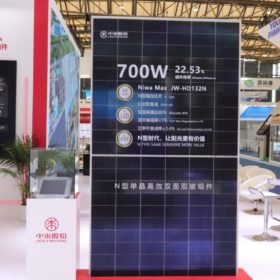
Jolywood unveils 700 W TOPCon PV module
The double-glass product has dimensions of 2,384 x 1,303 x 35 mm and a weight of 38 kg. It is based on the company’s n-type TOPCon 2.0 cell technology dubbed Niwa Max, which the manufacturer said reached efficiencies of up to 25.4% in the laboratory. The module’s efficiency ranges from 21.73 to 22.53%.
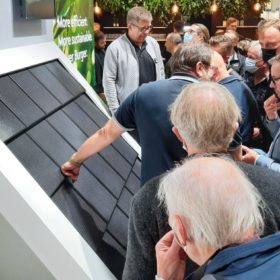
Meyer Burger unveils new solar tiles
Meyer Burger plans to start selling a new building-integrated PV product from 2022. It says the solar tiles have a high energy yield, with simplified installation and the ability to also provide heating. German engineering company paXos designed the tiles.
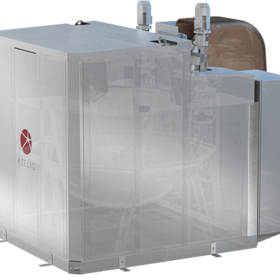
Azelio launches electro-thermal storage system for commercial applications
Developed by Swedish manufacturer Azelio, the system stores renewable energy in recycled aluminum and has an electrical and thermal energy output, with a total efficiency of 90 %. One unit’s storage capacity reaches 165 kWh of electrical output and on top of that thermal energy between 55-65 degrees Celsius. Its modular configuration allows the deployment of projects with a capacity of up to 100 MW.
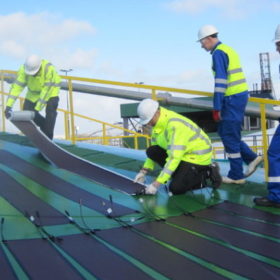
Fortescue announces 1 GW solar PV module factory in Australia
Fortescue Future Industries has revealed plans to develop a 1 GW solar PV module manufacturing plant in Australia, after confirming that it has acquired a 60% stake in Netherlands-based renewable energy specialist High yield Energy Technologies Group.
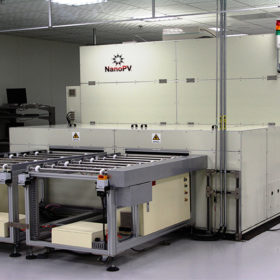
NanoPV to open US manufacturing plant
NanoPV Solar is investing $36 million in a facility to manufacture crystalline silicon and thin-film PV modules, in a move that will create around 500 new jobs.
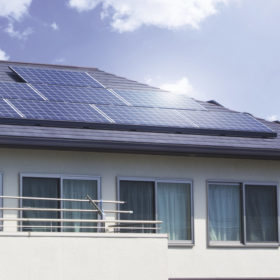
Computer model for residential solar fault detection
Developed by US scientists, the model detects and classifies panel faults without the need for additional sensors. It leverages correlations between the power produced by adjacent panels to detect deviations from a panel’s otherwise expected behavior.
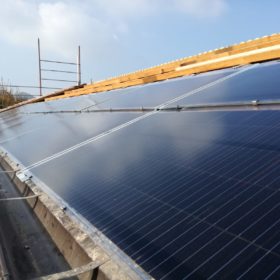
Solar tiles for roof coatings, shelters, facades
Italian startup EnergyGlass has developed a solar tile with 4 mm double-laminated safety glass. It is available in black, white and colored versions and has power outputs ranging from 120 W to 290 W. The tiles can be used to replace conventional roofs or they can be integrated into existing rooftops.
