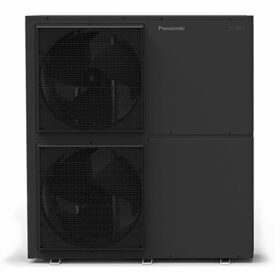
Panasonic reveals new air-to-water heat pumps
The new products are intended for commercial applications and and multi-dwelling buidlings. They have a size of 20 kW to 30 kW and use R290 as the refrigerant.
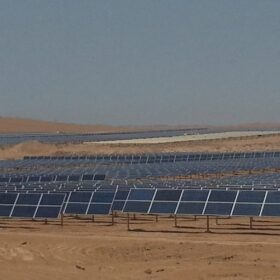
Solarpack closes financing on 300 MW of solar under PPA in Peru
Solarpack has closed financing for a 300 MW solar project in Peru, marking the country’s first solar farm to sell power through a bilateral power purchase agreement (PPA).
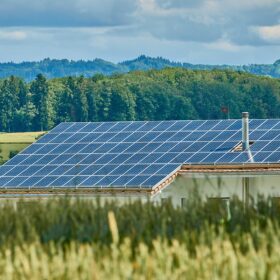
France concludes C&I rooftop PV tender with average price of €0.1021/kWh
The French authorities have wrapped up a procurement exercise for commercial and industrial (C&I) rooftop PV projects. They allocated 362.2 MW of solar capacity to 42 developers at an average price of €0.1021 ($0.1104)/kWh.
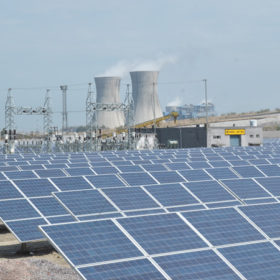
India’s NTPC allocates 1,584 MW of renewables-plus-storage at $0.056/kWh
India’s NTPC has allocated 1,584 MW of renewables-plus-storage projects at $0.056/kWh. The winning developers will set up renewable energy projects backed by energy storage systems to provide firm, dispatchable renewable energy, developed on a build-own-operate basis.
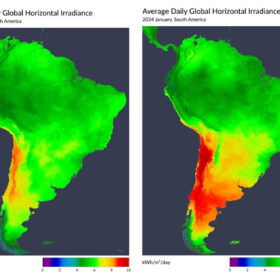
Dry Amazon delivers sunny start to 2024 for South America
In a new weekly update for pv magazine, Solcast, a DNV company, reports that Chile, Uruguay and Argentina saw irradiance up 5% to 15% above normal in January and February. Responsible for the surplus sunlight across South America was the ongoing Amazon drought, and circulation changes that pushed weather fronts further south of the continent than usual.
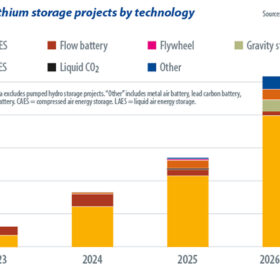
Can anything topple lithium-ion?
The need for long-duration energy storage in a net-zero world is undeniable but with conventional battery prices tumbling, can anything dislodge the mainstream grip of lithium ion? S&P Global’s Susan Taylor provides an update on non-lithium storage technologies.

UK firm finalizes $18 million deal for renewables in Nigeria
UK-based Konexa has finalized a deal that will see Climate Fund Managers and Microsoft’s Climate Innovation Fund invest $18 million to establish Nigeria’s inaugural private renewable trading platform and provide renewable energy to Nigeria Breweries.

Key takeaways from Solar Solutions Amsterdam
Volatility in the global PV market did not go unnoticed this week at the Solar Solutions Amsterdam trade fair. However, the prevailing impression is that the Dutch PV market is poised for stability.
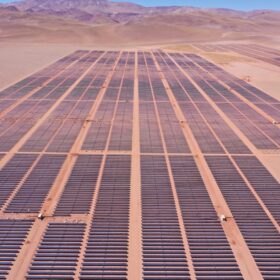
PV and prices, the (not so fast) uptake of solar in Argentina and Chile
The Atacama Desert in Argentina and Chile is the sunniest region on earth. Despite the excellent solar radiation resource availability and plenty of room on rooftops and on the ground, solar PV is not as widespread in either country as would have been expected based on the initial deployment of large-scale PV power plants in both countries some ten years ago.
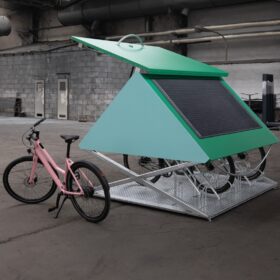
German startup unveils PV charging-parking system for e-scooters, bikes
German startup Domum has developed PV charging-parking systems for e-scooters and e-bikes. They use up to 660 W of solar panels.
