
Spain allocates €2 billion to expand clean energy and industry programs
Spain’s Ministry for Ecological Transition says a new €2 billion ($2.3 billion) funding package is designed to accelerate industrial capacity, expand renewable deployment, and boost the country’s long-term energy resilience.

Forecasts point to strong solar conditions across the U.S., China and Europe through spring
In a new weekly update for pv magazine, Solcast, a DNV company, reports that the end of the Northern Hemisphere spring is creating favorable conditions for solar generation across key markets in the United States, China, and Europe.

‘It’s not a matter of sodium versus lithium, we need both’
A US research team has developed all-solid-state sodium batteries that retain performance down to subzero temperatures. The systems utilize a special chloride-based solid-electrolyte-coated cathode.
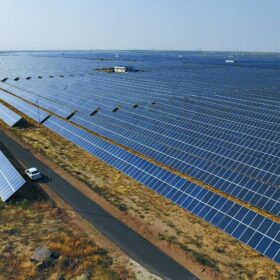
What can South Korea learn from India’s rapid solar deployment?
Korean policy analyst focusing on solar power plant siting and permitting, Daun Kim, has reported on her recent trip to India’s Bhadla Solar Park. The analyst highlights how clear siting policies and streamlined permitting helped India scale renewables, something that South Korea can learn as it pursues a 100 GW renewable energy target by 2030.
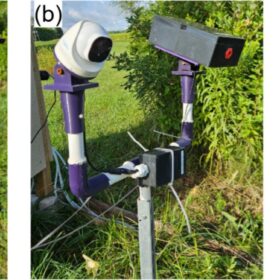
Open-access, modular monitoring platform for multi-year outdoor PV testing
A team of researchers in Canada has developed the Jericho Open Resistive Data Logger—an open-access photovoltaic (PV) monitoring platform that integrates data acquisition and processing hardware, a software framework, and a comprehensive sensor array. Designed primarily for agrivoltaic applications, the system has a total estimated cost of around $2,000.
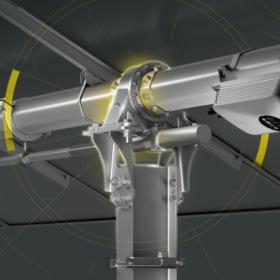
Antaisolar launches single-axis tracker
The Chinese company says its AT-spark has a length of up to 143 m and a rotation range of 60°. It can accommodate up to 120 solar modules.
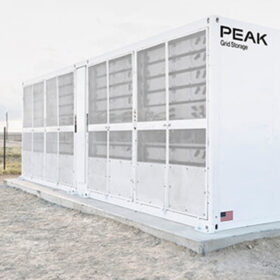
Peak Energy to supply up to 4.75 GWh of sodium-ion batteries to Jupiter Power
In a major milestone for the two-year-old Series A startup and the broader stationary energy storage sector, US-based Peak Energy has signed a supply agreement potentially worth more than $500 million.

Enecom launches reinforced solar panels for boating, off-grid use
The Italian specialty module manufacturer has launched a new lightweight, semi-rigid, glass-free silicon solar panel reinforced with a thin aluminum sheet for marine, mobility, and other offgrid applications. The series includes products with a power range of 145 W to 205 W.

Vertical bifacial agrivoltaics feasible at high latitudes with 8-meter row spacing
New research from Finland shows how spacing between solar modules plays a key role in determing power and crop yield. The scientists found that, at a separation of 8 m, crops received at least 75% of irradiation, which is expected to result in minimal impact compared with an unshaded scenario.
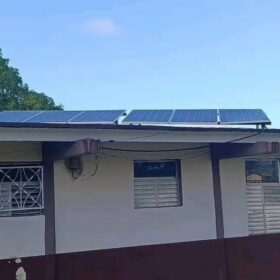
Hurricane Melissa floods Cuba’s Río Cauto solar park, cuts power supply
The United Nations Development Programme (UNDP) says emergency generators, some powered by solar panels, are being deployed as Cuba struggles to restore electricity after the storm.
