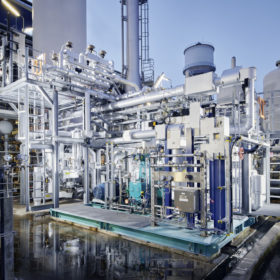
The Hydrogen Stream: World’s first full-scale pilot plant for extracting hydrogen from natural gas pipeline
Germany-based Linde Engineering has started up a full-scale pilot plant in Dormagen to showcase how hydrogen can be separated from natural gas streams using its membrane technology. Furthermore, Abu Dhabi-based renewable energy developer Masdar has teamed up with French energy giants Engie and Totalenergies on two separate hydrogen projects and Sweden’s nuclear power company OKG signed its first contract with an external buyer to enter the hydrogen market as a producer and supplier.
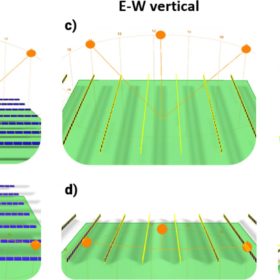
Optimal topology for agrivoltaics based on bifacial PV modules
A research team has outlined an optimized array topology for agrivoltaic projects built with bifacial modules. According to its findings, the benefits of bifacial PV arrays are most prominent in stilt mounted projects, where modules are elevated considerably off the ground at over 2 m, thus allowing plenty of light to be absorbed by the rear PV side as well.

Chinese solar industry may reach 500 GW module capacity by year end
According to Asia Europe Clean Energy (Solar) Advisory (AECEA), this huge capacity may not be met by actual demand in the global market. Furthermore, the consultancy reveals that solar module prices should reach a price level of up to RMB 1.75 ($028)/W by the second half of the year, and that in 2021 new PV additions totaled 53 GW with more than half of this capacity being delivered by distributed generation.

How artificial intelligence can be used to identify solar panel defects
Solar farm operators are turning to AI-powered inspection to speed up the inspection process and improve accuracy. They use algorithms that can automatically detect solar panel defects from images.
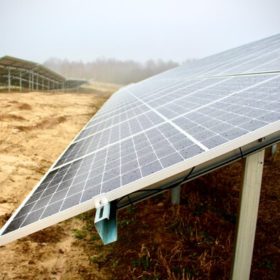
Unsubsidized solar projects proliferate in Poland
Four new PV developments have been announced this week, adding to a growing list of renewable energy projects in the coal-dependent Eastern European country.
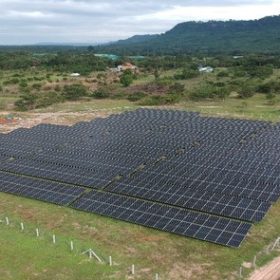
Solar-plus-storage for mineral water producer in Cambodia
The system delivered by French energy giant TotalEnergies will power Kulara Water’s bottling facility in Siem Reap Province.

Quantum battery prototype for superextensive charging
Scientists in Italy designed the prototype as a microcavity enclosing a molecular dye known as Lumogen-F orange (LFO). The charging power of the device is described as super-extensive, meaning that it increases faster with battery size.

Turkey added 1.14 GW of PV capacity in 2021
According to official statistics from grid operator TEIAS, the country’s cumulative PV capacity reached 7.81 GW at the end of December.
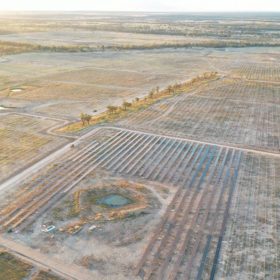
X-Elio reaches financial close on 200 MW solar farm in Australia
Spanish renewables developer X-Elio expects its 200 MW Blue Grass Solar Farm to achieve full commercial operations early this year after it reaches financial close for the project in Australia.

Vertical agrivoltaic project takes shape in France
The 100kW pilot vertical PV plant is being developed by French energy giant Engie. It will be used to test the effects of agrivoltaics on the microclimate, soil and vegetation.
