
Powerchina completes 200 MW solar project for Enel in Colombia
Powerchina has finished the 200 MW Guayepo III solar farm in northern Colombia, connecting it to the grid six days ahead of schedule for Italian utility Enel.

Unlimited low-cost energy storage
In its latest monthly for pv magazine, the International Solar Energy Society (ISES) explains how pumped-hydro energy storage combined with PV power generation could provide 24/7 power to data centres
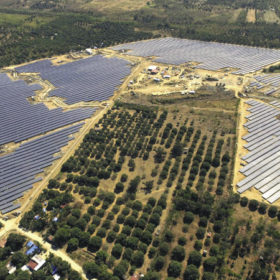
Philippines raises FIT levy for renewable payments
The energy regulator of the Philippines has approved an increase in the feed-in tariff allowance (FIT-All) to PHP 0.2073 ($0.004)/kWh from PHP 0.1189, with the new rate set to take effect next month.
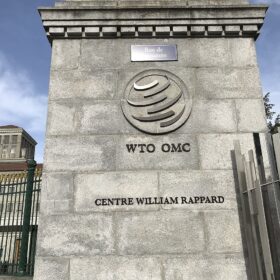
What WTO can still do to regulate global cleantech trade
pv magazine spoke with energy and environmental law expert Anatole Boute about the past and future role of the World Trade Organization (WTO) in regulating trade disputes related to clean energy technologies amid current geopolitical tensions. He noted that despite recent protectionist efforts to revive the solar manufacturing industry, the European Union still strives to remain compliant with WTO rules.
Optimizing solar-plus-storage operation for markets with imbalance penalties
Scientists in Japan have used a deep reinforcement learning–based AI model to calculate discrepancies between the planned and actual electricity supply volumes in PV-battery systems operating in markets where grid imbalances are penalized. Through a series of simulations, they found that the proposed methodology can reduce imbalance penalties by approximately 47%.

Romania drafts cybersecurity rules for PV, cogeneration up to 1 MW
Romania plans to amend its energy law to require the National Cybersecurity Directorate (DNSC) to define technical standards for PV and cogeneration systems up to 1 MW, aimed at preventing data breaches and safeguarding grid operations.

Deployable tracker-based rooftop PV system for stadiums
An international research team has developed a tracker-based rooftop PV system that can be installed on both new and existing stadiums. The proposed design reportedly allows for easier deployment and delivers higher power output compared to conventional stadium PV covers.

Mexico targets up to 9.5 GW of solar and wind by 2030
Mexico’s Secretaría de Energía (Sener) plans to add 6.4 GW to 9.5 GW of renewable capacity while keeping state-owned CFE’s share above 54%, integrating storage and efficiency measures to stabilize the grid.

Improving sodium-ion battery stability with calcium
Researchers in Japan have adopted a new calcium-doping strategy to improve the stability and electrochemical properties of NFM, a cathode material used in sodium-ion batteries. The new technique enhances crystallinity and increases the interlayer spacing in NFM, resulting in higher performance compared to NFM treated with conventional processes.

Spain makes agrivoltaic projects eligible for farm subsidy program
Spain’s new agricultural decree allows land hosting solar arrays to qualify for Common Agricultural Policy payments if farming remains the primary activity.
