
The best tilt angle to improve PV system performance on low-cost buildings
Researchers have demonstrated that the theoretical optimal tilt for rooftop solar energy production in low-cost buildings in Nigeria is approximately 5.67°. Their modeling suggests to adopt south-facing roofs for PV generation in the Global South.
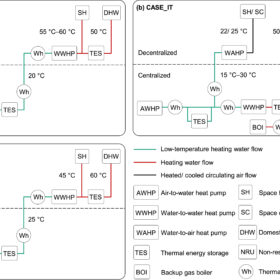
Researchers demonstrate technical feasibility of retrofitting PV-driven heat pumps in multi-family buildings
A research group led by Germany’s Fraunhofer ISE has conducted what it describes as the first empirical study on PV-assisted two-stage HP systems in existing multi-family buildings. Its findings show that substantial PV electricity exports result in greater avoided non-renewable primary energy use.
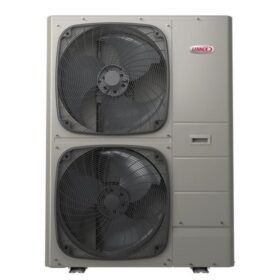
Lennox launches residential heat pump with space-saving design
The US-based company said its new EL18KSLV Side Discharge Heat Pump uses R-454B as the refrigerant and has a size ranging from 2 tons to 5 tons.

New model for predicting residential PV fleet yield
To predict the energy yield of residential solar PV fleets based on limited information, Dutch researchers developed a probability-based mathematical model that provides rapid sky view factor (SVF) calculations, protects PV plant owner privacy, and was shown to be effective for studying PV potential in urban areas.
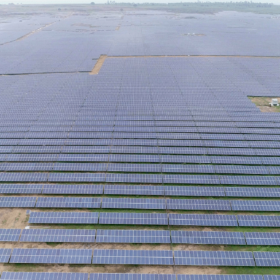
India’s solar potential estimated at 10.8 TW
A new study by the Energy and Resources Institute (TERI) has estimated India’s total solar potential at 10,830 GW, significantly higher than the previous 2014 assessment of 748 GW by the Ministry of New and Renewable Energy (MNRE). The study revisits conventional solar deployment areas such as barren and unculturable lands and explores additional avenues to expand the country’s solar potential.

Germany deploys 1.1 GW of PV in May
Germany installed 1.1 GW of new solar in May, bringing total installations for the first five months of 2025 to 5.97 GW, slightly below the 6.16 GW added over the same period in 2024.
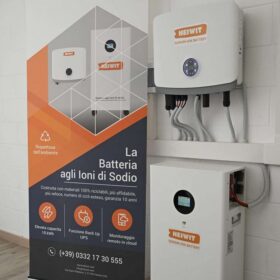
Italian startup releases 9.8 kWh sodium battery for residential applications
Italy-based Heiwit has developed a 200 Ah sodium-ion battery with a lifespan of 6,000 cycles. The device reportedly offers thermal stability and rapid charging speed.
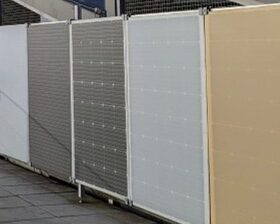
Glass-free, colored PV modules for building rooftop retrofits, façades
Researchers from Swiss and Austrian institutions have demonstrated a novel design for a glass-free, structurally robust silicon PV module. With a weight below 6 kg/m2, the targeted application is older buildings with weak roof structure.
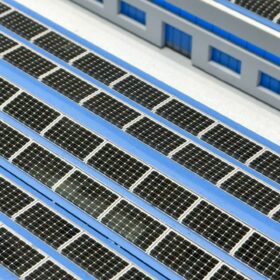
Understanding P50, P90 and P99 in solar energy
A review of using statistical probability to understand solar production outcomes.

TNO, Solarge unveil lightweight perovskite solar module prototype
TNO and Solarge have developed a lightweight perovskite solar module prototype measuring 32 cm x 34 cm by combining roll-to-roll processing and low-weight panel materials. The Netherlands-based partners aim to scale the technology for broader commercial applications.
