New DPP converter to improve yield in PV systems under permanent mismatch
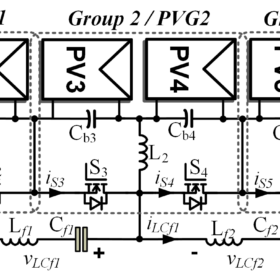
Brazilian scientists have created a new hybrid converter topology based on differential power processing (DPP) that can help reduce power losses in PV systems under permanent mismatch conditions, as well as temporary ones caused by partial shading, dirt and snow. The converter consists of a hybrid topology that combines the PV-to-PV and PV-to-Bus architectures and reportedly solve some of the issues presented by both configurations.

Global sales of off-grid solar energy kits hit 9.5 million units in 2022
In 2022, off-grid solar kit sales reached a record-breaking 9.5 million units. This is almost 1 million more than the 8.5 million units sold in 2019.
Foldable solar carport extends, retracts in response to weather
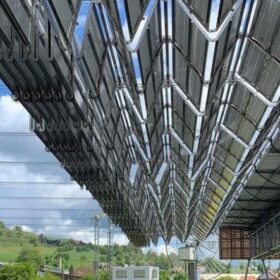
Switzerland’s Dhp Technology AG says it plans to deploy new retractable PV systems at 45 motorway service areas in the Swiss cantons of Valais and Bern. The foldable arrays can be retracted and protected during extreme weather conditions or hail storms.
Chelion unveils scalable battery storage solution
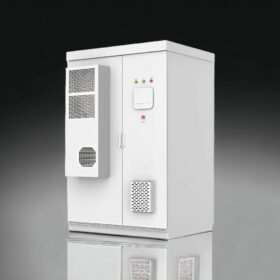
Chelion Australia, an energy storage solutions specialist, has developed a new all-in-one lithium iron phosphate battery cabinet for commercial applications.
German consumer group debunks residential battery misconceptions
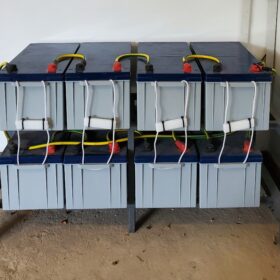
Verbraucherzentrale NRW, a German consumer protection association, has issued a warning about five misleading assumptions about PV-linked residential battery systems.
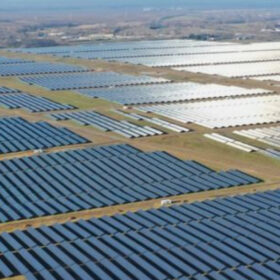
India’s H1 solar additions hit 3.6 GW
India installed 3.6 GW of solar capacity in the first half of 2023, down 53% year on year, due to project extensions for numerous large-scale initiatives.
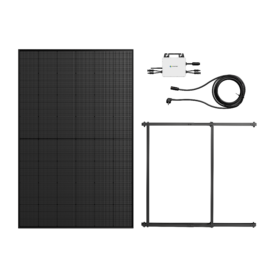
Slenergy announces new balcony PV system
Slenergy, a Chinese electronics manufacturer, has developed a new balcony PV system featuring two 425 W all-black solar panels, an 800 W microinverter, and a mounting structure. It includes a set equipped with a 5-meter AC cable, a 3-meter DC cable, and a 3P connector.
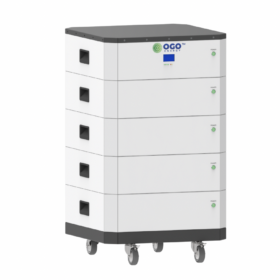
OGO Energy introduces residential battery storage solutions
India’s OGO Energy has developed modular battery energy storage systems with smart management capabilities. Up to five battery modules of 5.12 kWh each can be combined for a total storage capacity of 25.6 kWh.
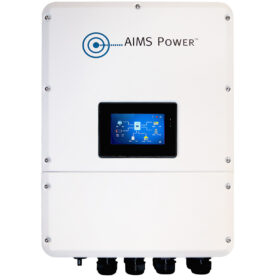
Aims Power introduces hybrid inverter for solar-battery systems
Aims Power has developed a hybrid inverter for solar-battery systems, with power outputs of 4.6 kW and 9.6 kW and solar input capacities of 6.9 kW and 15 kW.
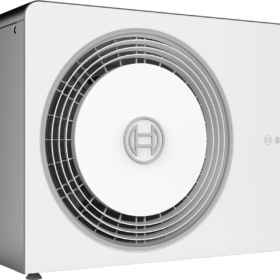
Bosch sells new propane heat pumps with PV packages
Bosch is currently selling the new heat pumps in the DACH markets and is planning to expand sales in other European markets in September. The new products use propane as the refrigerant and integrated sound diffusers. The manufacturer is also offering a power meter/sensor enabling the heat pumps to work with any existing PV system and battery storage solution at home.
