
CSIRO puts battery chemistries to test in tropical conditions
Researchers from Australia’s national science agency are working with Malaysian authorities to assess how different battery chemistries perform under tropical conditions, including high temperatures, humidity, and corrosion, and how these factors affect durability, safety, and cost effectiveness.
Electricity rate hikes slash commercial solar payback periods in US by 33%, says Wood Mackenzie
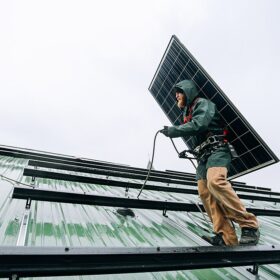
Soaring utility costs and rising power demand are recalibrating the financial outlook for the United States non-residential solar market.
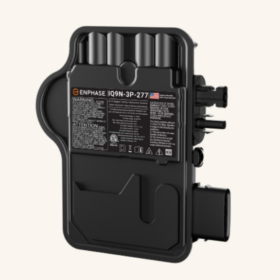
Enphase begins shipping GaN-based commercial microinverters
The new IQ9N-3P microinverter utilizes gallium nitride technology to deliver 427 VA of peak power and 97.5% efficiency for the 480 V three-phase commercial market.
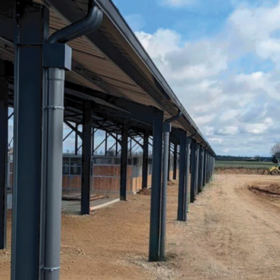
High-capacity gutter for efficient solar panel drainage
French company Dal’Alu has developed a high-capacity aluminum gutter designed to efficiently collect and channel rainwater from large roofs and solar panels. Its on-site profiling, modular components, and durable construction reportedly ensure rapid installation, long-term performance, and compliance with current building standards.
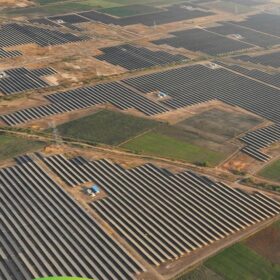
India deploys 37.9 GW of solar in 2025
Solar additions in calendar year 2025 comprised 28.6 GW of new utility-scale solar capacity, 7.9 GW of rooftop PV power, and 1.35 GW of off-grid and distributed installations.

Australian solar installer fined $6,000 over unsafe battery installs
A solar installation company has been fined $9,000 by an Australian court after pleading guilty to unsafe installation of residential battery energy storage systems at five properties, including one that caused a minor house fire.
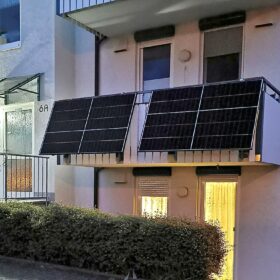
A guidebook on plug-in balcony solar for U.S. policymakers
Responding to increased state-level interest in plug-in solar, a nonprofit group has published an in-depth guidebook to help state policymakers navigate the path to allowing households to use the systems.
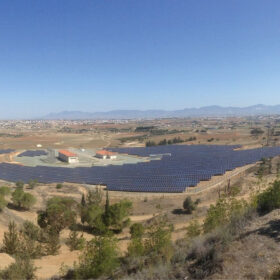
Cyprus solar curtailment hits 47% in 2025
Cyprus wasted nearly half of its distributed renewable generation in 2025, equivalent to 306 GWh, as grid constraints and lack of battery storage forced massive curtailments while solar capacity keeps growing.
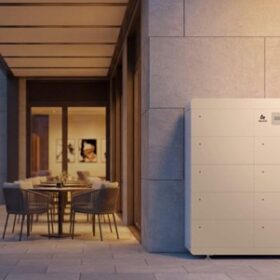
AlphaESS launches modular energy storage system for small C&I users
Designed for power ratings of 29.9 kW and 50 kW with scalable capacity up to 216,9 kWh, the new system is aimed at businesses seeking flexible energy storage solutions without the complexity of installation

Malaysia launches new net metering scheme for rooftop PV
Effective since January 1, 2026, the Solar Accelerated Transition Action Programme (Solar ATAP) aims to build on Malaysia’s previous net metering program’s efforts to maximize the use of rooftops for solar generation by incentivizing consumers to export excess generation to the grid. The capacity limit has been set at 100% of the consumer’s maximum demand, or 1 MW.
