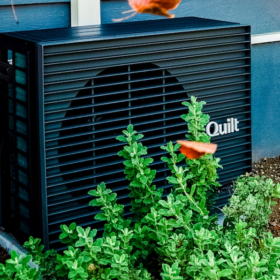
Quilt launches 3-zone ductless heat pump for residential applications
U.S. startup Quilt has introduced a new three-zone ductless heat pump for residential use, offering independent temperature control across three areas with a single outdoor unit. The system uses R32 (difluoromethane) as the refrigerant and can reportedly achieved a coefficient of performance of 4.2 at 8 C.
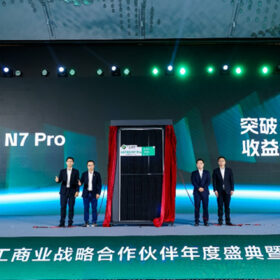
Astronergy launches 670 W TOPCon solar module with 24.8% efficiency
China’s Astronergy says its ASTRO N7 Pro module targets utility-scale PV plants and commercial rooftops, offering quarter-cell architecture, bifacial gains, and a 30-year performance guarantee.
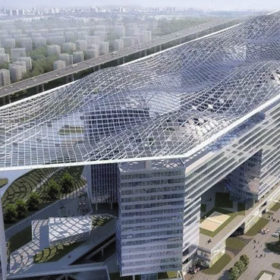
Semi-transparent photovoltaics cost-competitive only up to 50% transparency
Researchers from Spain found that semi-transparent PV systems are commercially viable only up to about 50% transparency, as higher transparency sharply reduces efficiency and increases system costs. Their analysis shows that declining power density, and not balance-of-system or financing factors, is the main driver of higher LCOE, even in high-irradiation regions.
ML System unveils solar facade panels, roof-integrated PV tiles
The Poland-based module manufacturer has developed Photonwall, a building integrated solution for ventilated façades. It also offers Photonroof, a ceramic PV roof tile solution. Both BIPV products are available in colors and finishes that match the aesthetics of modern and historic buildings.

Mibet releases mounting system for flat-roof PV installations
The Chinese company said its novel Z-type mounting supports installation angles of 5°, 10°, and 15° and withstands wind speeds up to 45 m/s. It claims a lifespan of more than 25 years.
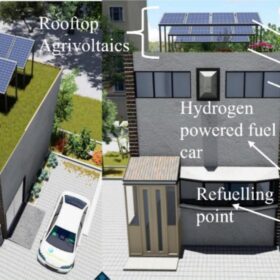
Growing agri-PV tomatoes while producing hydrogen for smart windows
Scientists have simulated a residential building based on a real double-story house in the United Kingdom, combining rooftop agrivoltaics with onsite hydrogen production. Electricity generated by the solar system is used to produce hydrogen, which is then supplied to a hydrogen vehicle and insulated gasochromic smart windows.
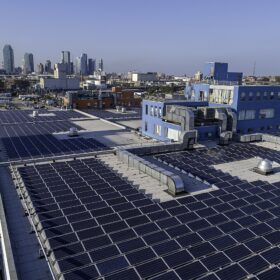
New York Power Authority renewables plan shows financial challenges for building solar
The levelized cost of building a solar project in New York far exceeds the expected revenue from selling solar power, says a NYPA plan, with project success potentially depending on the sale of renewable energy credits at a satisfactory price.
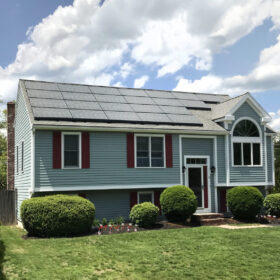
Solar and storage program forecast to save all Massachusetts ratepayers $313 million per year
Solar plus storage can also offer winter reliability improvements and limit gas consumption, finds a report from Synapse Energy Economics and the Solar Energy Industries Association.
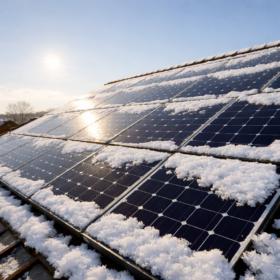
Remote sensing-based tech for hourly snow-induced PV power losses assessment
A team of Sweden-based researchers has developed a snow loss model to estimate snow-induced PV power losses on an hourly basis. The proposed approach relies solely on data from remote sensing sources, such as aerial imagery, LIDAR, and satellite data.
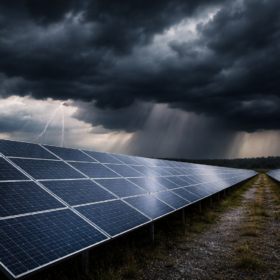
Building resilience amid intensifying weather events
In its latest monthly column for pv magazine, IEA PVPS shows that with climate-specific site selection, robust design, proper installation, and proactive O&M, most PV systems can be made resilient and remain reliable despite intensifying weather risks.
