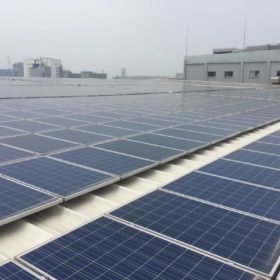
BIPV roofing membrane with 25-year service life for C&I applications
Solvay has announced a partnership with China’s 3TREES to develop building-integrated photovoltaic thermoplastic polyolefin roofing membranes that comply with China’s new 25-year aging requirements for BIPV TPO roofing. The new BIPV product will be commercialized by the end of the year.
How long do rooftop residential solar panels last?
Multiple factors affect the productive lifespan of a residential solar panel. In the first part of this series, we look at the solar panels themselves.
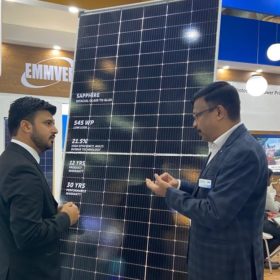
Emmvee unveils 545 W glass-to-glass bifacial solar module
India-based Emmvee has unveiled its Sapphire line of glass-to-glass bifacial modules, with power outputs ranging from 530 W to 545 W. The modules are built with 144 mono PERC half cells and 10 busbars.
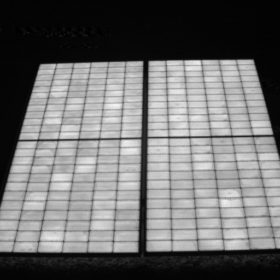
New electroluminescence tech for daily solar module inspections
Enertis Applus+ and the GdS Optronlab Group have developed a system to enable daytime electroluminescence in the inspection of PV modules.
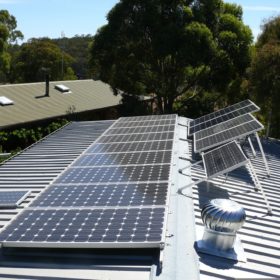
Dutch government asks energy suppliers to adjust billing practices for net metering
Rob Jetten, the Dutch energy minister, said the nation’s energy suppliers should implement billing practices for net-metered solar on a yearly basis, and not on a monthly or quarterly basis.

Hithium unveils 300 Ah battery for rooftop PV applications
Hithium’s new battery has an energy efficiency of 95% and an energy density of 170 Wh/kg. It can purportedly operate for more than 12,000 cycles.
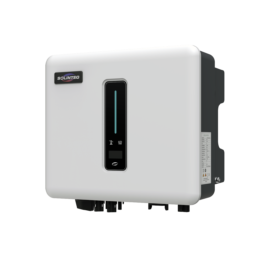
Solinteg unveils single-phase inverters for residential PV
Solinteg’s new inverters have an efficiency of 98.1% and a European efficiency of 97.5%.
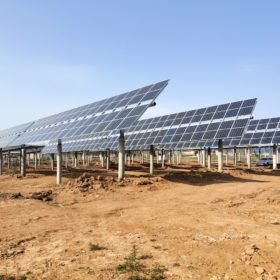
Trina Solar introduces new TOPCon solar panels
Trina Solar has unveiled its Vertex N solar panels for commercial, industrial and utility-scale projects, and the Vertex S+ modules for residential installations.

‘The first terawatt of solar PV installed globally took some 70 years to achieve, while the second will likely take only three’
Leading solar researchers from around the world are meeting for the first time in four years in Milan, Italy, for the 8th World Conference on Photovoltaic Energy Conversion (WCPEC-8). The first morning has seen prestigious awards bestowed on two scientific leaders and inspirational discussions as to how the “second terawatt” of solar can be installed globally in just a handful of years.
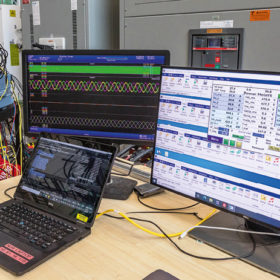
Real barriers to virtual power plants
The technology is available for virtual power plants to be rolled out across the United States, argues Jigar Shah, the director of the Department of Energy’s Loan Programs Office. Their implementation could result in a cascade of benefits, including lower electricity costs and wider adoption of distributed energy resources like rooftop PV.
