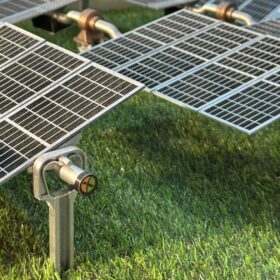
PV could outcompete agriculture in Spain within 20 years
Scientists have analyzed the competition between photovoltaics and agriculture for land use in Spain by studying 134 different crops in 15 regions. Using a real options framework, they found that falling solar PV costs and high irradiance in southern Spain could make solar more profitable than farming by the mid-2040s, highlighting growing land-use competition.
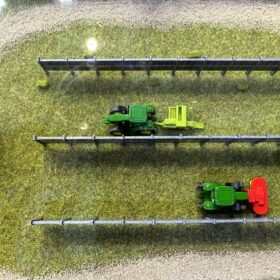
What standards for agrivoltaics?
The technology which combines solar PV panels and agriculture is gaining ground. IEC Standards for solar photovoltaic (PV) systems already exist, but more might be required, dealing with some of the more specific issues relating to agriculture.
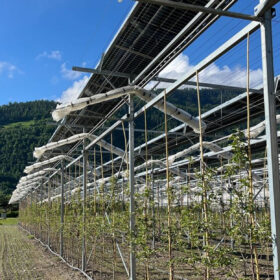
Agrivoltaics for cherries
Switzerland’s Energie360° and solar tech specialist Insolight have agreed to build a 1,300-panel agrivoltaic plant on a cherry farm in Leuggern, Switzerland. The facility will combine crop protection and dynamic light management.
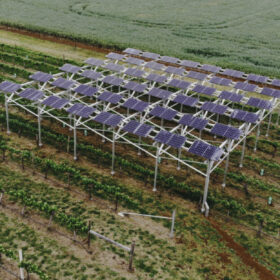
Australian university testing 20 kW agrivoltaic system on vineyard
Australian renewables company Greenwood has installed 48 solar panels at the University of Melbourne’s Dookie Campus vineyard to aid research on how agrivoltaics affect crop yields.
Italy allocates 1.5 GW in agrivoltaics tender
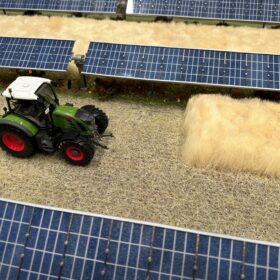
The Italian authorities have chosen 540 projects, totaling 1.5 GW, in the nation’s first agrivoltaics tender.

Agrivoltaics can increase grape yield by up to 60%
French agrivoltaics company Sun’Agri says that two of its facilities increased grape yields by 20% to 60% in 2024, compared to areas without solar panels. The PV modules helped regulate temperature fluctuations, reducing summer heat peaks and winter temperature declines.

Agrivoltaics can improve water conservation in Africa
Research led by the University of Sheffield installed an off-grid agrivoltaic system in Tanzania and a grid-tied agrivoltaic system in Kenya. They found the installations helped boost crop yield and conserve water while generating electricity at a lower cost than the national grid.

Research on agrivoltaics in Germany demonstrates strong synergies
Recent research conducted by Germany’s Fraunhofer ISE on agrivoltaics show that not only did the crops grown under the PV panels benefit from the partial shading, but also that the PV system produced more electricity than previously assumed thanks to the cooling provided by the plants underneath.
Vertical agrivoltaics for barley
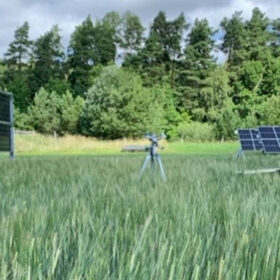
Researchers in Sweden have measured barney yield in a vertical agrivoltaic facility and have found that despite the shade created by the modules the yields are comparable to open-field control conditions, if not slightly higher. Their methodology can be replicated for other sites and crops.
Agrivoltaic community solar under development in New York state
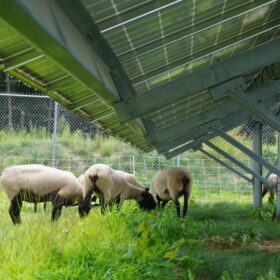
BlueWave has started working on three agrivoltaic community solar projects in Johnstown, New York, totaling 16 MW.
