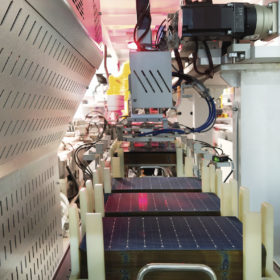
Adani raises $394 million for 10 GW fully integrated solar fab
Adani New Industries Ltd. (ANIL) has raised $394 million from Barclays and Deutsche Bank to support the working capital requirements of its integrated solar module manufacturing facility.
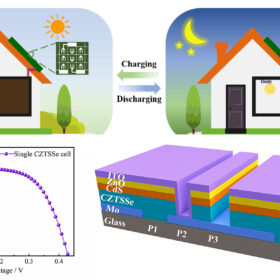
New solar window prototype based on kesterite photovoltaic cells
A research team in China combined solar power generation from kesterite thin-film generation with a nickel-cobalt bimetal oxide (NiCoO2) electrochromic window. The proposed prototype not only realizes the function integration of self-power and intelligent solar radiation adjustment, but also extends its function to energy storage.
RCT Solutions secures order for 10 GW solar module factory in Canada
RCT Solutions says it will provide its module production equipment for CAD 3 billion ($2.26 billion) in a 10 GW solar module factory in Manitoba, Canada. The Manitoba provincial government said in a statement that the facility will be fully integrated.
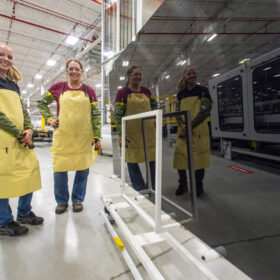
First Solar announces fifth US factory
First Solar has revealed plans to open its fifth factory in the United States. The new facility is expected to add 3.5 GW of annual production capacity at a cost of $1.1 billion.
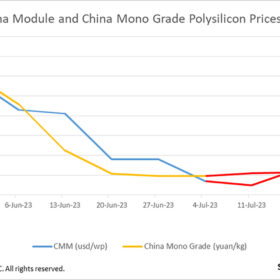
Module prices revert to descending trajectory after a brief rally
In a new weekly update for pv magazine, OPIS, a Dow Jones company, provides a quick look at the main price trends in the global PV industry.
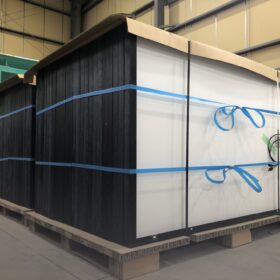
Marubeni, Hamada enter solar panel recycling business
Japan’s Marubeni and Hamada have launched Rexia Corporation to offer solar panel recycling and reuse services across the country, diverting material from landfill and giving a second life to older panels.
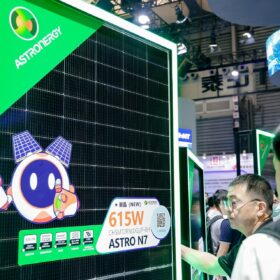
Chinese PV Industry Brief: Three Gorges buys 2.2 GW of PV panels for $0.18-019/W
China Three Gorges Group has announced its latest PV module procurement results, while GCL-Si has revealed plans to raise CNY 5.8 billion ($812.9 million) via a private placement to finance its expansion.

Belgian startup offers custom CIGS solar foils
Enfoil is developing a CIGS thin film custom manufacturing business, targeting building-integrated PV applications, such as powering sensors or track & trace sub-systems in trucks. The company is a spinoff of Hasselt University and imec, the Belgian research institute.
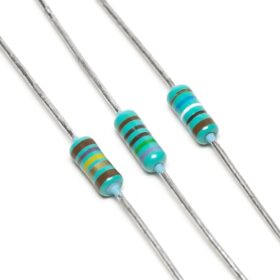
Using shunts to spot PV module degradation
Scientists in Ireland investigated the effect of shunt resistance on a PV cell’s electrical performance. The group says its finding could potentially lead to the development of models for early detection of various forms of cell degradation, allowing for intervention to repair or replace components before major power losses occur.
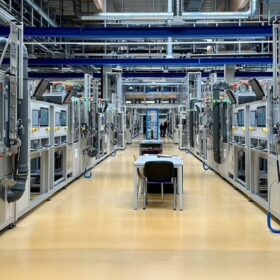
Meyer Burger builds 2 GW solar cell factory in US
Meyer Burger plans to start a 2 GW cell factory in Colorado in the fourth quarter of this year.
