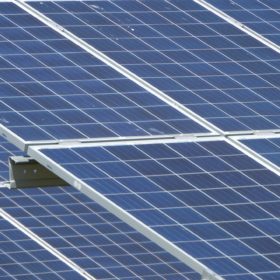
Chinese PV Industry Brief: PV glass supply deals, bonds to finance solar incentives
Two solar glass makers kicked off the week with new deals and solid earnings reports while the Chinese government revealed it may issue bonds to fund clean energy incentives.

Value of Indian PV imports tanked 83% in second quarter
Mercom India Research has said the quarterly value of solar cell and module imports was down 83% in the second quarter of the year, compared to the same period of 2019, to sit 54% lower than the value recorded in the January-to-March window.
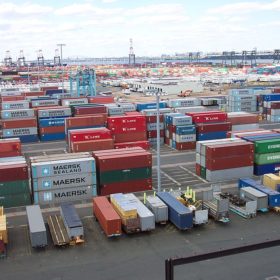
India confirms one-year extension of solar cell import duty
The ‘safeguard’ duty will be levied on Chinese, Vietnamese and Thai solar cells – whether assembled into modules or not – at 14.9% from today and falling to 14.5% in six months’ time. Malaysian products are exempted as their imports have fallen dramatically since the duty was introduced, in July 2018.
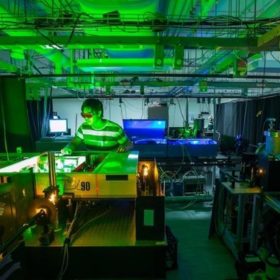
Pushing the boundaries of PV cell sensitivity
Scientists in Australia and the United States have managed to ‘upconvert’ light from below the silicon bandgap into high-energy light that can be captured by silicon solar cells.
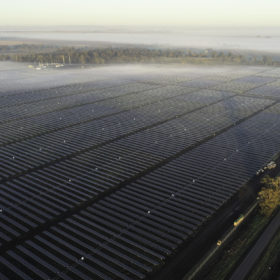
Chinese PV Industry Brief: Risen plans 13 GW output expansion, Datang reveals tender results
Risen Energy has announced plans to expand its annual cell and module output by 13 GW. Datang, meanwhile, has published the results of the module tender it held for this fiscal year.
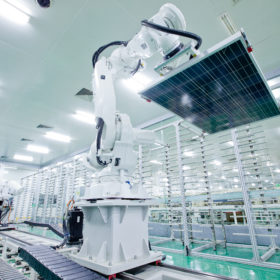
Jinko claims 24.79% efficiency for n-type monocrystalline cell
The Chinese manufacturer has claimed a world record for a large-size, contact-passivated solar cell. The result, certified by Germany’s Institute for Solar Energy Research in Hamelin, betters the company’s previous record by almost 0.6%.
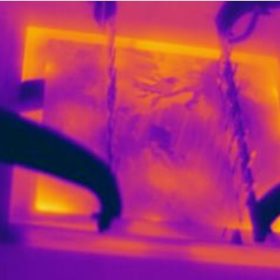
New protocols identify solar cell failures during production
Two new pass/fail protocols are said to be able to separate cells which present high hot-spot possibility, show high current leakage and demonstrate intermediate behavior. The sorting technique relies on a manual solar simulator, an infrared camera and a tool to measure isolation.
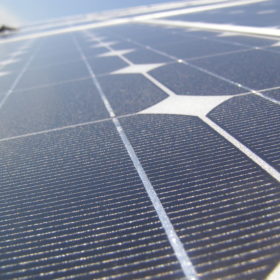
India’s ReNew Power to build 2 GW factory
The Haryana-based developer will invest up to $266.9 million to set up a new solar cell and module manufacturing facility.
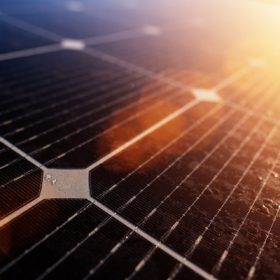
URE announces Taiwan factory disposal
The Taiwanese manufacturer said it has sold its Jhunan Kebei plant to a Taiwan-based maker of masks for semiconductor production. However, it will increase capacity at its manufacturing facility in Tainan by up to 200 MW in the third quarter.
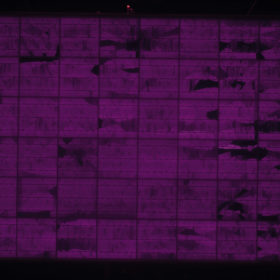
How the cracks are forming
Scientists in the United Kingdom have investigated the formation of cracks in PV cells, confirming that the high temperatures cells are exposed to during soldering for interconnection are a leading cause of cracking. Their findings will aid future research into module reliability and predictions of how cracks are likely to form.
