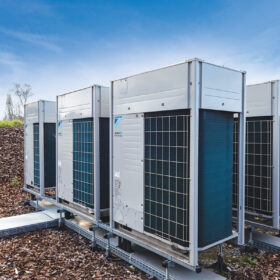
Daikin lauches new air-to-air heat pumps
Intended for applications in commercial buildings, the new VRV 5 heat pumps have reportedly a 9.1% higher seasonal efficiency compared to the company’s previous models. The new products use difluoromethane (R32) as the refrigerant.
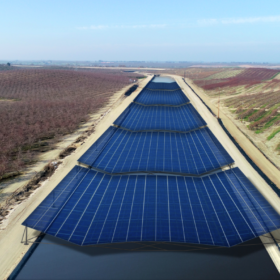
US tribal community to cut water losses with solar canopy
The Gila River Indian Community says it has broken ground on a solar array that will cover an irrigation canal south of Phoenix, Arizona.
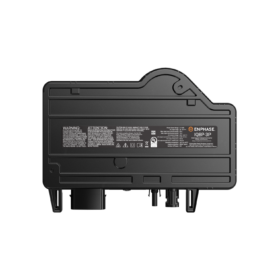
Enphase introduces commercial-scale microinverter
Enphase’s new IQ8-3P solar microinverter offers peak power output of up to 480 W.
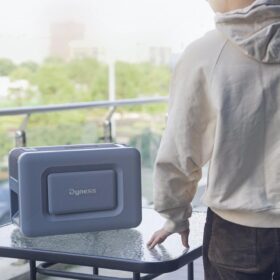
Dyness releases 1.6 kWh battery for balcony PV systems
Chinese manufacturer Dyness has unveiled a 1.6 kWh battery designed for balcony PV systems, allowing users to stack up to four units for a total storage capacity of 6.4 kWh, with a reported lifespan of more than 8,000 cycles.
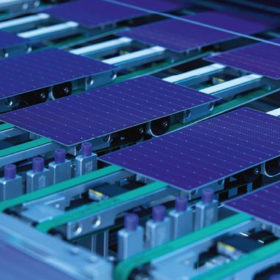
Chinese PV Industry Brief: PERC module prices down by 2.68%
EnergyTrend recorded a 1.85% to 2.68% decline in passivation emitter rear contact cell (PERC) solar module prices in China last week.
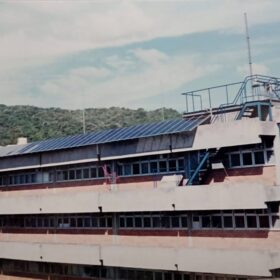
Brazil’s oldest PV system turns 26
Prof. Ricardo Rüther, the coordinator of the Strategic Solar Energy Research Group at the Federal University of Santa Catarina (UFSC), installed a solar energy system at the university 26 years ago. It currently operates at about 80% of its nominal power.

Fortescue continues US expansion with new clean energy manufacturing plant
Australian mining and green energy major Fortescue has revealed plans to establish a new clean energy technology manufacturing plant in the United States, as it looks to take advantage of the US Inflation Reduction Act (IRA).
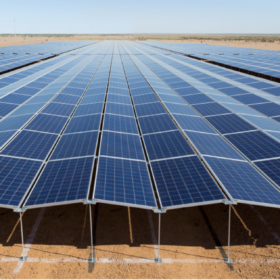
Barbados to build 60 MW of community solar gardens
Jurchen Technology and Blue Circle Energy have decided to develop a 60 MW portfolio of community solar gardens, distributed across 50 sites.
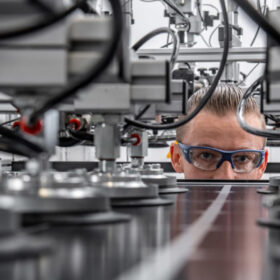
We need a ‘Domestic Renewable Energy Production’ standard for PV installations in Europe
The threat of catastrophic climate change, as well as increasingly obvious economic benefits, make it advisable, indeed essential, to convert our entire energy system to a sustainable system, based on renewable energy (RE) as soon as possible. The two main pillars of our future RE-based energy system will be power generation from PV and wind. In Germany alone, according to detailed studies by Fraunhofer-Institut für Solare Energiesysteme ISE, we will need at least about 300 GW of PV and an equally large amount of wind power.
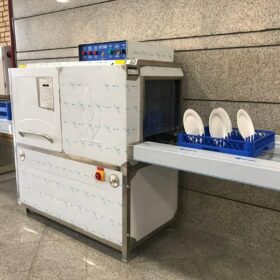
Using air conditioning to cool down PV modules, dry dishes
An international research team has investigated how air conditioning may be used to reduce the operating temperature of PV panels. The researchers not only found that the proposed approach is technically viable, but they also tested the use of excess heat from the panels for drying dishes.
