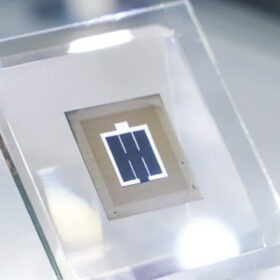
JinkoSolar achieves 32.76% efficiency in perovskite-TOPCon tandem solar cell
The result was certified by China’s National Photovoltaic Industry Metrology Test Center (NPVM). The cell utilizes a perovskite top device with MBT-ligand-controlled crystallization on a TOPCon silicon bottom cell, achieving a void-free, high-efficiency tandem structure.
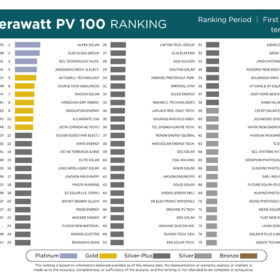
Who are the Top 100 PV manufacturers today?
The Terawatt PV 100 ranks the top 100 solar manufacturing companies using a new methodology based on production scale, financial strength, and corporate transparency, with Tongwei leading the Q1 2026 list and most top firms headquartered in China. The analysis highlights increasing global supply-chain scrutiny driven by tariffs and ESG mandates, while also showing rising influence from Indian companies and strong positions for key materials and equipment suppliers.
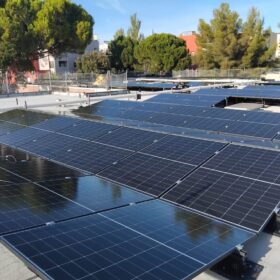
France lowers PV feed-in tariffs for systems up to 100 kW
France’s energy regulator has reduced feed-in tariffs (FITs) for PV systems up to 100 kW for the April to July 2026 period, with lower rates across all segments and reduced compensation for surplus electricity.

Spain enables 50-plus renewable plants for real-time voltage control
Spain’s grid operator Red Eléctrica and regulator CNMC have launched real-time voltage control services, allowing renewable energy installations to provide dynamic grid support under a new regulatory framework.

Smart meters are vulnerable gateways to cyberattacks
Researchers found that widely deployed smart meters pose a “massive” cybersecurity risk, potentially enabling data manipulation, energy theft, and service disruption. They propose a new detection method using state estimation and statistical boundaries to more accurately identify cyberattacks, outperforming traditional techniques despite higher computational demands.
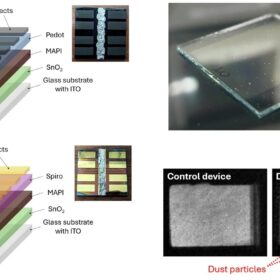
Perovskite solar cells can be made without expensive cleanrooms
Swansea University researchers found that perovskite solar cells can tolerate dusty fabrication environments, performing almost as well as those made in cleanrooms. The findings suggest low-cost, scalable production may be possible without ultra-sterile conditions, potentially accelerating cell and module manufacturing.
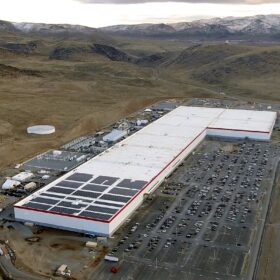
Tesla advances plan to build 100 GW of U.S. PV manufacturing capacity by 2028
Job advertisements on Tesla’s website outline the 100 GW ambition and follow reports the company is in talks with Chinese firms for the purchase of $2.9 billion worth of equipment for solar manufacturing.
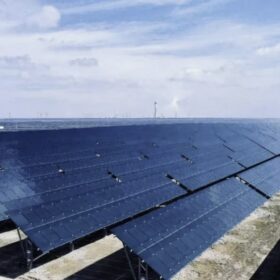
GCL Optoelectronics wins China’s first commercial perovskite-silicon tandem PV module order
GCL Optoelectronics has won a 1.2 MW commercial perovskite/silicon tandem solar module tender held by China’s Huaneng. The procurement required mass-producible, IEC-certified modules with over 25% efficiency, a 25-year performance warranty, and delivery by end of 2026.
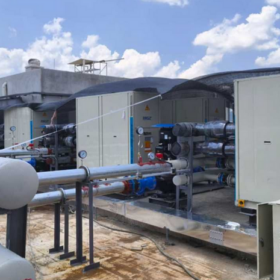
PVT-driven tower heat pump for building retrofits
Researchers in China demonstrated that integrating energy tower heat pumps with evaporator-side boilers, air-source heat pumps, or solar-assisted systems can significantly improve winter heating efficiency and economic performance in commercial buildings. Among the four configurations tested, the evaporator-side boiler and solar-assisted systems delivered the highest performance and energy savings, offering a sustainable, low-carbon alternative to conventional heating.

Solar cyber threats expand, but inverters still stay in the crosshairs
In an interview with pv magazine, Jay Johnson, the CTO of US-based cybersecurity firm DERSec, explains that PV systems face cybersecurity risks that extend far beyond inverters, as demonstrated by a December attack on Polish solar plants where wiper malware targeted substation equipment rather than the inverters themselves. Vulnerabilities often lie in backhaul communication channels like APIs and mobile apps, making layered defenses, network segmentation, and vigilant monitoring essential to safeguard distributed energy resources.
