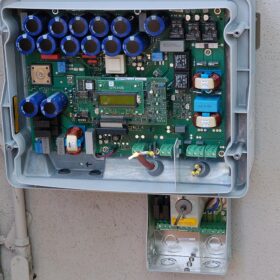
Inverter undersizing not universally effective to reduce soiling losses
An international research team explained that, although inverter clipping is initially effective in mitigating soiling losses, these losses could become more visible with time, as solar module degradation makes clipping less frequent. They also warned that inverter undersizing alone may not be enough to mitigate soiling losses and suggested cleaning as an additional way to reduce them.

Germany’s new PV deployments hit 1.07 GW in February
The German authorities say that around 40% of the 1.07 GW of solar capacity installed in February came from unsubsidized PV systems. The country’s cumumlative PV capacity reached 84.88 GW at the end of the month.
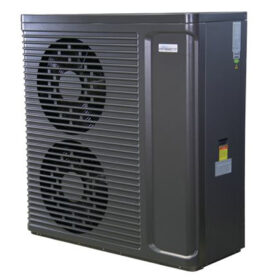
U.S. Boiler unveils hydronic heat pump for residential applications
The US-based manufacturer said its new heat pump system has 5-ton capacity and a coefficient of performance of up to 3.95. It uses difluoromethane (R32) as the refrigerant and relies on DC inverter enhanced vapor injection (EVI) technology.
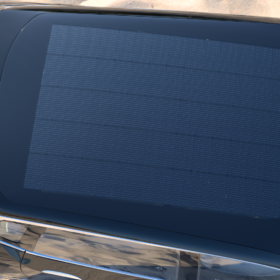
AGC Automotive Europe unveils photovoltaic panoramic sunroof for passenger vehicles
The Belgian automotive company said system can integrate either TOPCon, HJT, or xBC solar cells. The VIPV unit features a glass-glass construction and it does not need a roller blind system.
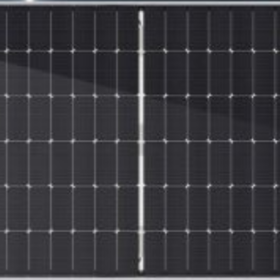
Citizen Solar introduces 590 W TOPCon bifacial module with 22.84% efficiency
The Indian manufacturer said its new TOPCon panels are built with 144 half-cut solar cells designed with 16 busbars. The temperature coefficient is -0.29% per C.
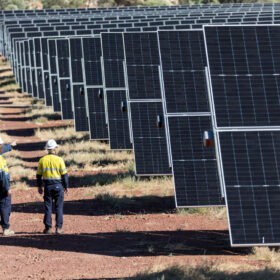
APA powers up Australia’s largest remote grid solar farm
Gas and electricity company APA Group has launched Australia’s largest remote-grid solar farm, announcing the official opening of the 88 MW Dugald River Solar Farm in outback Queensland.

California cuts interconnection costs for distributed solar developers that agree to export limits
By agreeing to limit exports to the grid at peak generation hours, distributed energy resources like rooftop solar and energy storage can now avoid delays and costly infrastructure upgrades.
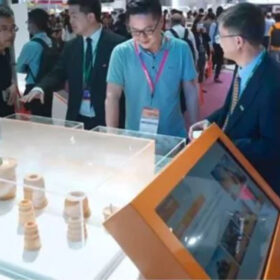
BASF, Worldlight release new PV module frame based on polyurethane
BASF and Worldlight have developed a new PV module frame based on polyurethane. The manufacturers claim that the new solution offers superior insulation and a longer lifespan than aluminum frames.
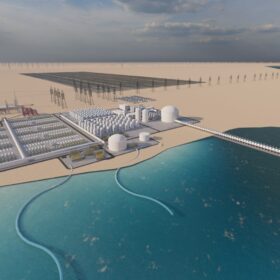
Morocco allocates land for green hydrogen projects
Morocco has allocated 1 million hectares for green hydrogen projects as part of its national energy strategy. The country initially plans to provide 300,000 hectare to private investors, divided into lots of 10,000 to 30,000 hectares.

Mercedes-Benz factory in Germany to host 11 MWh organic flow battery
A Mercedes-Benz factory in Germany is set to host an 11 MWh organic flow battery to store solar energy generated by its rooftop PV installation. Germany’s CMBlu has provided its Organic SolidFlow technology for the project.
