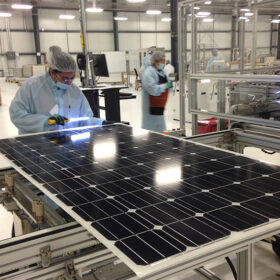
Pixon Green Energy to add 1 GW of solar cell, module capacity in India
Pixon Green Energy is expanding its solar module production capacity to 2 GW per year by adding a 1 GW unit with backward integration into 1 GW of cell manufacturing.

France’s new PV installations hit 3.15 GW in 2023
The French solar market grew by around 30% in 2023, reaching 3.15 GW, according to new data from Enedis. PV systems for self-consumption accounted for around one-third of all new capacity additions.

Chinese PV Industry Brief: Jinchen to raise funds for production equipment
Jinchen says it aims to raise CNY 1 billion ($140 million) through a private placement of shares.

Israel raises tariffs for commercial PV by up to 33%
Israel’s Electricity Authority says it has reached a decision on tariffs, as current rates do not ensure the viability of large rooftop PV projects. It has also raised the tariff for stored electricity sold at peak times.

Chinese authorities complete 50 MW of PV at altitude of 5,000 meters
The Chinese government says the 50 MW Caipeng PV plant has been completed with 40 MWh of battery storage at an altitude of 5,000 meters in Tibet. The project is connected to a new 35 kV transmission line.
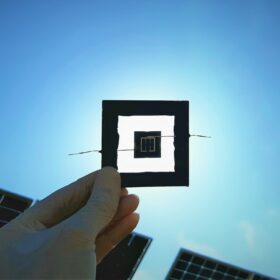
UNESCO reports rapid growth of solar research in Arab countries
Arab countries are “punching above” their weight in their contribution to academic research on photovoltaics, according to analysis by UNESCO. The region is expanding its global share of scientific publishing across all key energy topics, but it is highest in solar.
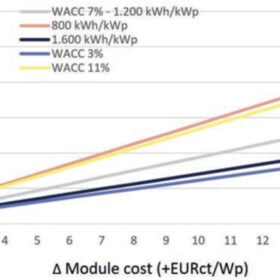
PV Manufacturing in Europe: Ensuring resilience through industrial policy
In its latest monthly column for pv magazine, the European Technology and Innovation Platform for Photovoltaics (ETIP PV) presents the main findings of its White Paper on PV manufacturing. The report evaluates how policy and regulatory frameworks have evolved for European companies in the PV sector, and compares these frameworks to the PV industrial-policy evolution of key global markets such as China, India, and the USA.
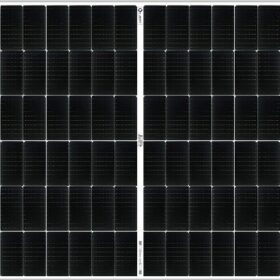
Bluebird Solar unveils M10 half-cut PV modules
Bluebird Solar, an Indian PV manufacturer, has developed half-cut mono passivated emitter and rear contact (PERC) solar modules based on M10-sized cells. The modules are available with outputs ranging from 400 W to 550 W.
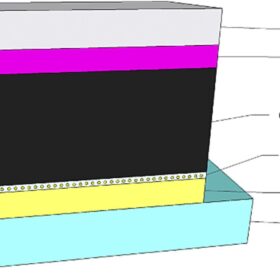
Improving perovskite solar cell performance with silver nanoparticles
Scientists in the United Kingdom have proposed for the first time to deposit silver nanoparticles in electron transport layers used in perovskite solar cells to improve device performance. They found that an “optimal” concentration of silver nanoparticles may help to improve a perovskite cell’s charge transfer and extraction, as well as its efficiency.
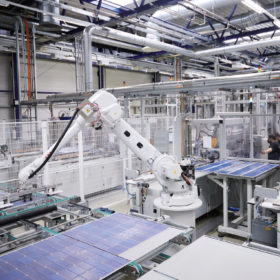
Meyer Burger to cease PV module production in Germany
Meyer Burger, a Switzerland-based heterojunction cell and panel manufacturer, says it will stop making PV modules in Germany, but it will continue to produce solar cells in the country to support its panel production operations in the United States.
