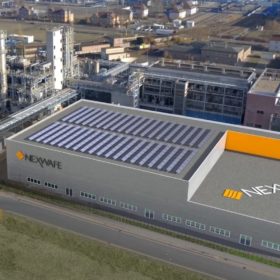
NexWafe secures funding to build wafer factory in Germany, announces new factory in Saudi Arabia
German wafer manufacturer Nexwafe is currently trying to commercialize its highly efficient monocrystalline wafer technology.
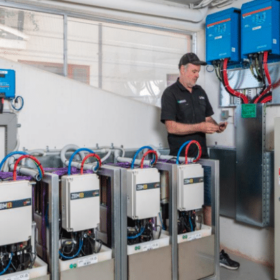
Redflow comissions 30 kWh zinc-bromine flow battery project in Australia
Queensland-based flow battery company, Redflow, has commissioned a 30 kWh zinc-bromine flow battery for the Brisbane City Council.
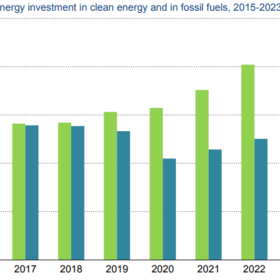
Global investment in clean energy nearly doubles that of fossil fuels
For every dollar invested in fossil fuels, 1.7 dollars are invested in clean technologies. Five years ago, it was a one-to-one ratio, said the International Energy Agency.

Chinese PV Industry Brief: Trina to build 25 GW ingot factory, Longi reduces wafer prices by 30%
Longi said today it cut the prices of its wafer products by 30% and Trina announced it will build a 25 GW monocrystalline ingot factory in the Sichuan province. Furthermore, the National Bureau of Statistics (NBS) revealed that the Chinese PV industry produced 39.92 GW of solar cells in April, and Datang Group unveiled the results of a tender to procure 8 GW of solar panels.
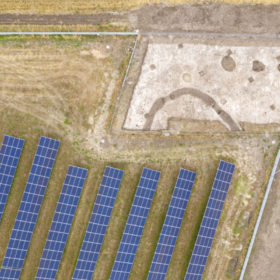
European Energy secures approval for 250 MW solar plant in southern Italy
European Energy, a Danish independent power producer, said it will build its new 250 MW close to a substation owned by Italian grid operator Terna in Sicily. It will occupy a surface of around 200 hectares.
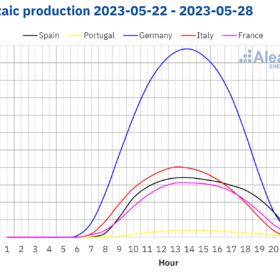
Photovoltaic energy continues to set new records in European electricity markets
Gas and CO2 prices continued their downward trend in the fourth week of May, which led to a general downward trend in prices in European electricity markets and several negative hourly prices were registered, which reached -€400/MWh in Netherlands. The notable exception of the Iberian market, which saw a rise in prices, came from the fall in renewable energy production. During the week, records of solar photovoltaic energy production were reached in Germany, France, and Italy.
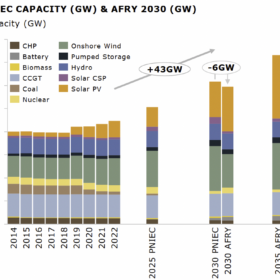
Spanish PV market exposed to over-investment risk by 2030
New data from Afry Management Consulting suggests that Spain’s solar power producers could face prices below €20/MWh before 2030 if renewable penetration continues to increase. Such low prices would render power purchase agreements (PPAs) and merchant projects unprofitable.
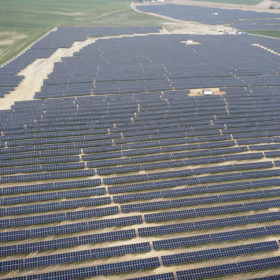
Poland tops 13 GW of PV capacity
Poland added around 4.7 GW of new PV capacity in 2022, according to new data from research institute IEO. It predicts that 2023 could be another record year, thanks to another 6 GW of new solar power.
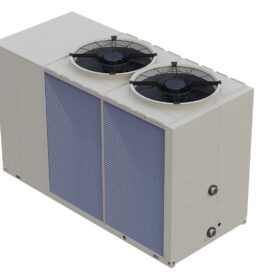
Daikin unveils air-to-water heat pump for commercial applications
Daikin Applied Americas has developed an air-to-water heat pump that can produce 91.2 kW of heat and 23.58 tons of cooling. The new device can be used as a cascade system with water-to-water heat pumps, and can switch between cooling and heating modes, depending on temperature requirements.

SPIC unveils TOPCon back contact solar panel with 23.4% efficiency
Chinese manufacturer SPIC Solar says its new PV modules have power outputs ranging from 450 W to 460 W, and power conversion efficiencies ranging from 22.9% to 23.4%.
