
‘It is crucial for our industry to take proactive steps to engage and empower young girls from an early age’
This week, Women in Solar Europe (WiSEu) gives voice to Paula Santolaria Martín, Senior Business Analyst at Schneider Electric. She says diverse teams not only enhance decision-making processes but also cultivate a sense of belonging and unity. “Embracing these two factors is not just a must nowadays, but it also fuels and lightens our ability to thrive in a dynamic and ever-evolving industry like Solar PV globally,” she stated.
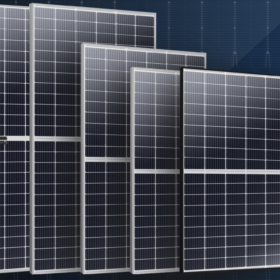
Sinovoltaics updates map of European solar module manufacturing sites
The latest report on the supply chain for European PV module production provides the status of 121 solar manufacturing sites, including closures and capacity on hold. It maps plants that produce PV modules, cells, wafers, ingots, polysilicon, and metallurgical-grade silicon.
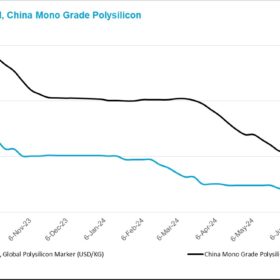
Polysilicon prices stable, futures listing opens possibilities in China
In a new weekly update for pv magazine, OPIS, a Dow Jones company, provides a quick look at the main price trends in the global PV industry.
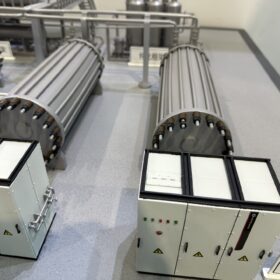
New method to calculate levelized cost of hydrogen
Scientists in Australia have incorporated overload capacity and power-dependent efficiency of the electrolyser in a novel techno-economic model to calculate the levelized cost of hydrogen. The proposed methodology was applied to ascertain the impact of internalizing environmental costs on the cost-competitiveness of green hydrogen compared to grey hydrogen.
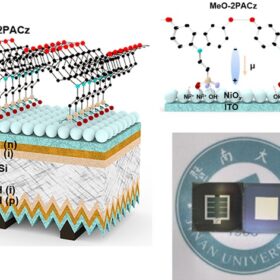
Perovskite-silicon tandem solar cell based on hybrid interconnecting layers achieves 28.47% efficiency
An international research team has designed a two-terminal perovskite-silicon tandem solar cell that utilizes new hybrid interconnecting layers to reduce recombination losses in the top perovskite device. The tandem cell achieved an impressive fill factor of 81.8%, which the scientists said is the highest value ever reported for this cell technology to date.
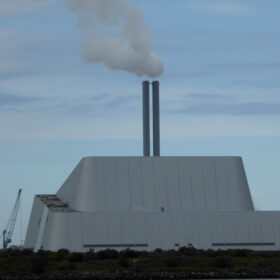
Coupling photovoltaics with waste-to-energy
Researchers have simulated the addition of PV plants and waste-to-energy systems in the Iraqi Al-Gharab region, that suffers from power cuts, and have identified the optimal size and locations for these hybrid plants, with the LCOE dropping by 7.7%.
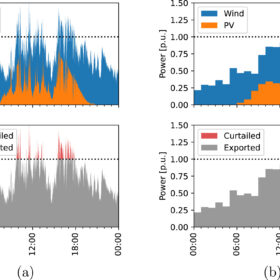
Novel approach to estimate curtailment, clipping losses in hybrid wind-solar plants
A European research team has proposed a new methodology for optimal design of hybrid wind-solar power plants. Their approach is based on 1-minute resolution data, which the scientists said provide much more accurate information about potential curtailment and clipping losses compared to 1-hour resolution data.

Israel mandates rooftop solar on new big buildings, targets 3.5 GW by 2040
The Israeli authorities have introduced new regulations requiring rooftop PV on new large buildings, with plans to install 3.5 GW by 2040. The minimum production capacity has been set at 5 kW.
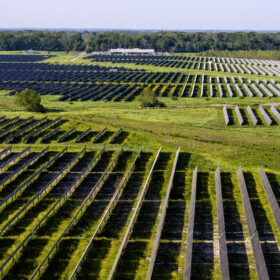
Jera Nex acquires US solar sites from Lightsource bp
Jera Nex has purchased two US solar arrays totaling 395 MW from Lightsource bp. The acquisition marks Jera Nex’s first deal since it launched in April. Lightsource bp will continue to manage assets and provide maintenance services at the projects.
Romania gives green light to CfD scheme
Romania’s Ministry of Energy has approved a new contracts-for-difference (CfD) mechanism, set to launch later this year. The first round will include 500 MW of solar, with the remaining capacity to be allocated in next year’s tender.
