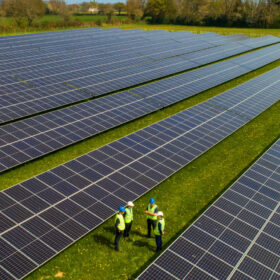
Brookfield seeks to acquire Neoen for €6.1 billion
Canada’s Brookfield Asset Management has revealed plans to buy France-based Neoen for €6.1 billion ($6.6 billion).
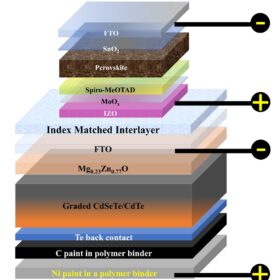
Perovskite-cadmium telluride tandem solar cell based on special electrode achieves 24.2% efficiency
An Indian-US research team has fabricated a four-terminal perovskite-cadmium telluride tandem solar cell by utilizing a highly conductive and sputtered transparent electrode to increase the current density of the bottom cell. The tandem device combines a 18.3%-efficient top perovskite cell and a 19.53%-efficient cadmium telluride bottom device.
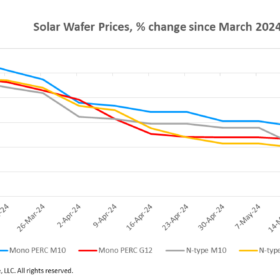
Solar wafer prices continue to soften, complex international trade situation sparks concerns
In a new weekly update for pv magazine, OPIS, a Dow Jones company, provides a quick look at the main price trends in the global PV industry.

Finland to construct seven solar plants totalling 213 MW
Solar projects across Finland have been given the green light after grant agreements were signed with the European Climate, Infrastructure and Environment Executive Agency. A total €27.5 million ($29.8 million) is being invested across the projects through the EU renewable energy financing mechanism.
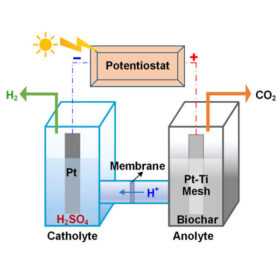
Producing hydrogen fuel from solar power and agricultural waste
Using 600% less voltage to produce hydrogen, a research team at the University of Illinois Chicago has developed a new method for splitting water.

Assessing feasibility of solar arrays at airports
A team of researchers developed a methodological framework for assessing solar potential at airports and applied it to seven Indian airports. They found the greatest potential at an airport in Raipur, central India, where they say an at least 21 MW array could be installed without compromising customer experience or safety.

PVRadar offers solar project risk assessments factoring in historical climate data
PVRadar Labs has expanded its software platform to include PV project risk assessment functionality, reportedly enabling more realistic performance estimates based on historical climate data.
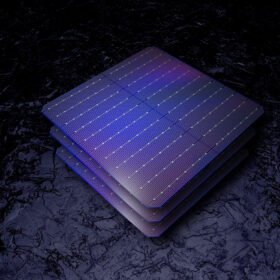
Qcells to deploy Lumet’s fine-line metallization tech
Qcells says it will use Lumet’s fine-line metallization technology for its solar cells, for higher efficiency and lower production costs.
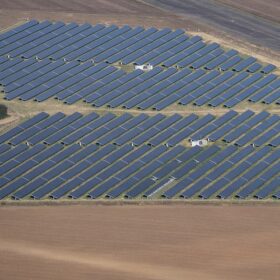
Apricus Generation buys stake in Nexus Renewables
US-headquartered Apricus Generation says it has acquired a controlling stake in Toronto-based Nexus Renewables – its first strategic acquisition.

Longi introduces 630 W HPBC photovoltaic modules with 23.3% efficiency
The Chinese manufacturer said its new Hi-MO X6 Scientist series has a temperature coefficient of -0.28%/C and a power output ranging from 620 W to 630 W. They rely on the company’s proprietary hybrid passivated back contact (HPBC) cell technology.
