
Assessing feasibility of solar arrays at airports
A team of researchers developed a methodological framework for assessing solar potential at airports and applied it to seven Indian airports. They found the greatest potential at an airport in Raipur, central India, where they say an at least 21 MW array could be installed without compromising customer experience or safety.

PVRadar offers solar project risk assessments factoring in historical climate data
PVRadar Labs has expanded its software platform to include PV project risk assessment functionality, reportedly enabling more realistic performance estimates based on historical climate data.
Qcells to deploy Lumet’s fine-line metallization tech
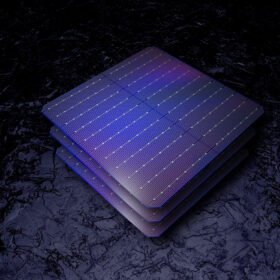
Qcells says it will use Lumet’s fine-line metallization technology for its solar cells, for higher efficiency and lower production costs.
Apricus Generation buys stake in Nexus Renewables
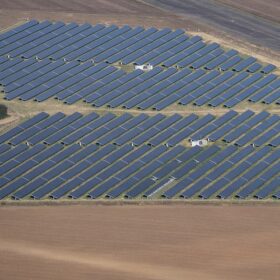
US-headquartered Apricus Generation says it has acquired a controlling stake in Toronto-based Nexus Renewables – its first strategic acquisition.

Longi introduces 630 W HPBC photovoltaic modules with 23.3% efficiency
The Chinese manufacturer said its new Hi-MO X6 Scientist series has a temperature coefficient of -0.28%/C and a power output ranging from 620 W to 630 W. They rely on the company’s proprietary hybrid passivated back contact (HPBC) cell technology.

Tajikistan to build 200 MW of solar, PV panel factory
Chinese developer Eging PV Technology says it will build a 200 MW solar power station in southwestern Tajikistan. The nation will also construct its first production plant for solar equipment, with investment from South Korea’s Global Solar Wafer.
Japanese researchers unveil solar chemical heat pump system for buildings
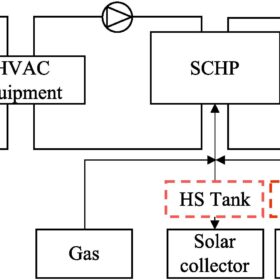
The novel heat pump concept combines solar energy with chemical storage and reportedly consume 75% less electricity than conventional heat pumps. The system relies on a battery and a heat storage tank that can be used either separately or simultaneously, depending on the outdoor conditions.

France may lower FIT threshold for rooftop PV from 500 kW to 100 kW
The French authorities might be poised to lower the feed-in tariff (FIT) threshold for rooftop PV from 500 kW to 100 kW. France’s Direction générale de l’énergie et du climat (DGEC) says the proposed measure is designed to reduce the expense of the FIT scheme, despite opposition from trade groups such as Enerplan and SER.
PV-to-methanol plants may maximize returns in reserve markets
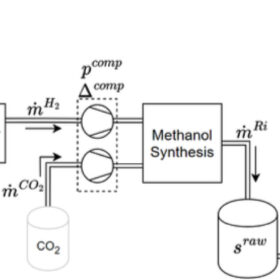
New research from Denmark shows PV-to-methanol facilities may achieve 30% lower levelized cost of methanol through engagement in reserve markets. The researchers examined the ability of a PV-to-methanol plant to contribute to the grid in frequency containment reserves (FCR), automatic frequency restoration reserves (aFRR), and manual frequency restoration reserves (mFRR).

Angola inaugurates 25.3 MW solar park
The Angolan authorities have inaugurated a 25.3 MW solar park built by Portugal’s MCA and Sun Africa. The project is the fourth of seven installations that are being built for the Angolan government, with a combined capacity of 370 MW.
