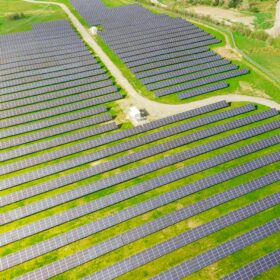
Italian solar sector gears up for cybersecurity regulations on PV systems over 100 kW
The Italian energy regulator is requiring PV and wind plants over 100 kW to install central controllers with remote active power control, with staggered compliance deadlines up to 2028. The rules, coupled with rising digitalization, are driving cybersecurity upgrades, AI-based monitoring, and grid-aware operational practices across the renewable energy sector.
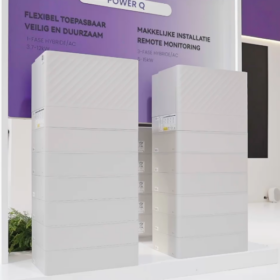
Fox ESS presents residential storage system line with 89.6% round-trip efficiency
The new series features single- and three-phase systems with scalable LFP battery integration. Designed for rapid whole-house backup and VPP applications, the new product delivers up to 89.6 % round-trip efficiency, according to the manufacturer.
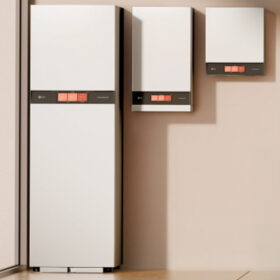
LG debuts new indoor air-to-water heat pumps
The Korean manufacturer has expanded its Therma V R290 heat pump line with three indoor unit options to improve installation flexibility. The new products are designed to deliver heating performance at ambient temperatures as low as -28 C and domestic hot water output of up to 75 C.

Dutch startup plans roll-to-roll factory for perovskite solar cells
TNO has launched Perovion Technologies to industrialize lightweight, flexible perovskite solar cells, targeting niche applications where conventional panels are unsuitable. The company plans to build the first roll-to-roll perovskite solar cell manufacturing facility in the Netherlands by 2030.

Arctech presents dry cleaning robot weighing just 38 kg
The Chinese manufacturer said its new Star Shine I system is already available in Europe and can operate at speeds of 10–18 m/min, performing cleaning routes of up to 3 km round trip and 9 km in a single direction.
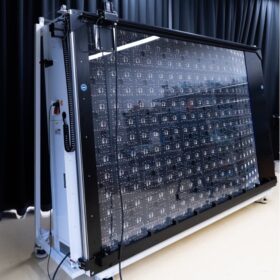
Ciemat unveils large-area multispectral solar simulator for PV module testing
The system enables measurements under controlled irradiance, spectrum, and temperature conditions. It can combine 0.4% spatial irradiance uniformity, 500 ms illumination pulses, and dynamic I-V acquisition to accurately test high-capacitance photovoltaic modules in a single pulse, according to Ciemat.
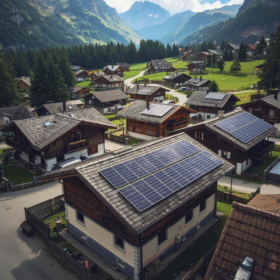
Is Switzerland going back contact?
In 2025, back-contact solar modules from Aiko Solar and Longi accounted for more than 50% of the Swiss market, driven by strong demand for high-efficiency rooftop PV systems, according to a new report by Eturnity and the Bern University of Applied Sciences.

Ukraine prioritizes solar-plus-storage in renewables auctions
Newly-implemented rules governing Ukraine’s energy market introduce solar-plus-storage systems as a separate auction category, ease regulatory barriers governing standalone storage projects and establish processes for renewable energy facilities located in Ukraine’s occupied territories.

Austria could harness 90 TWh of agrivoltaics using 5–16% of cropland
Austrian researchers conducted a techno-economic analysis of agrivoltaic systems and found that 5%–16% of the country’s cropland would be required to meet its solar electricity targets.

New framework promises unprecedented level of cybersecurity for SCADA systems
An international research team developed CyberSentry, a software framework using advanced deep learning and optimization techniques to enhance cybersecurity in SCADA systems for power plants and critical infrastructure. It combines feature selection, hybrid anomaly detection, and dynamic parameter tuning to detect diverse cyberattacks with 99.5% accuracy while minimizing false alarms.
