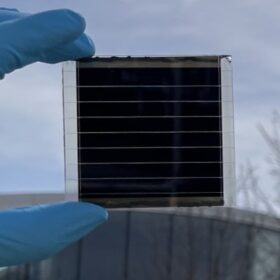
2D/3D perovksite solar cell with record-breaking efficiency of 25.32%
A Chinese-Swiss research group has fabricated a 2D-3D perovskite solar cell with a world-record power conversion efficiency. The cell uses a 2D perovskite layer at the interface between the perovskite and the hole transport layer, which the researchers said can improve charge-carrier transport/extraction while suppressing ion migration.
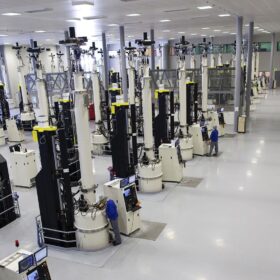
European solar manufacturers secure EU financial support
Norsun and Midsummer have both secured financing to support their capacity expansion plans. Norway’s Norsun plans to raise its polysilicon capacity to 3 GW and Midsummer wants to build a 200 MW module facility in Sweden.
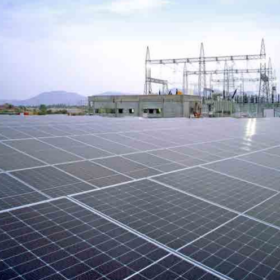
India’s JSW Energy targets 40 GWh/5 GW of storage capacity by 2030
JSW Energy aims to reach 20 GW of power generation, along with 40 GWh/5 GW of energy storage by 2030. It is also investing in solar manufacturing and green hydrogen production.
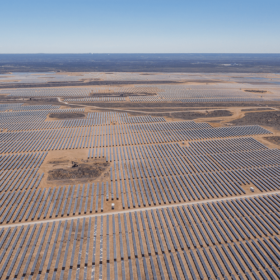
Texas curtailed 9% of solar generation in 2022
Transmission and energy storage limitations in Texas resulted in wasted renewable energy last year.
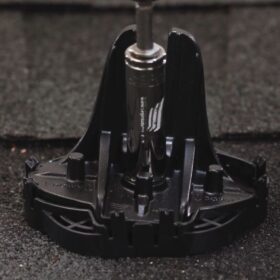
US manufacturer introduces roof mount with integrated sealant
Pegasus Solar has developed the InstaFlash pre-installed sealant for composite shingle roofs.

Chinese PV Industry Brief: CHN Energy plans 1 GW offshore floating PV project
CHN Energy has signed a deal to build 1 GW of offshore floating PV in China’s Shandong province, while JA Solar has announced plans to raise around CNY 9 billion ($1.3 billion) to support capacity expansion.

New research identifies potential for 51 TW of agrivoltaics in Europe
Researchers in Denmark have analyzed the potential of PV systems and their influence on the underlying farmland in three different agrivoltaic projects, including vertical bifacial optimal tilted, horizontal single-axis tracking, and vertical bifacial setups. They also calculated the potential for agrivoltaic in every region in the European Union and found that the eligible areas are unevenly distributed.

TSUN launches kit for garden, balcony PV systems
Chinese inverter manufacturer TSUN says its new balcony PV kit consists of one or two 20.7%-efficient solar modules, a 96.7%-efficient microinverter, a bracket, and cables.

The solar glass opportunity in India
Large capacity addition in solar modules by 15-20 players is likely to drive domestic solar glass demand, say CRISIL analysts in an interview with pv magazine. New players have expressed interest to set up solar glass manufacturing in India, however, import duty removal last year on solar tempered glass has put them in a wait-and-see mode.
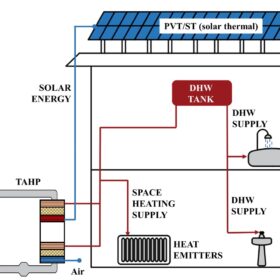
Thermoacoustic heat pump prototype for residential building heating
An international research team has fabricated a heat-driven thermoacoustic heat pump prototype that is claimed to achieve a heating capacity of 5.7 kW and a coefficient of performance of 1.4, with a heating temperature of 300 C and a heat-sink temperature of 55 C. The device uses medium/low-grade heat sources and is purportedly able to offer a complementary solution to the existing domestic heating methods.
