
Mini perovskite solar panels with 18.4% efficiency
Researchers in Singapore have developed a 6.4 cm2 solar module based on co-evaporated methylammonium lead iodide (MAPbI3). They claim that the panel is a step forward in the industrialization of perovskite mini-modules.
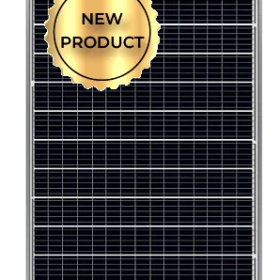
RenewSys unveils 505 W solar modules
The Indian solar manufacturer has announced the release of its DESERV Galactic Ultra line, which includes the world’s first mono-facial modules to cross peak output of 500 W, using G1-sized (158.75 mm) cells.
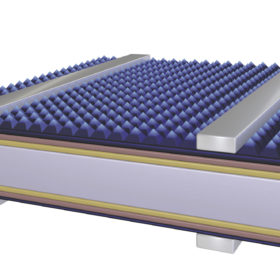
China’s Jinergy bets on heterojunction
China reportedly has 10 GW of heterojunction cell capacity already up and running or under construction. Liyou Yang, general manager at Chinese state-owned manufacturer Jinergy that as costs for the technology continue to fall, more manufacturers in Asia can be expected to make the switch.

Modular raft system for floating PV plants
Qi-energy and Candock have developed a raft-based system for utility-scale floating PV plants, based on special high-density polyethylene “dock cubes” supporting a nonmetallic frame.

Triple junction perovskite cell hits 16.8% efficiency
Scientists in the Netherlands fabricated three different perovskite layers, all using the same process. The three cells are all tuned to different bandgaps in order to absorb different wavelengths of light. A triple-junction device incorporating all three achieved 16.8% conversion efficiency. This, the researchers say, is a promising result for the technology, though would require the development of new wide-bandgap perovskites to push much further.

Australian green hydrogen project secures first commercial offtaker
BOC will compress green hydrogen produced at HyP SA, which taps South Australian solar generation.
Chinese PV Industry Brief: Stable wafer and cell prices and another 2.2 GW solar-plus-storage project
Solar manufacturers Longi and Tongwei have frozen next month’s prices.
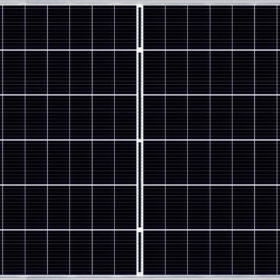
Canadian Solar launches 640-665 W panel series
The HiKu7 CS 7N-MS series is available with power output ranging from 640-665 W and efficiency ranging from 20.6-21.4%. The panel, which is the most powerful product the company brought to the market to date, is considered ideal for utility-scale and commercial and industrial PV projects.

China could annually deploy 65 GW of PV in 2021-25 period
Liu Yiyang, deputy general secretary of the China Photovoltaic Industry Association, believes that PV development will accelerate under the nation’s 2060 carbon-neutrality target.
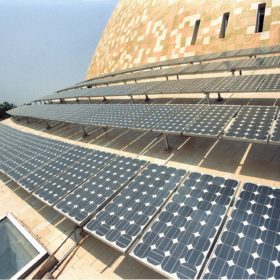
India added 883 MW of rooftop solar in nine months despite Covid-19
With 380 MW of generation capacity, the state of Gujarat accounted for 43% of new rooftop solar installations during the January-to-September period.
