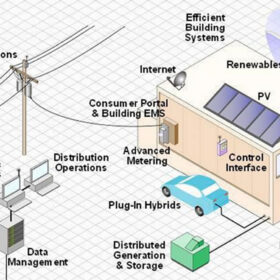
Industry 4.0 technologies raise cyber risks for smart renewables grids
An international research team developed a multi-stage intrusion detection system that uses supervised and unsupervised AI techniques to detect and mitigate cyber threats in smart renewable energy grids. The system can reportedly achieve high accuracy, low false positives, and real-time detection, outperforming traditional intrusion detection system models.
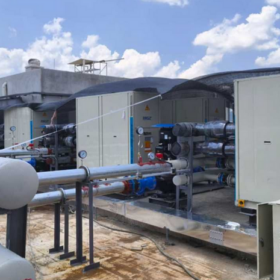
PVT-driven tower heat pump for building retrofits
Researchers in China demonstrated that integrating energy tower heat pumps with evaporator-side boilers, air-source heat pumps, or solar-assisted systems can significantly improve winter heating efficiency and economic performance in commercial buildings. Among the four configurations tested, the evaporator-side boiler and solar-assisted systems delivered the highest performance and energy savings, offering a sustainable, low-carbon alternative to conventional heating.
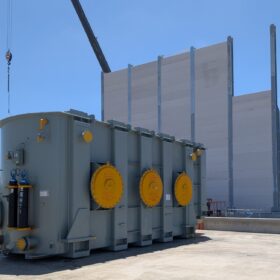
Why BESS insurers are sweating transformers and contractor errors over battery fires
The BESS insurance risk profile is shifting. In an exclusive interview, Tokio Marine GX underwriter Michael Carrington explains why insurers are looking past battery fires and sweating over supply chain bottlenecks, high-voltage transformers, and costly EPC integration errors.
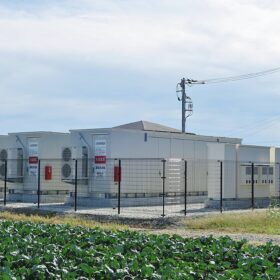
Panasonic claims world’s first trial of cybersecurity monitoring for grid-scale BESS
A Japanese joint-pilot will test grid-scale BESS with a range of local and remote attack vectors, with cybersecurity monitoring to watch for indications of anomalies.
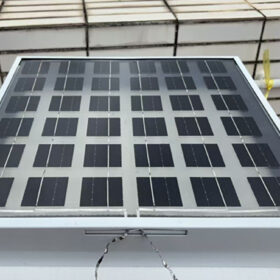
Thermochromic bifacial PV glazing system for reducing building cooling loads
Researchers in Hong Kong Hong Kong fabricated a thermochromic bifacial photovoltaic glazing system prototype that passively regulates solar heat gain while harvesting energy from both sides. Experiments and simulations showed it significantly reduces cooling loads and indoor temperatures while boosting electricity generation.
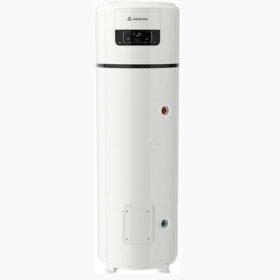
Ariston launches residential propane heat pump with built-in PV function
The Italian heating solutions provider said its new Nuos Plus S2 Wi-Fi heat pump system offers up to 80% energy savings and a coefficient of performance of up to 3.51.

Solar-to-X could redefine Iran’s energy future
Iran is widely known for its oil and gas resources, but its strongest long-term energy asset may be the sun. New research shows how solar PV could drive a cost-competitive transition across power, heat, transport, industry, and desalination, while opening the door to a broader Solar-to-X Economy.
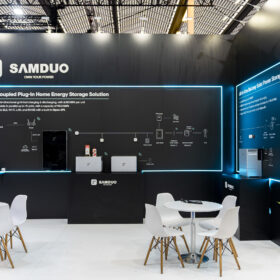
Samduo launches residential AC-coupled plug-in storage systems
The Chinese manufacturer said its new Nex E6000 and Nex E6000H storage systems combine a 6 kWh battery, an inverter, and an integrated energy management system, with scalable design allowing multiple units to be networked for higher capacity and coordinated energy sharing.
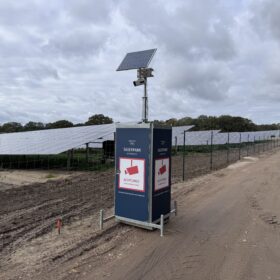
How EU NIS2 is reshaping physical and cybersecurity for PV plant operators
The European Union’s NIS2 Directive is pushing PV operators to strengthen both cyber and physical security, treating solar assets as critical infrastructure. It also highlights the need for stronger physical protection measures, such as site surveillance, access control, and perimeter security to prevent tampering and intrusion.
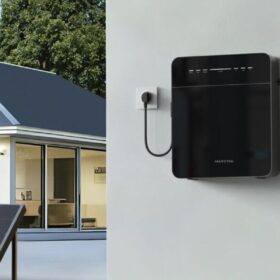
Marstek launches 2 kWh plug-in battery storage system
Marstek has unveiled a plug-in storage system with a two-kilowatt-hour capacity. The device plugs into a standard household socket and is designed to store solar power from balcony systems or draw in cheap electricity from dynamic pricing tariffs.
