
Cyprus approves energy storage subsidy scheme
Applications for participation in the scheme will be accepted from January 15, 2025.
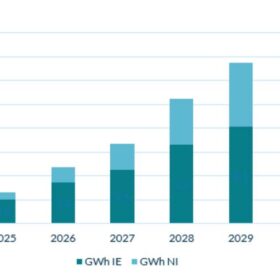
Ireland’s battery storage fleet to grow to 13.5 GWh by 2030
Cornwall Insight calculates that Ireland’s battery storage capacity will reach 13.5 GWh by 2030, up from 2.7 GWh in 2025.
Israel plans 2,000 m2 PV project in occupied Palestinian territories
Israel plans to bild a 2,000-square-meter solar PV project in the occupied Palestinian territories and has directed civilian authorities in the West Bank to identify suitable land and launch a tender within a year. The project may also include energy storage options.
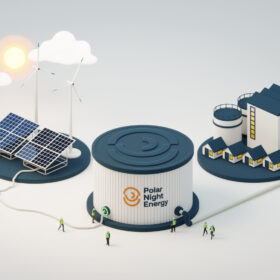
Testing to start on 100 MWh sand-based thermal battery in Finland
Finnish startup Polar Night Energy is building an industrial-scale thermal energy storage system in southern Finland. The 100-hour, sand-based storage system will use crushed soapstone, a by-product from a fireplace manufacturer, as its storage medium.
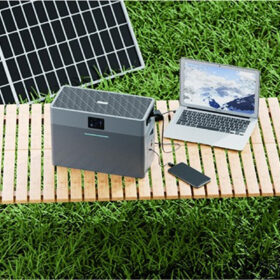
Deye launches 2 kWh hybrid ESS for residential, off-grid PV
Chinese manufacturer Deye says its new energy storage system (ESS) features a microinverter, a lithium iron phosphate (LFP) battery module, and a battery management system (BMS).

Jordan’s new electricity law encourages investment in energy storage
The new law aims to improve the efficiency and reliability of Jordan’s electricity infrastructure and introduces the concept of energy storage in the country’s legislation for the first time.
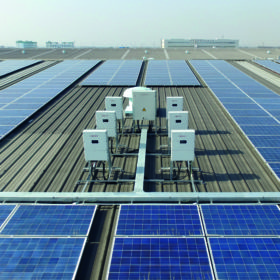
Two-layer power trading mechanism to support distributed solar
Researchers in China have proposed a new hybrid transaction model for distributed power trading. The model encourages the participation of aggregators in market transactions for distributed resources and promotes the expansion of distributed energy storage.

Brazil could add 18.2 GW of energy storage by 2040
That figure would require incentives, regulation and ambition. A study by Clean Energy Latin America (CELA) estimated the Brazilian storage market should grow at least 12.8% annually through 2040, reaching a cumulative 7.2 GW, excluding client-side, ‘behind-the-meter’ installations.
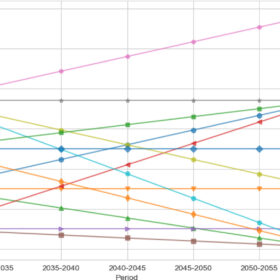
New research estimates average long-term green hydrogen price at $32/MWh
New research from Norway has found that deploying around 140 GW of green hydrogen generation capacity by 2050 could make green hydrogen economically viable in Europe. Reaching this scale may help balance system costs effectively while increasing renewable integration, making green hydrogen a self-sustaining technology without subsidies, according to the scientists.

New grid forming strategy for solar batteries
A group of scientists from a major Chinese grid operator have proposed to use an enhanced version of the particle swarm optimization algorithm to adjust inertia and damping coefficients in batteries linked to PV systems. Their approach was validated through a series of simulation and was found to enhance transient performance.
