
New bio-inspired based algorithm to improve PV output under partial shading
The novel algorithm is based on the behavior of marine animal tunicates and reportedly provides remarkable results in terms of power errors. It was tested in four PV system configurations with five different shade patterns.
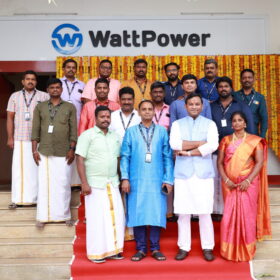
WattPower opens 10 GW solar inverter factory in India
WattPower has inaugurated a string solar inverter factory in the Indian state of Tamil Nadu, with an annual production capacity of 10 GW.
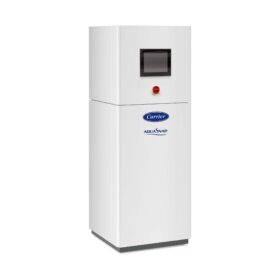
Carrier launches new series of high-temperature heat pumps
Carrier, a US-based heating solutions provider, has introduced a new line of high-temperature heat pumps with capacities ranging from 30 kW to 735 kW, with hydrofluoroolefins as a refrigerant.
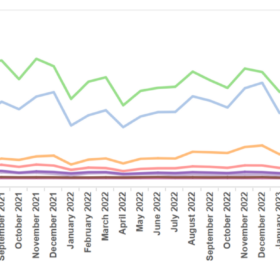
Australian PV system prices trending into new territory
SunWiz says that 10 kW solar systems in Australia have become cheaper than 6.6 kW arrays on a per kilowatt basis for the first time.
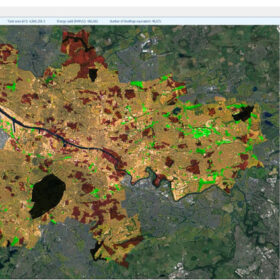
Online mapping tool to identify policy-suitable land for renewables
Called Geospatial Opportunity Mapping (GOMap), the new tool considers high-resolution information from both the local authorities and local utility companies. It is reportedly able to determine the number of rooftop or ground-mounted solar projects that can be deployed in a given area.
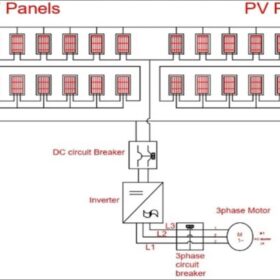
Underground photovoltaic water pumping system with average system efficiency of up to 8.5%
Developed by Egyptian scientists, the PV-powered water pumping system may produce up to 181.8 m3 of water per day. The system consists of two PV arrays with each a capacity of 4.6 kW and a pumping unit made up of a 7.5 kW three-phase alternating current motor, a multistage submersible pump, a deep well, and a 15 kW inverter.

Off-grid solar canopy charges electric tractor at California winery
Paired Power partnered with Monarch Power to deliver the emissions-free off-grid solution. The winery’s solar canopy is a 38.5 kW array comprised of 72 panels, 535 W each.
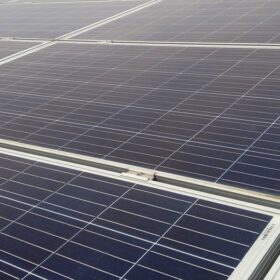
Chinese PV Industry Brief: JinkoSolar wins CHN Energy’s 2 GW module tender
JinkoSolar has agreed to sell more than 2 GW of its solar panels to CHN Energy at prices ranging from CNY 1.225 ($0.17)/W to CNY 1.230/W.
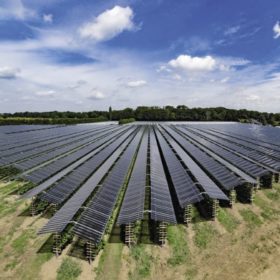
Italian Council of State clarifies rules for agrivoltaics
The Italian Council of State has issued new rules to address a number of regulatory gaps, according to lawyer Andrea Sticchi Damiani, who recently won two cases related to agrivoltaic projects. In both instances, the council confirmed that agrivoltaic facilities are distinct from conventional ground-mounted PV plants.
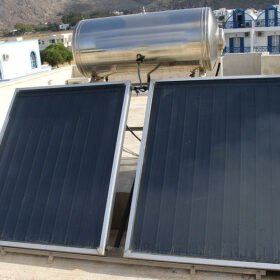
Heat pump design to reduce footprint of solar thermal installations
A US-Mexican research team has investigated how linking heat pumps with solar thermal collectors may help reduce the surface needed to deploy the collectors themselves. The scientists found the proposed solution may not only significantly reduce the footprint of solar thermal systems but also provide a lower levelized cost of energy compared to fossil fuels.
