Chinese PV Industry Brief: Increasing polysilicon prices and new supply deals
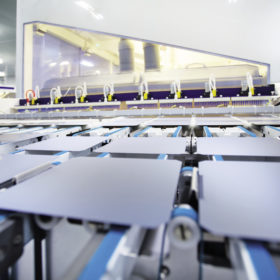
PV Infolink reported a considerable increase in prices for polysilicon and wafer prices for last week. Both products saw their average price increase by over 9% compared to the previous week.
India eyes 10 GW of ingot-to-module manufacturing capacity within two years
Under a production-linked incentive scheme, the government will reward manufacturers for building vertically integrated PV production lines. The scheme aims to attract 10 GW of production capacity by April 2023.
Nexwafe raises €10 million for commercialization of wafer tech
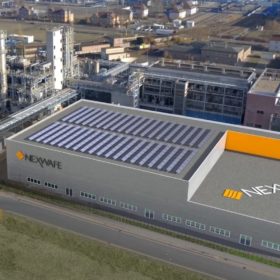
Wafer manufacturer Nexwafe is currently trying to commercialize its highly efficient monocrystalline wafer technology.

Chinese PV Industry Brief: Huge orders for Trina Solar and JYT Corporation
Trina Solar has secured a 4 GW solar module order from US company Nextera Energy and wafer manufacturer JYT Corporation closed deals to supply a total of 1,906,000,000 wafers.
Chinese PV Industry Brief: more manufacturing capacity from Trina, GCL Integration and Eging PV
Plans to set up new cell and module capacities have been announced by the three manufacturers. Trina intends to add 10 GW of cell capacity to its manufacturing site in the Sichuan province, while GCL Integration wants to build an 8.5 GW monocrystalline solar cell factory in the Jiangsu province.
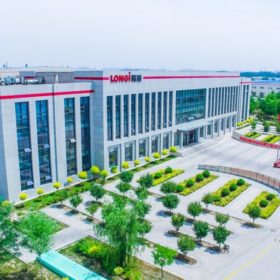
Chinese PV Industry Brief: Intense M&A activity and two more factories
Longi and Tongwei have both seen changes in ownership in recent days. Meanwhile, Maxwell Technology has unveiled a plan to build a heterojunction cell factory Jiangsu Province and the Henan Group has entered PV glass and module production.
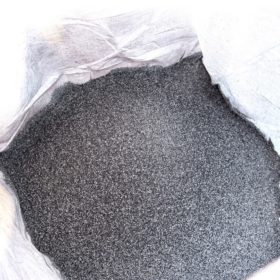
New method to recover silicon from end-of-life modules
Compared to other techniques based on chemical reactors and organic solvents, the proposed method is said to be able to maintain a “good mechanical yield” in the recovered solar cells. According to its creators, this technique allows the reuse of silicon from the recycled panels in the production of new solar cells.
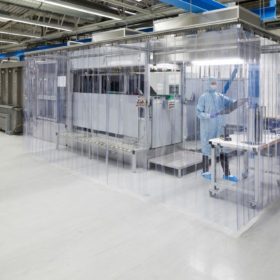
The weekend read: Something truly new
You can try to succeed by making a better version of your competitors’ product, or you can try to do something completely new. NexWafe has chosen the second path. It is developing plans to manufacture wafers for high-efficiency solar cells in Bitterfeld, Germany, that are produced more sustainably and at lower cost than any other products available today.

Plasma passivation process to cut silicon cell costs
Scientists in Saudi Arabia have developed a new passivation process for n-type silicon solar cells, which they say could offer a simpler, lower-cost alternative to current processes used in manufacturing. The group fabricated wafers using this process with promising results, and now plans to integrate the process into a full silicon cell.
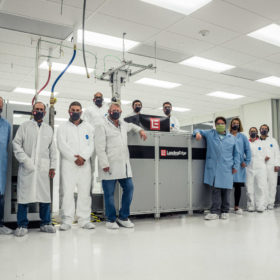
US startup wins $7.6 million in funding for ribbon silicon furnaces
Leading Edge Equipment Technologies falls in the kerfless solar wafer or direct solar wafer category. Its “drop-in” manufacturing tech cuts wafer costs by 50%, drives up commercial PV power by 7%, and reduces manufacturing emissions by 50%. It’s the emissions piece that may be winning over investors.
