
Eging to hit 10 GW module capacity this year
With the panel maker already installing 3 GW of cell and module capacity to double its output during the next quarter, Eging has now announced fresh, $370 million expansion plans.

We need an energy access revolution: A new approach to innovation can help
840 million people still don’t have access to electricity today, according to the World Bank. But the radical decrease in the cost of the green technologies of solar and battery storage provides an unparalleled opportunity to close this gap and achieve universal electricity access by 2030.
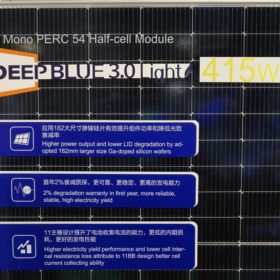
JA Solar unveils 415 W solar module with 21.3% efficiency
The module can be used for residential and commercial PV projects. It is available in five versions with power outputs claimed by the company of 390-415 W and reported efficiencies of 20.0-21.3%.

YouTube – a proven marketing platform to expand solar businesses
YouTube videos are becoming a vital part of consumers’ solar-buying journey, providing a unique opportunity for solar marketers. Marketing pro Rich Feola offers insights on how to use videos to boost your solar company.
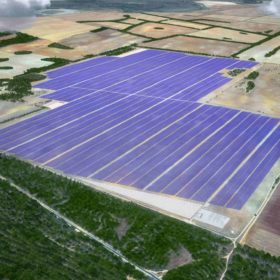
Australian state approves 350 MW/200 MWh solar+storage project
As New South Wales rapidly expands its renewable energy pipeline, the Australian state’s Independent Planning Commission process is helping to align its energy needs with community and environmental concerns.

Indian state wraps up 500 MW solar auction
The Indian state of Gujarat’s latest 500 MW solar auction has secured a winning bid of INR 2.20 ($0.03)/kWh, which JMK Research has partly attributed to the project sites and growing expectations that mono PERC module prices will fall 10-15% by 2022.

The weekend read: New pathways in flexible thin film PV
Having picked up GBP 5.8 million ($8 million) in a series of investments, U.K.-based Power Roll is pushing ahead with pilot production of an innovative new thin film with which it can manufacture both solar modules and capacitors. In the future, the design could also bring the potential for solar generation and energy storage within a single lightweight device.
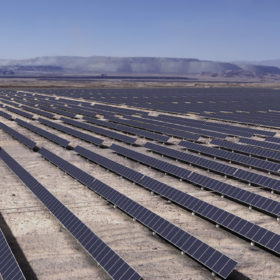
Weekly Round-Up: Gigafactory in Spain, financial close in Armenia, PPA in Sweden
Solar and storage are developing at a relentless pace and pv magazine cannot cover all the interesting developments that are announced day by day. In this weekly Round-Up, we provide a quick review of all facts and deals that should not be off of our readers’ radar.
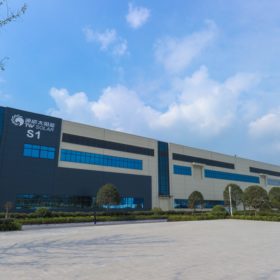
Chinese PV Industry Brief: Polysilicon prices keep rising
This week, the price of polysilicon reached RMB 124 ($18.9)/kg. All major categories of polysilicon products have seen their price increase by around 45% so far this year. Meanwhile, Tongwei has lowered the prices of its solar cells for April.
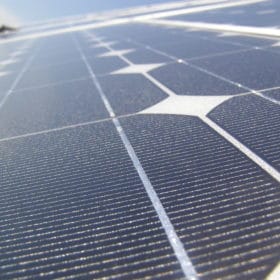
US government wants to cut solar costs by 60% in 10 years
The US Energy Department set a goal of achieving 2 cents/kWh by 2030, and announced an initial $128 million in funding to support technology development.
