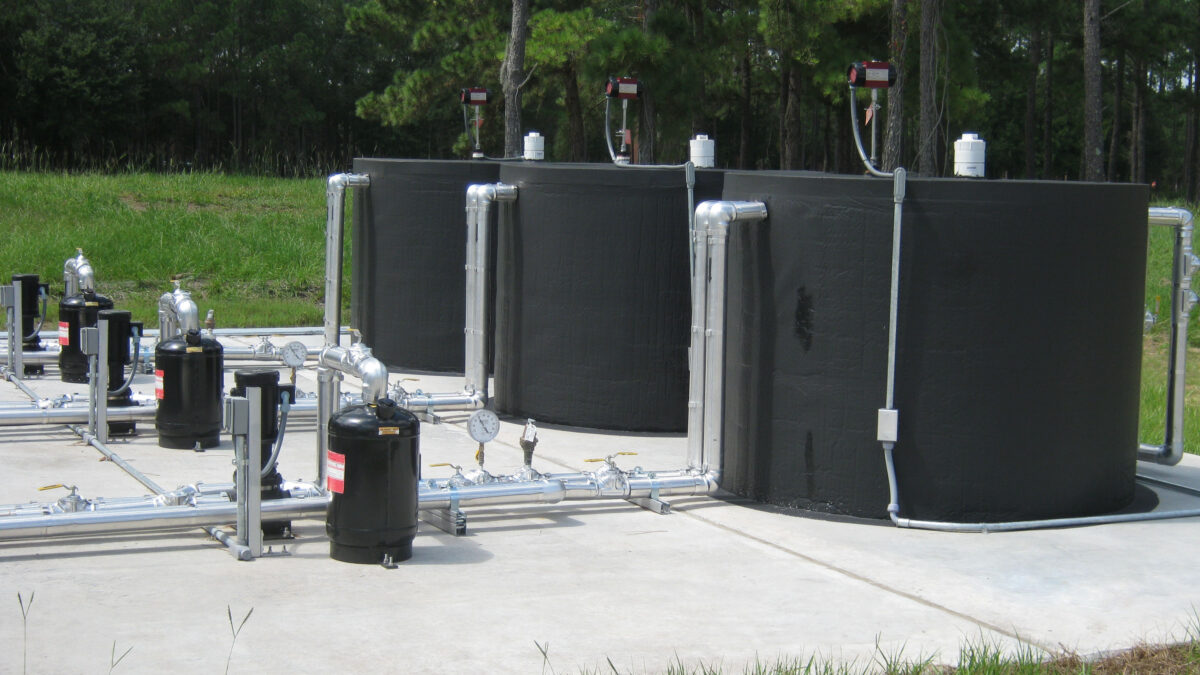





An international research group led by China’s Zhejiang University has developed a proof-of-concept compression-assisted adsorption thermal battery (CATB) prototype, using solar thermal collectors.
The prototype was also scaled up via software simulation and analyzed across different global locations.
“Water-based adsorption thermal batteries (ATBs) have been playing a leading role in low-temperature heat source recovery,” explained the researchers. “To further improve the heat release performance of ATBs under severe working conditions, we proposed a compression-assisted ATB (CATB) concept in 2011, which aims to enhance one or multiple performance indicators since low-grade heat energy and electrical energy are stored as a form of chemical potential.”
The group noted that the proposed CATB design benefits from the use of a compressor, which is aimed to reduce heat input demand and boost heat release performance by using ammonia working pairs.
For their prototype, the group used composite sorbents, combining two or more substances to enhance the adsorption of the adsorption reactor. In the case of this prototype, they were made out of strontium chloride (SrCl₂), expanded natural graphite (ENG) and nanocarbon-coated copper (Cu@C).
“In summer, the halide salt in the reactor is desorbed by abundant solar heat. After being cooled by ambient, ammonia is compressed and sent to the condenser/evaporator by the compressor. The ammonia is then cooled and condensed in the condenser/evaporator by the ambient source. After closing the valves, the charging process is completed,” the team explained. “In cold winter, when heat demand is urgent, the liquid ammonia is evaporated by ambient once the valves open. Then, the compression of ammonia gas follows, and adsorption occurs in the reactor, and heat is released to users by heat transfer fluid.”
The prototype comprises a reactor, a condenser/evaporator, a compressor, and additional accessories, including a thermostatic bath, and variable frequency power supply, among other parts. During the experimental tests, the condensing temperature during charging is set at 10 C, whereas the evaporating temperature during discharging is -10 C.
The scientists found that, with the compression ratio rising from 1 to 4, the thermal battery's maximum heat power increased from 309.2 to 667.2 W and the average heat charging power rose from 164.1 to 316.7 W. As for the discharging process, a 300.1% increase in average output heat power was found to be achieved when the compression ratio grew from 1 to 4.
Their analysis noted optimal conditions for seasonal heat storage are found in regions with high winter heat demand and abundant summer solar radiation. “The most suitable regions for seasonal heat storage are primarily located around the latitudes of 45° north and south, including northwest China, the Black Sea coast, northeast North America, and southern South America,” they added.
The novel thermal battery concept was presented in “A solar adsorption thermal battery for seasonal energy storage,“ published in Cell Reports Physical Science. The research team included academics from China’s Zhejiang University, Hangzhou Oxygen Plant Group, the University of South Africa, and the Netherlands Organisation for Applied Scientific Research (TNO).
This content is protected by copyright and may not be reused. If you want to cooperate with us and would like to reuse some of our content, please contact: editors@pv-magazine.com.


By submitting this form you agree to pv magazine using your data for the purposes of publishing your comment.
Your personal data will only be disclosed or otherwise transmitted to third parties for the purposes of spam filtering or if this is necessary for technical maintenance of the website. Any other transfer to third parties will not take place unless this is justified on the basis of applicable data protection regulations or if pv magazine is legally obliged to do so.
You may revoke this consent at any time with effect for the future, in which case your personal data will be deleted immediately. Otherwise, your data will be deleted if pv magazine has processed your request or the purpose of data storage is fulfilled.
Further information on data privacy can be found in our Data Protection Policy.