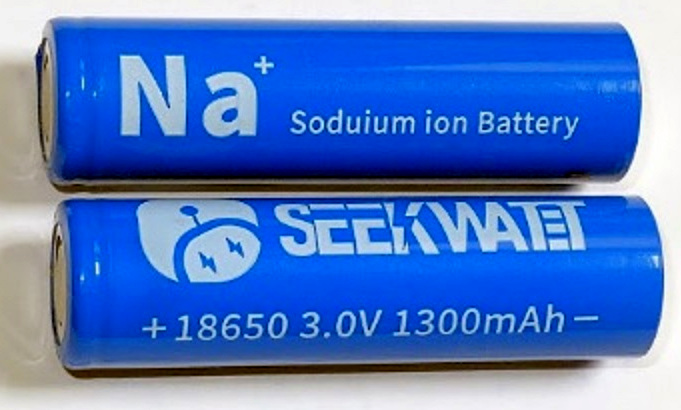





A research team of scientists from China's Chongqing University and the State Grid Corporation of China has experimentally investigated the aging mechanism of sodium-ion batteries (SIBs). Using the results from this investigation, the group was able to develop a temperature-resistant state of health (SOH) estimation method with an average mean absolute error (MAE) of 0.96.
“These SIBs, similar to lithium-ion batteries (LIBs), experience a gradual decrease in usable capacity over long-term cycling because of irreversible phenomena, such as side reactions, degradation of active materials, and increased internal resistance,” said the researchers. “However, current research on the aging mechanisms of SIBs is limited, and aging data during long-term cycling are scarce, making the similarities and differences in the degradation mechanisms of SIBs and LIBs unclear.”
The aging mechanism of the SIBs was investigated using electrochemical impedance spectroscopy (EIS). This non-invasive technique analyzes a battery's response to small AC signals at various frequencies, thereby measuring its health. However, until now, the method has been highly dependent on ambient temperature. To solve this problem, the academics conducted EIS under different states of charge (SOC) and temperature conditions, extracting the most valuable features that remained relatively constant with temperature.
Their experiment was conducted on commercial 26700 SIBs utilizing the layered O3-type Na(Cu1/9Ni2/9Fe1/3Mn1/3)O2 cathode and a hard carbon anode, employing NaPF6 as the electrolyte salt dissolved in ester solvents. According to the manufacturer's datasheet, the charge cutoff voltage was 3.95 V, the discharge cutoff voltage was 1.5 V, the nominal capacity was 3.3 Ah, and the maximum continuous charging rate was 1C. The EIS value was obtained every 20 cycles at state of charge levels of 10%, 50%, and 100% under temperatures of 10 C, 25 C, and 30 C.
“Compared with LIBs, the large radius of sodium ions leads to pronounced volume changes and stress accumulation in multilayer oxide particles during phase transitions, which cause cathode material degradation and pulverization over prolonged cycling, leading to rapid battery life degradation,” the researchers emphasized. “Additionally, the manufacturers' strategies of extending the low-potential plateau to achieve high energy density lead to a low operating potential of hard carbon anodes and a high risk of sodium deposition. The formation of sharp sodium dendrites could pierce the separator and trigger thermal runaway in SIBs.”
Based on their analysis, the scientists identified four temperature-resistant indicators: one reflecting changes in ohmic resistance, another reflecting sodium ion diffusion impedance, and the last two reflecting solid electrolyte interphase (SEI) impedance. Based on the EIS feature extraction, the group employed a machine learning method, specifically a Gaussian-kernel support vector regression (SVR) model, to estimate battery health. Ten batteries were used for training, and two for testing.
“The Gaussian-kernel SVR model exhibited robust adaptability across a wide temperature range. For the test set samples collected at 10 C, 25 C, and 30 C, the average root-mean-square deviation (RMSE) was 1.14%, and the average MAE was 0.96. All RMSE and MAE values were below 1.5% at each temperature,” they concluded. “These results indicate that the model maintained stable performance despite the temperature variations.”
Their findings and the model were introduced in “Degradation mechanism of sodium-ion batteries and state of health estimation via electrochemical impedance spectroscopy under temperature disturbances,” published in Energy.
This content is protected by copyright and may not be reused. If you want to cooperate with us and would like to reuse some of our content, please contact: editors@pv-magazine.com.

By submitting this form you agree to pv magazine using your data for the purposes of publishing your comment.
Your personal data will only be disclosed or otherwise transmitted to third parties for the purposes of spam filtering or if this is necessary for technical maintenance of the website. Any other transfer to third parties will not take place unless this is justified on the basis of applicable data protection regulations or if pv magazine is legally obliged to do so.
You may revoke this consent at any time with effect for the future, in which case your personal data will be deleted immediately. Otherwise, your data will be deleted if pv magazine has processed your request or the purpose of data storage is fulfilled.
Further information on data privacy can be found in our Data Protection Policy.