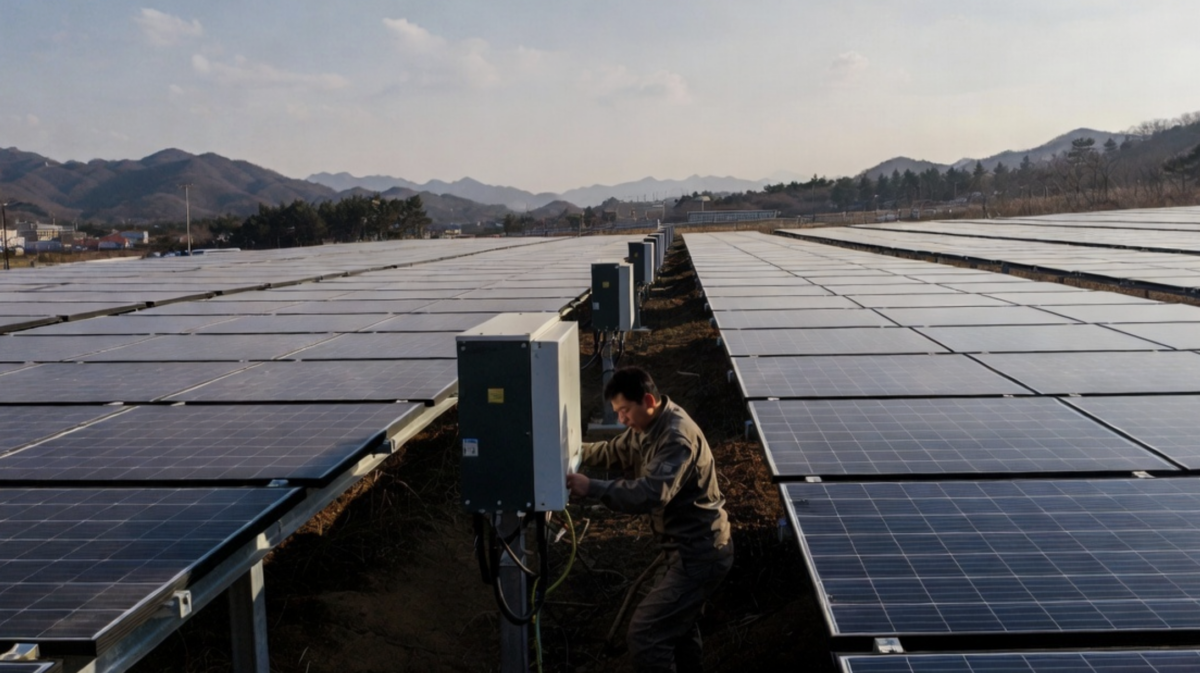





Seven South Korean inverter manufacturers have formed a new industry group to coordinate domestic production and address rising cybersecurity risks tied to foreign-made equipment that now dominates the market.
The group – OCI Power, Dass Tech, Ecos, Dongyang E&P, DIK, Geumbi Electronics, and Inno Electric – held its inaugural meeting on Nov. 18 at the Cheongju Osong Convention Center in Cheongju, North Chungcheong province.
The council said it plans to build a unified response framework for domestic inverters, propose policy measures, and strengthen the sector’s position in a market where imports, mainly from China, account for more than 80% of annual sales.
OCI Power said in a recent press statement that the companies aim to stabilize grid operations and protect local expertise at a time when unapproved communication modules found in Chinese inverters and batteries have raised concerns about unauthorized access, remote manipulation, and firewall bypass.
South Korea’s inverter sector is under pressure as foreign hardware and original design manufacturer (ODM) arrangements displace local technology. The market is valued at up to KRW 1 trillion ($680.6 million) per year, with most segments dependent on imports, aside from a few niches.
Officials also point to energy security risks as inverters increasingly function as networked devices that monitor generation and grid conditions in real time. The warnings echo growing scrutiny in Europe, where regulators and industry groups have highlighted vulnerabilities in connected inverters and data systems.
Government renewable energy targets could expand domestic opportunities. South Korea’s 2050 Carbon Neutral Green Growth Committee plans to deploy 100 GW of renewables by 2030, including 80 GW of solar. With current solar capacity at 27 GW, annual installations of more than 10 GW will be needed for the next five years, underscoring the need for domestic manufacturing and a resilient supply chain.
Until now, South Korean manufacturers have lacked a unified voice, and heavy reliance on ODM imports made it difficult to address shared concerns. The new council said it will support stronger local production and reinforce the country’s inverter supply chain as cybersecurity concerns escalate worldwide.
Recent developments across Europe show growing regulatory and industry concern over cybersecurity risks linked to connected solar inverters.
SolarPower Europe said in a spring 2025 report that connected inverters and cloud-based data systems expose EU solar plants to cyber threats, including ransomware, remote shutdown, and data misuse. The study said fragmented governance, weak installer practices, and limited sector-specific rules leave large parts of the solar fleet vulnerable despite new EU cybersecurity legislation.
Czechia’s cybersecurity agency warned in September that Chinese solar inverters, which account for up to 99% of hardware in the country’s small PV plants, pose risks including data exposure, firmware manipulation, and potential grid disruption. The agency called for measures to curb dependence on Chinese technology, while the national solar association said that Europe must expand its own manufacturing base to address this level of structural reliance.
This content is protected by copyright and may not be reused. If you want to cooperate with us and would like to reuse some of our content, please contact: editors@pv-magazine.com.

By submitting this form you agree to pv magazine using your data for the purposes of publishing your comment.
Your personal data will only be disclosed or otherwise transmitted to third parties for the purposes of spam filtering or if this is necessary for technical maintenance of the website. Any other transfer to third parties will not take place unless this is justified on the basis of applicable data protection regulations or if pv magazine is legally obliged to do so.
You may revoke this consent at any time with effect for the future, in which case your personal data will be deleted immediately. Otherwise, your data will be deleted if pv magazine has processed your request or the purpose of data storage is fulfilled.
Further information on data privacy can be found in our Data Protection Policy.