





The European Commission has adopted a legislative proposal planning to introduce EU-made content requirements for products benefiting from public funds, including solar photovoltaics and battery energy storage systems (BESS).
Known as the Industrial Accelerator Act, the draft regulation proposes that solar projects awarded through public procurements, auctions for net-zero technologies and public support schemes must feature solar inverters and solar cells, or their equivalent components, that are manufactured in the EU from within three years after the act enters into force.
Dries Acke, Deputy CEO of SolarPower Europe, called the act a “watershed moment for industrial policy in Europe.”
“By focusing on Made-in-EU solar inverters and cells, the European Commission has largely found a balance between reshoring production of the most strategic solar PV system components, while avoiding overly restrictive requirements too early,” he said. “This means support for European manufacturers, without negatively impacting affordable solar deployment. There is an important caveat here, however, that Made-in-EU must indeed mean made in Europe – the EU and EEA.”
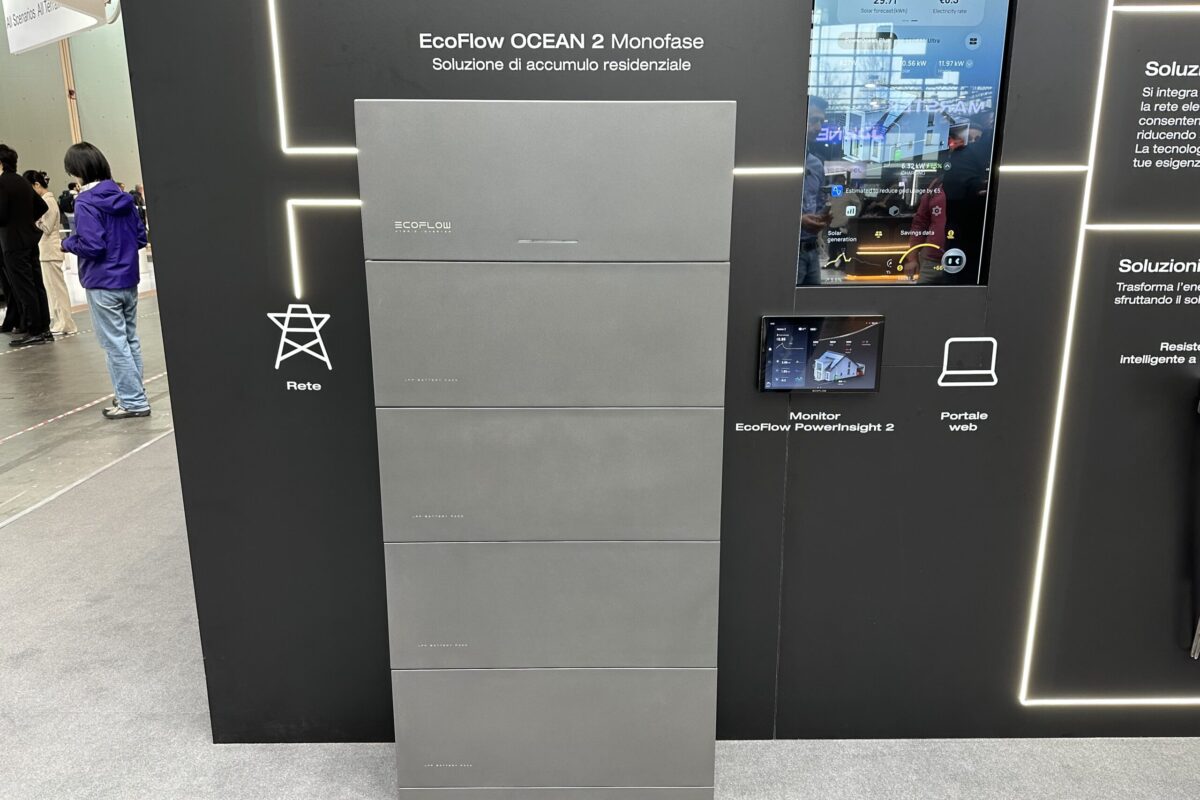
The act also stipulates that BESS must originate in the EU, and systems larger than 1 MWh must include an EU-made battery management system, from one year after the act enters into force. From three years after entry, BESS will be required to additionally include EU-manufactured battery cells and at least one additional main specific component.
Acke added that the BESS requirements are stricter than those for solar, kick in too early and risk counter productivity while Europe works to ramp up its storage capacities.
“Battery storage is the absolute short cut to maximising Europe’s use of domestically produced renewable electricity and reducing Europe’s exposure to punishing fossil gas import prices,” Acke said. “Accelerating battery storage fundamentally underpins the top EU security and competitiveness priorities.”
Aurélien Ballagny, Senior Policy Officer at Energy Storage Europe, agreed that the introduction of EU-origin requirements across the battery supply chain must be gradual in order to provide clear signals to investors and sufficient time to build the necessary industrial capacity. “Identified dependencies should be addressed through a realistic pathway for diversification, ensuring that the deployment of energy storage, and therefore renewables, is not slowed down or made more expensive,” Ballagny said.
The European Solar Manufacturing Council (ESMC) has released a statement saying it is “deeply disappointed by the watered-down local content requirement for solar energy”. It says that by limiting the criterion to solar inverters and cells, it will not be possible to bring the entire solar supply chain to Europe and voices concern that the three-year delay for provision will mean it likely only becomes law in 2030.
“We need Made in Europe to ensure the continent's long-term energy security. The current explosion in energy prices, caused by the war in Iran, demonstrates the importance of being independent of other regions,” commented ESMC Secretary General Christoph Podewils. “If the European solar industry has to wait another three years after the legislation is adopted, many companies will have disappeared in the meantime due to ongoing unfair competition from China.”
A statement published by the European Commission says the Industrial Accelerator Act will be negotiated by the European Parliament and EU Council before its adoption and entry into force. An indicative timeline has not been published.
Other features of the act include conditions on investments in strategic sectors exceeding €100 million ($116.2 million) where a single third country holds more than 40% of global manufacturing capacity. The condition, set to impact investors from China’s photovoltaic market, stipulates these investments must be compliant with local content requirements, while the investor cannot hold a majority stake in an EU company, must employ mostly European workers and must license its intellectual property to benefit the EU investment.
Other proposals under the act included the streamlining and digitalization of permitting procedures for industrial projects via the development of a one-stop-shop, and the introduction of so-called Industrial Acceleration Areas to create clean manufacturing project clusters.
Figures from the European Commission state the Industrial Accelerator Act will help to create tens of thousands of European jobs, including 85,000 in battery projects and 58,000 in solar manufacturing. Digitalized permitting is expected to lead to administrative savings of up to €240 million across all manufacturing industries in the EU.
This content is protected by copyright and may not be reused. If you want to cooperate with us and would like to reuse some of our content, please contact: editors@pv-magazine.com.


By submitting this form you agree to pv magazine using your data for the purposes of publishing your comment.
Your personal data will only be disclosed or otherwise transmitted to third parties for the purposes of spam filtering or if this is necessary for technical maintenance of the website. Any other transfer to third parties will not take place unless this is justified on the basis of applicable data protection regulations or if pv magazine is legally obliged to do so.
You may revoke this consent at any time with effect for the future, in which case your personal data will be deleted immediately. Otherwise, your data will be deleted if pv magazine has processed your request or the purpose of data storage is fulfilled.
Further information on data privacy can be found in our Data Protection Policy.