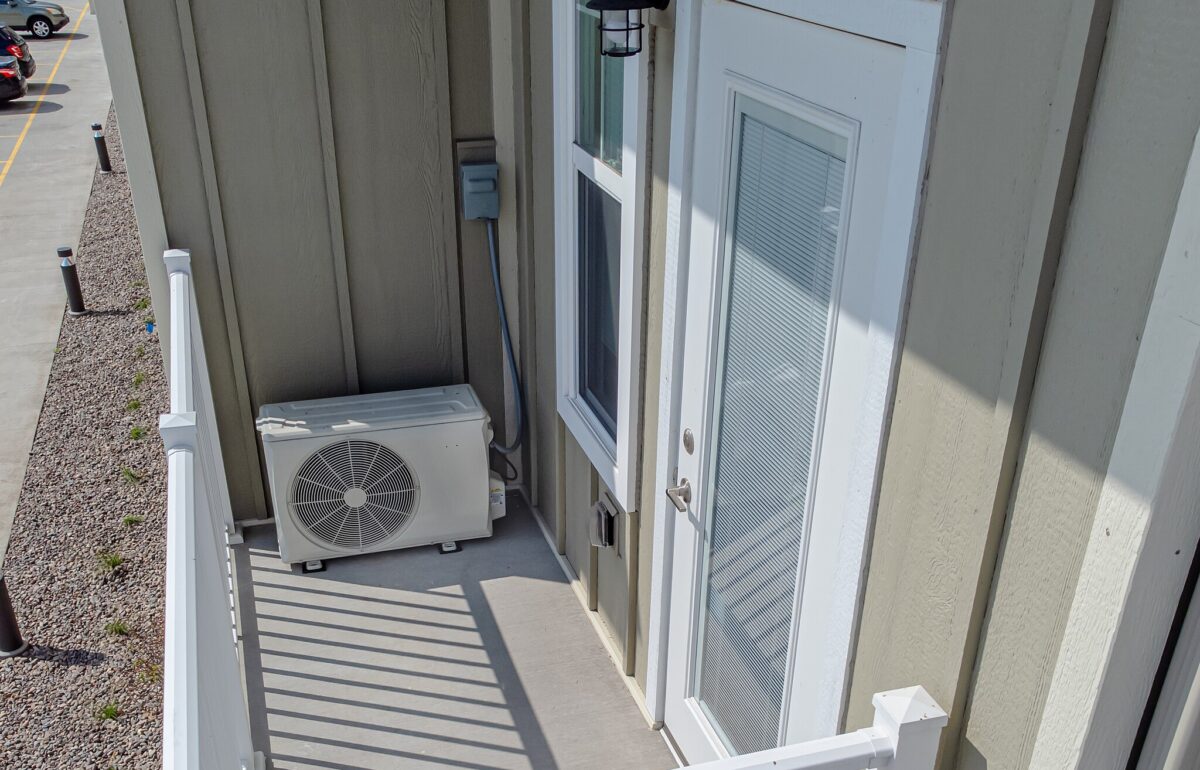





South Korea’s Ministry of Climate, Energy and Environment (MCEE) has revealed plans to roll out a nationwide package of incentives, regulatory changes and industry support to expand the use of heat pumps. It has set a target of installing 3.5 million units by 2035 and cutting greenhouse gas emissions by 5.18 million metric tons, according to an online statement.
The measures, due to be announced at an interministerial meeting on industrial competitiveness, position heat pumps as a central tool for decarbonizing heat, which accounts for roughly half of total energy use in South Korea. This has become a development priority because the nation remains heavily dependent on fossil fuels, according to the ministry.
The new MCEE plan prioritizes deployment in areas without municipal gas networks, including detached homes with rooftop solar, social welfare facilities, agricultural buildings and high-heat-demand sites such as bathhouses and swimming pools. Public buildings, including schools and government offices, will be encouraged to adopt integrated systems combining heat pumps, solar generation and energy storage systems.
The ministry said financial support will expand in phases from 2027, with options such as long-term, low-interest loans and installment-based payment models now under review. It added that it will encourage uptake by revising energy laws to recognize ambient air heat as a renewable energy source, align heat pumps with zero-energy building certification, and allow air-source heat pumps to access alternative electricity tariff categories.
Building standards and housing regulations will also be adjusted to support installation in multi-family housing, while existing fossil fuel-focused subsidy programs will be gradually redirected toward electrified heating, according to the MCEE statement. It noted that the package also includes steps to strengthen the domestic heat pump industry, including support for large-capacity and high-temperature systems for residential and industrial use, the creation of an industry association to gather data and train specialists, and public outreach to raise awareness.
Climate Minister Kim Sung-hwan said the measures are designed to accelerate decarbonization in buildings while supporting industrial competitiveness. He added that a broader heat energy roadmap will follow.
Amid this expanded policy push, heat pump tech and product development continue to accelerate in South Korea. Over the past year, a number of domestic manufacturers have ramped up investment in residential and small-scale heat pump systems, aligning product development more closely with export markets and tightening domestic decarbonization policy.
In January, for example, Samsung Electronics launched a new range of air-to-water heat pumps, targeting residential heating and hot water applications. It said the models have been designed for cold climates and European energy efficiency standards.
In April, Seoul-based Navien unveiled a 4 kW to 17 kW air-source heat pump for residential use, expanding its product lineup beyond gas boilers as it positions itself to focus on growth in electrified heating markets.
And in September, LG Electronics partnered with Octopus Energy Group to offer an integrated heat pump solution in Europe, combining hardware, installation and energy services as part of a bundled decarbonized heating package.
This content is protected by copyright and may not be reused. If you want to cooperate with us and would like to reuse some of our content, please contact: editors@pv-magazine.com.

By submitting this form you agree to pv magazine using your data for the purposes of publishing your comment.
Your personal data will only be disclosed or otherwise transmitted to third parties for the purposes of spam filtering or if this is necessary for technical maintenance of the website. Any other transfer to third parties will not take place unless this is justified on the basis of applicable data protection regulations or if pv magazine is legally obliged to do so.
You may revoke this consent at any time with effect for the future, in which case your personal data will be deleted immediately. Otherwise, your data will be deleted if pv magazine has processed your request or the purpose of data storage is fulfilled.
Further information on data privacy can be found in our Data Protection Policy.