Marija Maisch


Making BESS warranties work: Contracts vs. reality
Striking a careful balance between technical limitations, market ambitions, and contractual realism in operating battery energy storage systems (BESS) is no easy task. Rigid battery warranties can often be a make-or-break factor in BESS asset management. As a result, many industry players now argue that adopting a more flexible approach to warranties could unlock greater value from these inherently flexible assets.

Philippines switches on agrovoltaic complex with 320 MWh battery storage
The Citicore Solar Batangas 1 Power Plants stand as the Philippines’ first integrated agrovoltaic and battery storage facility.
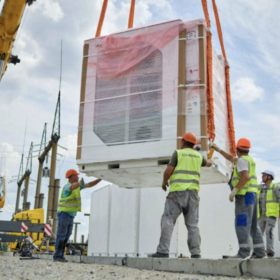
Ukraine’s biggest battery storage project goes online
Ukraine’s DTEK has completed a 200 MW/400 MWh battery project, the nation’s largest, in just six months using remote commissioning with Fluence.
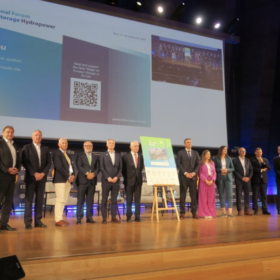
New alliance aims to unlock 35 GW of pumped hydro storage across Europe
More than 50 utilities, hydropower suppliers and energy focused associations have already backed the initiative committing to supprt the rollout of pumped hydro storage in Europe.
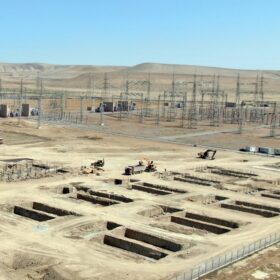
Azerbaijan builds largest BESS, Uzbekistan launches storage hub
Azerbaijan has started construction of 250 MW/500 MWh battery systems, the largest in the country, while Uzbekistan is securing financing for its first utility-scale wind farm paired with battery storage, marking a regional milestone in renewable integration.
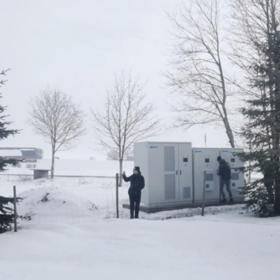
Cold climates are no obstacle for battery storage
China-based battery storage specialist Poweroad is rapidly expanding its global footprint, deploying advanced battery energy storage systems (BESS) even in some of the world’s most extreme climates, where temperatures can plunge to -40°C.

Canadian Solar’s e-STORAGE launches 8.36 MWh modular battery
Canadian Solar’s e-STORAGE unit has unveiled its FlexBank 1.0 modular utility-scale battery, offering 8.36 MWh per unit, with deployment expected in 2026.

Montenegro utility launches 240 MWh battery storage tender
EPCG, Montenegro’s state utility, aims to procure two grid-scale battery storage systems (BESS) totaling 240 MWh in a €48 million ($55.9 million) tender.
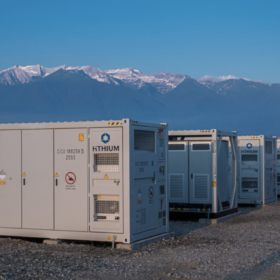
Bulgaria launches consultation on 1.9 GWh energy storage subsidy
The Bulgarian Ministry of Energy has opened a public consultation for a new round targeting 1.9 GWh of standalone storage capacity, building on the success of its initial RESTORE procurement, which backed nearly 10 GWh of energy storage development.
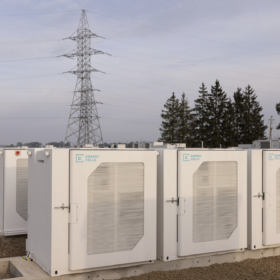
Lithuania approves 1.7 GW/4 GWh of energy storage
Lithuania has concluded its latest energy storage procurement round with plans to deploy 1.7 GW/4 GWh, five times its initial 800 MWh target, to strengthen grid flexibility and reliability.
