
Sigenergy launches Hong Kong IPO
China’s Sigenergy has announced a Hong Kong initial public offering (IPO), with shares open to retail investors until April 13 and backing from major international asset managers.

Brazil approves first co-located solar and battery project
Brazil’s National Electric Energy Agency (Aneel) has authorized a 5 MWh battery system co-located with a solar plant, setting a regulatory precedent for integrated storage.
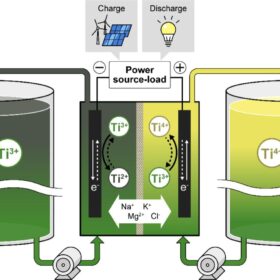
Titanium emerges as a vanadium alternative for redox flow batteries
A Japanese–Chinese team developed a titanium molten salt redox-flow battery using abundant titanium ions and molten salt electrolytes to enable high-voltage, fast, and stable grid-scale energy storage. The system demonstrates high efficiency of over 97%, strong cycling stability, and improved cost and scalability compared to vanadium-based batteries, with further optimization underway.

AI-enabled hacks expose remote shutdown risk in microinverters
IT security firm Jakkaru has identified a vulnerability in microinverters from AP Systems that could enable a “kill switch” scenario, potentially shutting down tens of thousands of inverters simultaneously and disrupting grid operations.

Cornex unveils new 165 Ah sodium-ion prismatic cell for stationary energy storage
A new sodium-ion cell for ESS may further improve competitiveness in large-scale systems against the weight of the lithium-ion battery sector.
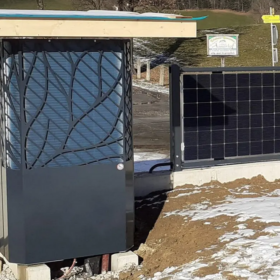
Austrian manufacturer offers modular air-to-water propane heat pumps
Lambda Wärmepumpen GmbH said its Eureka heat pump series uses a patented fluid mechanics system that reportedly improves heat transfer by four to six times while maintaining a temperature difference of just 3 K between the air and the refrigerant. Its seasonal coefficient of performance ranges from 4.50 to 6.10.
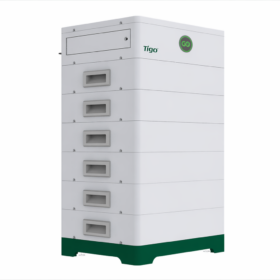
Tigo releases modular battery for residential PV
The US manufacturer has launched a modular residential battery for Europe, scalable from 7.3 kWh to 47.9 kWh with LFP chemistry and IP65 protection. The system offers up to 23.3 kW nominal power, over 6,000 cycles, and a depth of discharge of 90%.
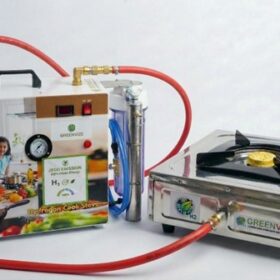
Indian startup launches plug-and-play hydrogen cooking unit
Indian clean-tech startup Greenvize has launched a compact hydrogen-based cooking system designed for residential and commercial kitchens. The system integrates a proton exchange membrane (PEM) electrolyser directly into a cooking unit, enabling on-site hydrogen generation from water without the need for storage or distribution infrastructure.

Conductive smart hydrogels as battery electrolytes: Promising for lithium, sodium, and zinc-ion chemistries
Hydrogels offer promise in batteries as an electrolyte, including lithium and sodium chemistries, due to being inherently more safe.
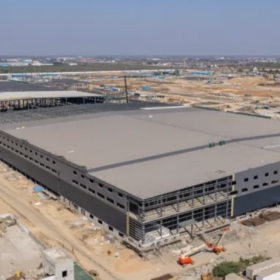
Agratas advances 20 GWh battery plant in western India
Agratas, the global battery business of the Tata Group, has completed the steel frame of its Sanand facility in India, with production expected to begin in 2027.
