
Residential storage solution with LG Chem battery, SolarEdge inverter
The South Korean battery manufacturer has integrated SolarEdge’s Energy Hub system into its RESU 10H battery, which has a capacity of 5 kW and offers 9.8 kWh of storage.
Portugal’s hydrogen call attracts €16bn of proposed investments
The proposed projects come from Portuguese and European companies covering the entire value chain. The call, which has a budget of up to €40 billion, is part of the country’s hydrogen strategy.
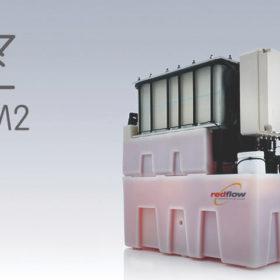
Redflow batteries to add VPP capabilities
Australia-based battery supplier Redflow has joined forces with smart-energy systems specialist carbonTRACK to add virtual power plant functionality to its flow batteries.
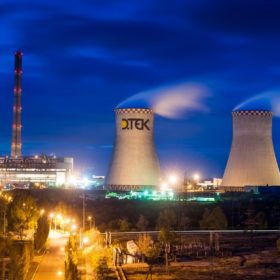
Ukraine’s first utility scale battery – supplied by Honeywell to a fossil fuel plant
North Carolina-based Honeywell will supply a 1 MW/1.5 MWh lithium-ion battery storage system at the Zaporizhzhya Power Plant belonging to utility Dtek.
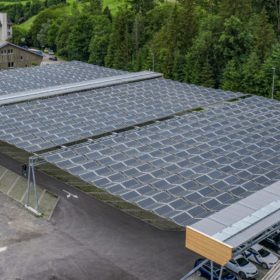
A car park PV folding roof to recharge electric vehicles
The first Horizon folding rooftop has been installed above a parking lot in Switzerland, where it will generate power for on-site consumption, including EV charging.

Planned law could unlock 4 GW of UK storage projects
The government’s Department for Business, Energy & Industrial Strategy has drafted secondary legislation aimed at easing the construction of large scale energy storage projects for renewables. Around 100 such batteries could be deployed thanks to the proposed rules, according to the department.
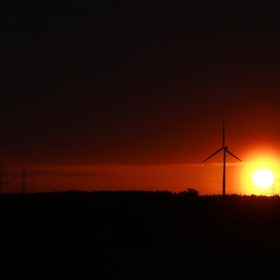
New all-iron redox flow battery for renewables storage
Scientists in the U.S. claim to have demonstrated an inexpensive, long-life, safe and eco-friendly redox flow battery. The device is said offer coulombic efficiency of 97.9% thanks to functional electrolyte additives, pH and elevated temperature.
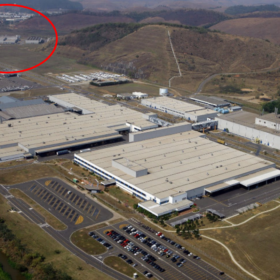
Plans take shape for lithium-sulfur-battery powered two-seater plane
British Li-S cell manufacturer Oxis Energy today revealed it is working with U.S. planemaker Texas Aircraft Manufacturing on a pilot training and private transport aircraft. The trainer appears likely to be at least three years away from development, given the commissioning timeline previously announced for Oxis’ Brazilian cell factory.
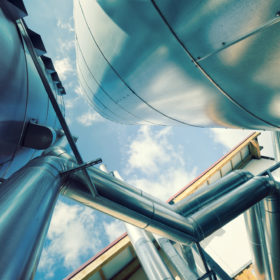
Seven major players shortlisted for Australia’s hydrogen funding round
Commercialisation of hydrogen production is a priority of the Australian government. Seven applicants for ARENA funding of large-scale hydrogen proposals made it through to the next round, in which they will submit full applications for projects that will be expected to commence construction in 2022.
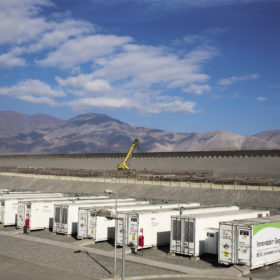
Solar-plus-storage has a 99.8% capacity value in California
“The energy from solar can consistently charge a 4-hour storage device having the same installed capacity” prior to the hours of peak demand, says a new study.
