
BBDF 2026 Opening Session: Optimism, caution, and grid fees
Investors at the Battery Business & Development Forum (BBDF) 2026 signaled continued confidence in the energy storage market, while warning that regulatory uncertainty, particularly around grid fees in Germany, could affect project economics and investment decisions.

Italy targets 16 GWh storage auction under MACSE scheme
Italy’s energy regulator ARERA has approved a proposal from the Ministry of the Environment and Energy Security to target 16 GWh of storage capacity in the 2029 MACSE auction, while urging caution on final volumes to reflect existing pipeline capacity.

US startup begins manufacturing grid-scale flywheel ESS
SOSV-backed Qnetic is aiming to raise $20 million in 2026. Over the next two years it will work with the National Lab of the Rockies and other partners on field testing and validating its technology across multiple use cases.
UK defining stronger energy cybersecurity rules after Poland attack
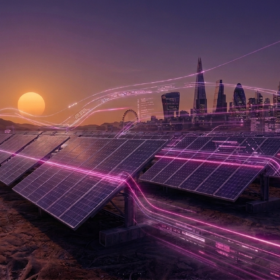
The UK government is proposing stronger cybersecurity rules for electricity and gas sectors, prompted by recent attacks on European energy infrastructure, including a recent incident involving solar power plants in Poland. The plans would extend baseline cybersecurity requirements to all licensed energy organizations and could also adjust compliance thresholds under NIS regulations.
Sodium-ion cells launched for energy storage by another Chinese mid-tier battery company
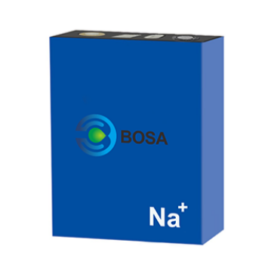
Bosa Energy in Hubei, China, has launched sodium-ions cells for stationary energy storage, with a volumetric energy density of 206 Wh/L

Lithuania’s solar capacity surpasses 3 GW
Lithuania added approximately 600 MW of solar last year, taking total capacity to 3,040 MW. Technical permits have been issued for an additional 4 GW of solar but with grid congestion becoming a primary constraint, future deployments will be increasingly dependent on integration with storage technologies.
The Hydrogen Stream: Capacity outlook grows, deals shift
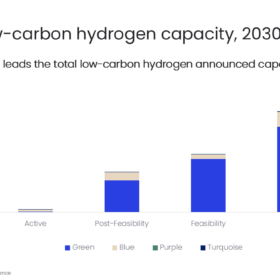
GlobalData says hydrogen capacity could reach 82.3 million metric tons per annum (mtpa) by 2030, while Topsoe has ended supply agreements with First Ammonia.

What are the selling points of marine energy?
Marine energy is renewable and generally predictable. It could thus compensate for the unplanned intermittency of solar and wind generation, its proponents argue. But several challenges still need to be overcome for the energy to become widely used.
Solar generation performance with regional weather conditions deviating from long-term averages
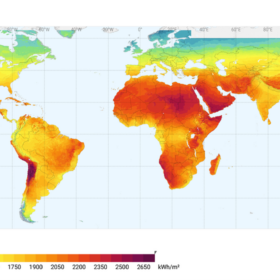
Global solar PV continues its rapid growth, reaching around 650 GW in 2025, with record solar irradiation extremes across regions such as East Asia, India, and Latin America. With current production capacity and emerging technologies like perovskite-silicon tandem modules, PV is poised to surpass all other electricity generation technologies combined by the end of the decade.
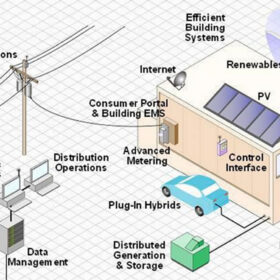
Industry 4.0 technologies raise cyber risks for smart renewables grids
An international research team developed a multi-stage intrusion detection system that uses supervised and unsupervised AI techniques to detect and mitigate cyber threats in smart renewable energy grids. The system can reportedly achieve high accuracy, low false positives, and real-time detection, outperforming traditional intrusion detection system models.
