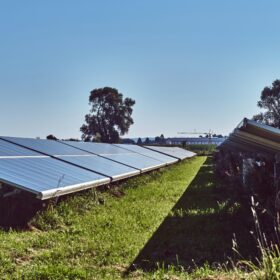
EU solar and storage push could cut power system costs by nearly half
A scenario analysis by SolarPower Europe, modeled by Rystad Energy, finds that accelerating PV and battery storage deployment could save the European Union €223 billion ($260.7 billion) in gas imports between 2026 and 2030 and reduce wholesale electricity prices by 14% compared with 2025 levels.

EU funding ban on high-risk inverters, including Chinese suppliers, extends to BESS
The new policy has already applied, and impacts billions in funding from the European Investment Bank on renewable projects including standalone and co-located storage.

Batteries: The game has changed – and it’s not what you think
A single benchmark no longer exists. In some cases, charging speed is what matters; in others, it is energy density, and in still others, cost and scalability. In other words, the battery is ceasing to be a simple component. It is becoming the transversal energy infrastructure of the next industrial cycle. And those who can control not only the technology but also production, integration, and the grid will have an advantage that will be difficult to recover.

US utility signs 4 GW solar, storage buildout deal
Salt River Project and NextEra Energy Resources have signed a power purchase agreement for 3,000 MW of solar and 1,000 MW of battery storage to be built in Arizona through 2027.
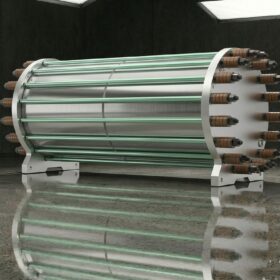
The Hydrogen Stream: AfDB backs projects, Europe logs 265 offers
The African Development Bank (AfDB) has launched a hydrogen funding call for African projects, while the European Commission has registered 265 supply opportunities under its Hydrogen Mechanism.
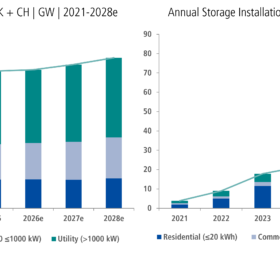
Europe’s solar and storage development: Selectivity amid rising global supply and returning energy shocks
Escalating Middle East tensions and global energy supply risks are accelerating Europe’s shift toward solar and storage, particularly in commercial, industrial, and utility-scale segments where energy security, resilience, and price stability are becoming central investment drivers. At the same time, expanding manufacturing capacity in China and India is redirecting surplus solar and storage supply toward Europe, creating a highly competitive and increasingly selective market where long-term success depends on quality, reliability, ESG alignment, and strategic market positioning.

ESS Tech to add 8.5 GWh of US-made sodium‑ion batteries to its portfolio
ESS Tech is complementing its iron flow storage offering, which is engeeneered for the 8–24 hour long-duration segment, with sodium-ion battery products aimed at short and medium-duration applications.

EU hydrogen mechanism connecting supply and demand activates hundreds of projects
The first operational round of the EU Hydrogen Facility matched 265 supply-side opportunities with 45 demand projects, with 87% of offers receiving at least one expression of interest and half attracting multiple buyers.

Gotion unveils 5 MW/18.8 MWh ensclosed battery storage system
While the exact specifications of the new product, such as dimensions and weight, haven’t been disclosed, available imagery suggests potential transportation challenges.

Chile reaches 4.6 GW of energy storage under construction
The March 2026 Energy Sector Construction and Investment Projects Report, released by the Chilean Ministry of Energy, records 38 storage systems under construction, for 4,597 MW and 18,780 MWh.
