Chinese PV Industry Brief: Huadian kicks off 2 GW tender
Also, a court in Beijing is now reviewing an application for bankruptcy filed by a unit of Hanergy. In other developments this week, a diverse range of solar industry players launched the 600W+ Photovoltaic Open Innovation Ecological Alliance.
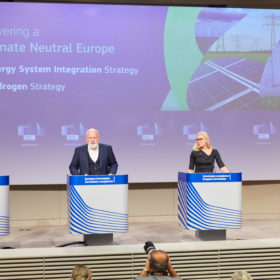
EU hydrogen strategy could drive 120 GW of renewables capacity
The European Commission has outlined a long-anticipated plan it says could unlock up to €340 billion for new solar and wind projects over the next decade. The 30-year strategy envisages up to €470 billion being spent on electrolyzer capacity.
US sodium-ion battery developer raises $35M as storage investment surges
Startup Natron Energy is building a battery using Prussian blue analogue electrodes and a sodium-ion electrolyte. Investors include ABB Technology Ventures, NanoDimension Capital, Volta Energy Technologies, Chevron, Khosla Ventures, and Prelude Ventures.

There’s something fishy about this flow battery innovation
Scientists led by MIT have suggested chitin, a carbon and nitrogen-rich material made from waste shrimp shells, could produce sustainable electrodes for vanadium redox flow batteries and other energy storage technologies.
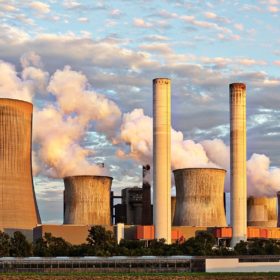
India will add just 50 GW of solar in the next five years, according to company bosses
The expected return would leave the nation woefully short of its ambitious 175 GW clean energy target, which was laid down with a 2022 deadline. Chief executives who criticized aggressive clean power auctions said they would like to see more fossil fuel facilities thrown into the mix.
EU opens applications for €10bn, ten-year clean tech innovation fund
Funded by the bloc’s Emissions Trading System, the warchest will look to spend more than €10 billion on bringing clean energy innovations to market over the next decade. The scheme will work with other green recovery programs to secure jobs and lay a foundation on which to restart the European economy.
Hitachi-ABB Power Grids takeover could boost e-mobility and energy storage
The Japanese brand has closed the initial $6.85 billion purchase price for 80% of the Power Grids business that was owned by ABB. The buyer will have the option of purchasing the outstanding shares in 2023.

The weekend read: Adding blockchain to battery supply chains
Responsibility in battery supply chains has become a growing focal point over the last few years and will remain a key theme as demand for mobile phones, electric vehicles, and alternative forms of energy continue to increase. Alexander Preston from SAFE sets out how the application of blockchain technology can deliver visibility, build trust, and facilitate the battery sector’s digital transformation.
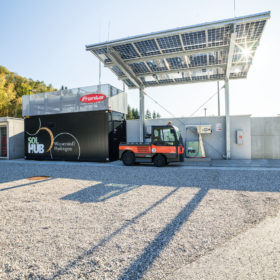
Seasonal storage: alternatives to the alternative
In an update to a report it published earlier this year, Norway-headquartered consultancy DNV GL outlined the role it sees for both seasonal heat storage and pumped hydro to help manage the 1.4 TW of variable renewable energy capacity it forecasts to be connected to European electricity grids by 2050. DNV GL maintains the original report’s conclusion that where seasonal storage is concerned, hydrogen will be the first option.

IEA report appears to acknowledge 2050 net zero may be beyond us
A study into the clean energy tech innovation rate required to keep global heating under control may suggest concepts such as lithium-air could yet keep us to the mid-century ambition, but it is also starting to contemplate the temperature rise to be expected if we only achieve net-zero by 2070.
