Zambia tenders 300 MW of solar
The first bid window of Zambia’s new Carbon Feed In Premium Program plans to develop 300 MW of solar across projects that are connected to on-site battery energy storage systems. The deadline to submit expressions of interest is May 31.

New intrusion detection systems boost protection of SCADA systems against cyber threats
An international reserch team developed two deep learning-based IDS models to enhance cybersecurity in SCADA systems. The hybrid approach reportedly improves detection of complex and novel cyber threats with high accuracy, adaptability, and efficiency, outperforming traditional methods across multiple datasets.

Neuron Energy plans 5 GWh battery storage factory in India
India-based EV battery manufacturer Neuron Energy plans to enter the grid-scale storage market with a 5 GWh battery energy storage system (BESS) manufacturing facility in the Indian state of Maharashtra.

Swiss startup offers lifetime guarantee for second-life batteries
Switzerland startup Evolium Technologies’ subscription-based business model offers residential battery owners a lifetime guarantee on second life batteries. The startup tests and remotely monitors each battery cell so it can alert customers when a cell is under-performing.
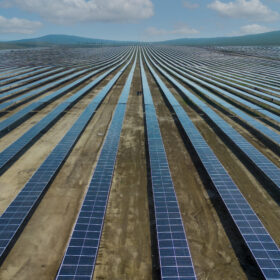
TotalEnergies, Masdar to merge renewables activities in nine Asian countries
The two major developers plan to establish a joint venture company with equal ownership that will be their sole vehicle for building, owning and operating both existing and future solar, storage and wind projects across nine Asian countries.
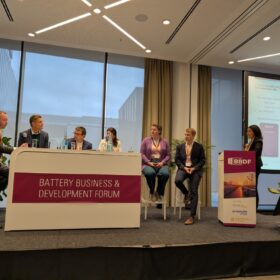
BBDF 2026: How financing standalone vs. co-located projects really works
The “lab” session at Battery Business & Development Forum 2026 made transparent how different stakeholders evaluate and view energy storage projects between standalone and co-located options, and where views diverged.

BBDF: German network agency to release BESS grid fee framework soon
Germany’s Federal Network Agency (Bundesnetzagentur) is set to present a framework for future network fees in May 2026, with industry discussions highlighting how these charges could interact with flexible connection agreements and affect battery energy storage system (BESS) returns.

Can sodium-ion storage drive energy flexibility in France?
France’s Association Environnement Juste has proposed a storage mandate for renewables projects exceeding 10 kWp in order to integrate flexibility at the source. The association argues European sodium-ion batteries could present an economically and environmentally viable solution, capable of stabilizing grids without depending on imported metals.
Grid bottlenecks threaten 120 GW of planned renewables in Europe
Latest analysis from Ember finds major grid bottlenecks in transmission and distribution networks across Europe, threatening the viability of both future utility-scale and smaller-scale residential solar in the most impacted countries.

BBDF 2026: Finance, tolling, and getting the merchant balance right
As Europe prepares to roll out 200 GWh of battery storage over the next five years, discussion at the Battery Business & Development Forum 2026 turns to how financing models are rapidly shifting. Bankers, developers and stakeholders shared key pain points with the audience, as well as practical advice.
