
Solar PV, geothermal hybrid systems are more than niche solutions
Solar energy, driven by excellent resource conditions and rapidly improving economic attractiveness, is expected to emerge as a bulk energy supplier in future energy systems. The self-limiting effects of solar power can be circumvented through solar-hybrid solutions, such as PV-geothermal hybrid configurations.

Brazil approves first co-located solar and battery project
Brazil’s National Electric Energy Agency (Aneel) has authorized a 5 MWh battery system co-located with a solar plant, setting a regulatory precedent for integrated storage.

Utility-scale sodium-ion arrives in Romania
Renalfa Power Clusters plans to combine newly acquired solar and battery assets in Romania into a hybrid project using lithium-ion and sodium-ion storage.
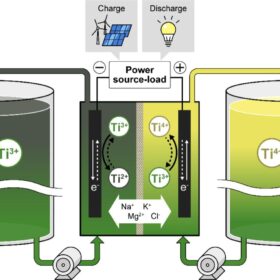
Titanium emerges as a vanadium alternative for redox flow batteries
A Japanese–Chinese team developed a titanium molten salt redox-flow battery using abundant titanium ions and molten salt electrolytes to enable high-voltage, fast, and stable grid-scale energy storage. The system demonstrates high efficiency of over 97%, strong cycling stability, and improved cost and scalability compared to vanadium-based batteries, with further optimization underway.

Greek utility completes 2.13 GW solar cluster at former coal mine
Greece’s PPC Group has finished construction of its 2.13 GW solar portfolio in northern Greece. The company is now working on its third large-scale battery storage facility in the area, with plans for two pumped-hydro storage projects also progressing.

Cornex unveils new 165 Ah sodium-ion prismatic cell for stationary energy storage
A new sodium-ion cell for ESS may further improve competitiveness in large-scale systems against the weight of the lithium-ion battery sector.

The Hydrogen Stream: Dutch electrolyzer merger forms Alquion
Battolyser Systems and VDL Hydrogen Systems have merged to form Alquion, while Ming Yang Smart Energy Group plans to invest more than $10 billion in hydrogen and renewable energy projects in Ethiopia.
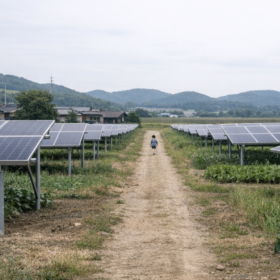
Croatia tenders 56 MW solar-storage project
Croatian power company Hrvatska Elektroprivreda is seeking a developer to build a 56 MW solar power plant tied to up to 200 MWh of battery energy storage. The deadline to submit expressions of interest is May 12.
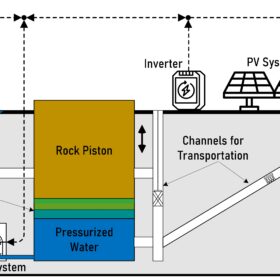
PV-driven hydraulic hydro storage may hit $0.022/kWh LCOE in the U.S.
An international study has demonstrated that utility-scale solar PV paired with hydraulic hydro storage (HHS) could reach an LCOE as low as $0.022/kWh in select U.S. regions. The system could provide GWh-scale, cost-competitive, and highly reliable long-duration storage, capable of powering large commercial districts with minimal environmental impact.
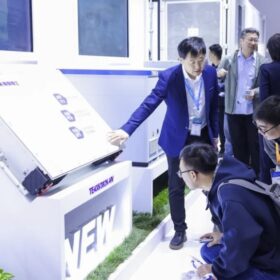
TBEA unveils grid-forming converter for large-scale storage, renewables
Chinese power transformer manufacturer TBEA introduced a grid-forming string power conversion system (PCS) for utility-scale storage, renewable energy base projects, and weak-grid applications. The TE435/392K-HV-BL high-power converter focuses on improving power density and grid support. According to TBEA, its fully integrated liquid-cooling design increases volumetric power density by 78% and gravimetric power density by 32% […]
