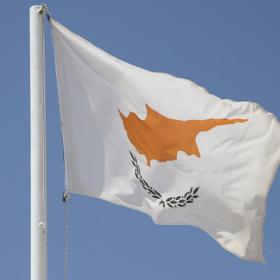
Cyprus switches on first significant battery system
The Apollon PV Park has commissioned a 3.3 MWh battery energy storage system (BESS) and solar project, in a milestone for Cyprus.
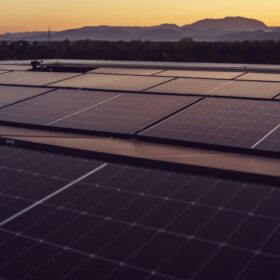
Nigerian utility signs 100 MW solar-plus-storage agreement
Kaduna Electric has signed an agreement to develop a 100 MW solar project with battery storage to strengthen electricity supply across Kaduna, Sokoto, Zamfara and Kebbi states in northern Nigeria.

Swiss developer breaks ground on 800 MW/1.6 GWh redox flow storage project
Flexbase Group has broken ground on an 800 MW/1.6 GWh redox flow battery project in Laufenburg, Switzerland, in what could become one of Europe’s largest flow storage systems. The multi-use site will integrate utility-scale storage, an AI data center, and district heating.
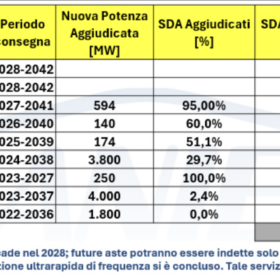
Utility-scale batteries show exponential growth in Italy
The development of bigger battery energy storage systems (BESS) is booming in Italy, but deployment of residential and commercial and industrial (C&I) equipment fell in 2024.
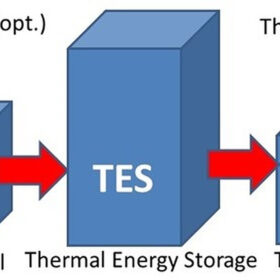
Optimizing Carnot batteries for renewables storage
Based on the the heat pump-organic rankine cycle, scientists in Portugal have created six different models of Carnot batteries for stationary storage. They investigated 16 different combinations of working fluids and created a multi-objective optimization for the best candidate.

Propagation of lithium-ion fires is the real threat
Live fire tests aim to demonstrate physical containment technology.
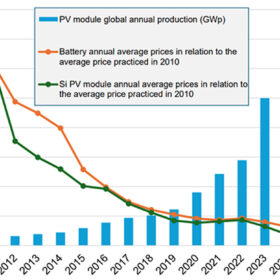
Falling Li-ion battery prices mirror solar photovoltaics trends: Is there a role for second-life batteries before recycling?
Lithium-ion batteries are everywhere, powering everything from consumer electronics to electric vehicles, residential PV storage systems, and, more recently, mitigating curtailment in large-scale wind and solar power plants. EVs are driving large-scale demand for Li-ion batteries which will result in substantial volumes of spent batteries in the near future. This scenario highlights the potential for repurposing EV batteries for second-life stationary applications, which could maximise their value before recycling. However, to fully realise this opportunity, several economic, technical, and regulatory challenges must be addressed and resolved.

Argentina publishes details of 500 MW battery tender
Argentina’s AlmaGBA tender for the Buenos Aires metro area will pay a fixed $10/MW of electricity supplied, with storage capacity bids capped at $15,000/MW per month.

The Hydrogen Stream: EU backs 15 hydrogen projects
The European Commission has selected projects for €992 million ($1.1 billion) of EU public funding, while the Japanese government has agreed to provide $4.80 in subsidies for hydrogen fuel cell trucks.
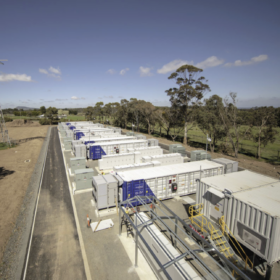
Global battery storage deployments hit nearly 9 GWh in April, says Rho Motion
China and Chile led battery storage deployments in a more evenly distributed scene than in previous months, but a lower overall total was installed at grid-scale.
