
EU energy regulator opens consultation into PPA market
The European Union Agency for Cooperation of Energy Regulators (ACER) is running a public consultation on the evolution of the bloc’s power purchase agreement (PPA) market to identify existing initiatives and challenges.
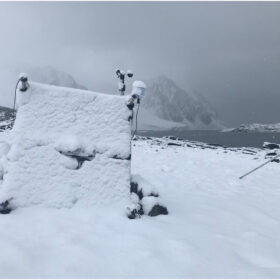
Solar above 60° North: The Arctic as PV’s next frontier
An IEA-PVPS report finds that solar power above 60° North is not only viable but rapidly expanding, driven by cold-climate performance gains, bifacial technologies, and rising energy security needs. While challenges like extreme seasonality, snow, permafrost, and scarce data remain, Arctic PV is emerging as a critical—and technically distinct—frontier for global solar deployment.
Solar parks reshape soil biodiversity, plant traits
A study of 20 solar parks in southern France found that soil biodiversity and respiration drop significantly under panels, especially in mown areas, while plant traits like height and leaf area can increase under grazing. The researchers highlighted that climate, management type, and solar shading all shape soil and plant responses.
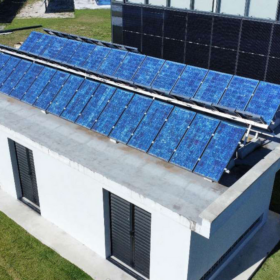
Extensive testing validates reuse of 23-year-old second-life polycrystalline solar modules
Researchers in Brazil tested second-life polycrystalline PV modules for two years and found they retained 87–88% of their original power, with minimal degradation and stable performance. Despite strong sustainability and circular economy benefits, economic incentives remain limited due to the declining cost and short warranties of new state-of-the-art silicon PV modules.

Bhutan opens rooftop, ground-mounted solar tender
Bhutan is seeking expressions of interest from private sector players interested in developing solar projects under a build-own-operate basis. The first deadline to register interest is April 30.

U.S. national laboratories lead multi-agency push for solar cybersecurity standards
The U.S. Department of Energy is deploying a research framework across four national laboratories to harden the domestic power grid against digital vulnerabilities as solar deployment accelerates.
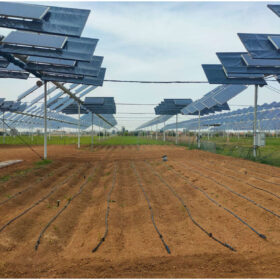
Multi-year field study finds that agrivoltaics can support healthy potato yields
Multi-year field trials conducted in Italy show that agrivoltaic systems can support healthy potato yields without major losses. Strategic shading and dynamic light management during critical growth stages proved key to maintaining productivity.
UK defining stronger energy cybersecurity rules after Poland attack
The UK government is proposing stronger cybersecurity rules for electricity and gas sectors, prompted by recent attacks on European energy infrastructure, including a recent incident involving solar power plants in Poland. The plans would extend baseline cybersecurity requirements to all licensed energy organizations and could also adjust compliance thresholds under NIS regulations.
Lithuania’s solar capacity surpasses 3 GW
Lithuania added approximately 600 MW of solar last year, taking total capacity to 3,040 MW. Technical permits have been issued for an additional 4 GW of solar but with grid congestion becoming a primary constraint, future deployments will be increasingly dependent on integration with storage technologies.
Japan’s Kyocera, Cosmo Energy units enter solar, wind PPAs
Kyocera Corporation will begin to supply electricity generated from its solar assets to Cosmo Energy Solutions from next month. It has also entered into a separate power purchase agreement with Cosmo Eco Power for energy generated from a 48 MW wind farm.
