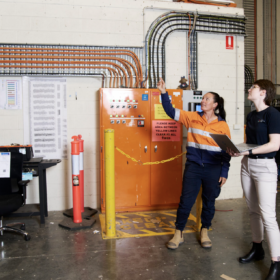
Australia’s first all-female team completes commercial rooftop solar
Sydney-based Smart Commercial Solar (SCS), in collaboration with Australian Women in Solar Energy (AWISE), is delivering the nation’s first commercial rooftop PV project completed entirely by women.
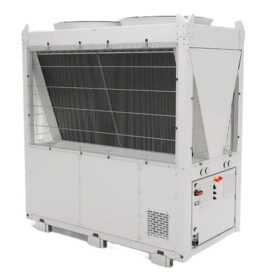
Daikin unveils air-to-water heat pump for commercial buildings
The new heat pump series uses propane as the refrigerant and can reportedly provide hot water up to 75 C.

Ghana plans renewable energy investment fund
Ghana plans to accelerate its deployment of renewable energy sources, including solar systems for hospitals, public institutions and smaller companies, through a new green investment fund.

Longi unveils anti-dust back contact solar module with 24.8% efficiency
Longi has released a back-contact solar module with 24.8% efficiency, featuring a power output of up to 670 W and a temperature coefficient of -0.26% per degree Celsius.
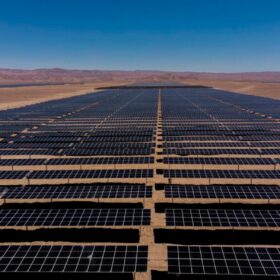
South America estimated to add 160 GW of PV by 2034
Mature markets Brazil and Chile will account for 78% of total installations, with small-scale projects (<5 MW) accounting for 48% of total builds in the region, according to Wood Mackenzie.

US solar facilities lost $5,720 per MW to equipment issues in 2024
US solar facilities lost $5,720 per megawatt in 2024, with global losses from equipment failures and extreme weather reaching $10 billion. Raptor Maps says 193 GW of projects recorded rising power losses, primarily from inverters, strings, and combiners, with regional weather risks varying significantly.

China deploys 277.57 GW of solar in 2024
China installed 277.57 GW of solar in 2024, up 28.3% from 2023 and bringing total capacity to 887 GW., according to the China Photovoltaic Industry Association (CPIA).

Serbia adds 80 MW of solar in 2024
Serbia’s solar market is set to expand with a 3.9 GW project pipeline and 80 MW added in 2024, bringing total capacity above 200 MW, the country’s renewable energy association tells pv magazine.
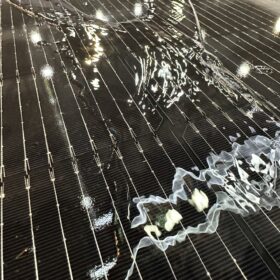
UK seeking supplier for solar modules to power marine stations
The UK Northern Lighthouse Board is seeking a supplier to annually provide up to 800 solar modules for four years. The modules will be installed at unmanned stations, vessels, and buoys off the UK coast. The application deadline is April 8, 2025.
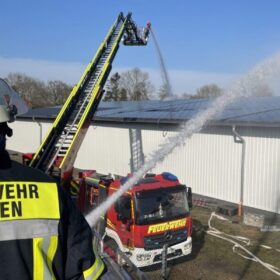
Germany hit by two PV system fires
A photovoltaic system on the roof of a warehouse caught fire in the northern German town of Norden, triggering a large-scale operation by the volunteer fire department that lasted for hours and involved the use of two water cannons on Monday. On the same day, in Erftstadt, near Cologne, a garage in the area of a PV system caught fire, according to the local fire department.
