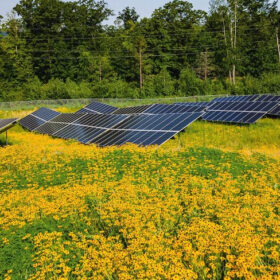
How community solar is impacted by the One Big Beautiful Bill
Despite the upcoming loss of US federal tax credits, community solar developers and investors can prevail if they prioritize states with strong legislation and financial incentives.
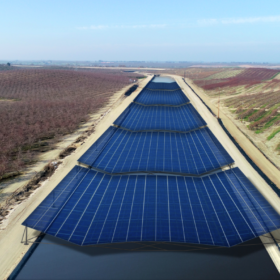
The best tilt angle for canal-mounted PV systems
Researchers in Türkiye have conducted an experimental study on the ideal tilt angles for PV systems deployed on canals. Their analysis showed that an 8◦ tilt angle consistently demonstrates greater performance.

Solarix Solar launches new terracotta solar panel
The Netherlands-based solar façade panel and mounting system provider has added a new terracotta rooftop module to its product range. It also announced it is expanding it sales network and boosting its manufacturing capacity after raising €5.5 million in financing.
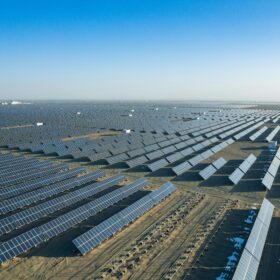
Chinese PV Industry Brief: Trina Solar to supply 700 MW to Austrian utility
Trina Solar has agreed to supply more than 700 MW of high-efficiency PV modules for projects in Spain and Italy under a five-year deal with Verbund Green Power, while EVE Energy says it will invest CNY 8.65 billion ($1.2 billion) in a new battery plant in Kedah, Malaysia.
EU renewable energy up 3.4% in 2024 as coal hits record low
Renewables accounted for 47.3% of electricity generation in the European Union in 2024, driven by a 7.7% year-on-year increase in output, according to data from Eurostat. Fossil fuel-fired power fell to 29.2% of the mix, while nuclear contributed 23.4%.
Chinese PV Industry Brief: Fox ESS, Gold Electronics plan IPOs in Shenzhen
The Shenzhen Stock Exchange (SZSE) has approved a plan by Fox ESS to raise more than CNY 1.6 billion ($223 million) through a share sale, while Hangzhou Gold Electronics has secured clearance to seek up to CNY 850 million for its battery management system (BMS) business.
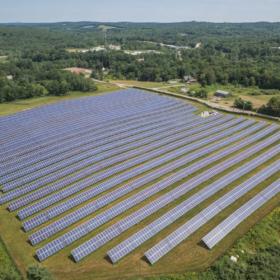
Nexamp outlines $3.9 billion investment in US community solar
Nexamp says it aims to develop 3 GW of community solar through 2028.
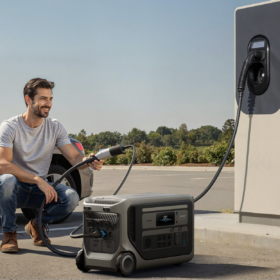
Anker Solix launches F3000 portable power station with US, Canada pricing
Anker Solix has launched the F3000, a 3.1 kWh portable power station with 3.6 kW output, dual solar inputs, and EV and generator charging. The system is expandable to 12.3 kWh and priced at $2,599 in the United States and Canada.
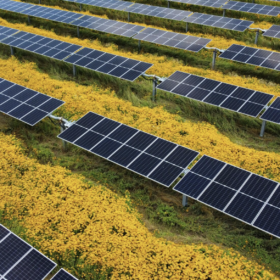
‘Yes in my backyard’: research rejects ‘NIMBY’ hypothesis for solar opposition
A US national survey published in Frontiers in Sustainable Energy Policy shows that most people living near large-scale solar projects feel positively or neutrally about them, and only 18% would oppose additional development.
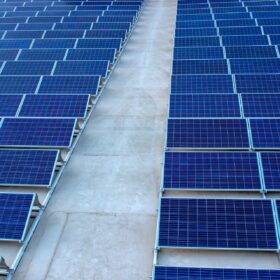
Romania extends investment in solar for public institutions
Romania’s Ministry of Energy is backing 47 solar projects to produce electricity for self-consumption in schools, hospitals, city halls and other public institutions. It has now supported more than 1,000 such contracts, together reaching a combined capacity of 390 MW.
