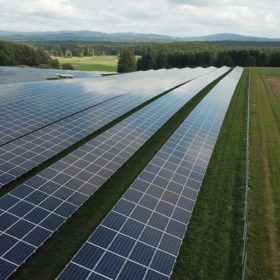
KKR’s India platform will acquire operating renewables assets
Headquartered in Mumbai, Virescent Infrastructure owns 169 MWp of solar assets in Maharashtra and 148 MWp in Tamil Nadu.

Sudan wants to contract 500 MW of solar power
According to the country’s Ministry of Energy, an unspecified UAE solar company has committed to building several large scale PV plants across the country. These new projects would be granted a 20-year PPA and would be Sudan’s first solar parks.
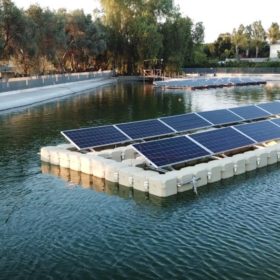
Enel to combine floating PV, hydropower
The Italian utility is testing several technologies at a floating PV array in Sicily. It wants to select the most promising ones for future large-scale projects in the reservoirs of its hydropower plants throughout the world.
Oil India seeks installers for at least 100 MW of solar
Oil India, a state-run oil producer, has issued a call for bids to build at least 100 MW of solar capacity at any location in India on a turnkey basis.
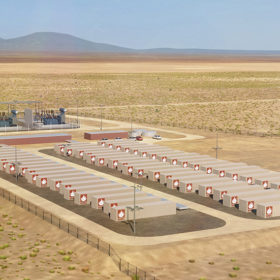
South Australia awards 10-year PPA to 260 MW of PV, 100 MW battery
Construction of the state’s biggest PV array and its fifth “big battery” will create 810 jobs. The state government forecasts US$8.96 million of energy savings over the course of the decade-long contract.
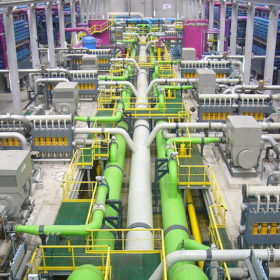
PV powered desalination is “the most competitive design”
Scientists in France conducted an analysis on the competitiveness of water desalination, taking a large scale project planned for Morocco as a case study. The research concludes that PV without storage is the cheapest option to power desalinators, and will likely remain so until at least 2030.
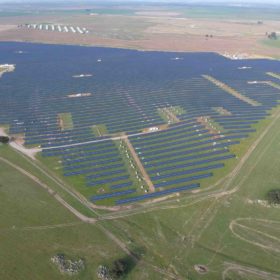
Unsubsidized PV plant goes online in Portugal
Hyperion Renewables continues to expand its PV plant portfolio and is now working on green hydrogen production and distributed generation projects.
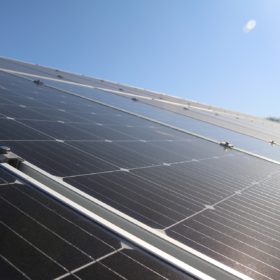
NREL’s performance ratio method applied to thousands of PV systems
Researchers have analyzed the monthly performance ratio of 8000 PV installations distributed across the United Kingdom by using the calculation model of the U.S. National Renewable Energy Laboratory. They measured, in particular, thermal impact on the performance ratio (PR) and found that Spring and Summer seasons have higher monthly PR compared to Autumn and Winter.
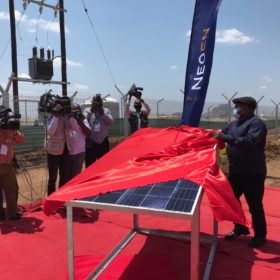
Construction begins on 41 MW solar project in Mozambique
French independent power producer Neoen is developing the facility, which will be the Sub-Saharan nation’s largest PV plant upon completion.

Italy’s Lombardy region adds another €20 million for residential PV+storage
Italy’s most affluent region will continue to support solar+storage installations with rebates, and the authorities plan to roughly triple funding this year.
