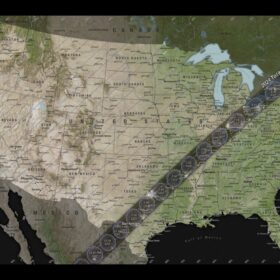
Potential effect of the 2024 solar eclipse on solar energy production
To compensate for potential loss of solar energy flowing to the grid, grid operators will have to be ready to rely on other sources to ensure grid stability, as was done during the 2017 and 2023 eclipse episodes.
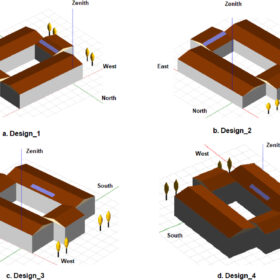
Improving performance ratio of PV systems via shading effect
Researchers in Indonesia have investigated how shading effects may influence the performance ratio of a PV system. Their analysis also considered payback period and return on investment.
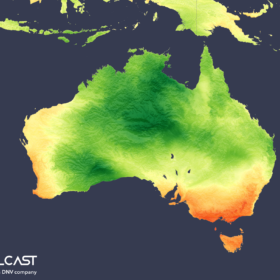
Australian solar evades clouds to perform in March
In a new weekly update for pv magazine, Solcast, a DNV company, reports that Victoria, Tasmania, Western Australia, and New South Wales were over-performing solar regions in March. This overperformance in the southeast and southwest came despite most of the Australian continent seeing below-average irradiance, due to thicker-than-usual clouds over the sparsely-populated interior and tropics.
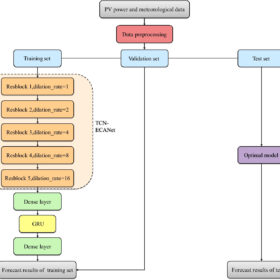
New machine learning tech for short-term PV power generation forecasting
Researchers in China have applied a machine learning technology based on temporal convolutional networks in PV power forecasting for the first time. The new model reportedly outperforms similar models during all seasons.
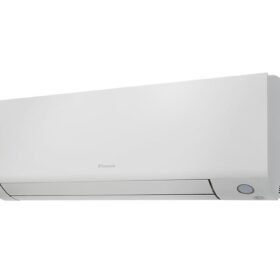
Daikin debuts residential air-to-air heat pump
The Japanese manufacturer claims the new product has a seasonal energy efficiency ratio of up to 9.47 and a seasonal coefficient of performance of up to 5.20.
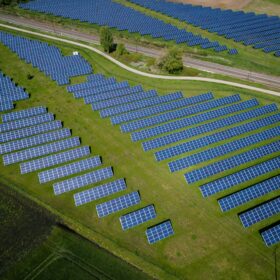
IRENA says solar capacity rose by 345.5 GW in 2023
The International Renewable Energy Agency (IRENA) says developers installed 345.5 GW of solar throughout the world in 2023. China mainly drove the surge, accounting for nearly three-quarters of all new renewable energy, but IRENA says more equitable growth will be needed to hit 2030 deployment targets.

NREL updates online tool with data for Africa, Eastern Europe, Middle East
The US Department of Energy’s National Renewable Energy Laboratory (NREL) has added a high-resolution solar data set covering Africa, Eastern Europe and the Middle East on its Renewable Energy Data Explorer tool.

Chinese PV Industry Brief: New PV hit 36.72 GW in January-February period
China’s National Energy Administration (NEA) says that the nation’s cumulative PV capacity hit 646.2 GW at the end of February.
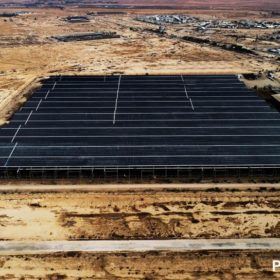
Israel hits 51% renewable production for first time
The Israeli government said that earlier this month, for several minutes, renewable energy accounted for most of the nation’s energy production. In particular, solar covered 45% of total generation.
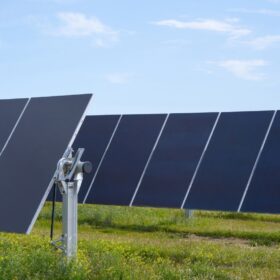
India sets efficiency requirements for cadmium telluride solar modules
India’s Ministry of New and Renewable Energy (MNRE) has established minimum efficiency standards for cadmium telluride (CdTe) thin-film solar modules to qualify for inclusion on the Approved List of Models and Manufacturers (ALMM).
