
French company offers router capable of redirecting surplus solar to water heating
French energy cooperative Solarcoop has launched a solar router that redirects surplus photovoltaic power from self-consumption systems to electric water heaters or other resistive loads, and can also control additional devices such as heat pumps.

Photovoltaics vs. photovoltaic-thermal
Researchers in India say that photovoltaic-thermal (PVT) systems offer greater performance stability than conventional PV systems in hot climates. Using irradiance and temperature data, the team applied a Random Forest model that predicted efficiency classes with 97% accuracy.
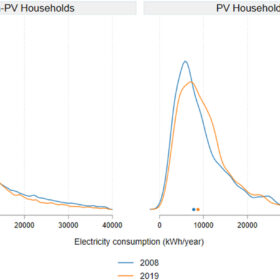
New research confirms residential PV tends to increase household power consumption
New Swiss research shows PV-powered homes can increase power consumption by up to 11% compared to non-solar households. This rise is linked to electric vehicle adoption or other high-usage appliances, which the study’s author notes is not inherently negative or wasteful.

UK records 513 MW of January-May solar additions
Inclusion of deployment figures sourced from Ofgem bring UK solar capacity close to 19 GW. Latest electricity generation data shows strong start to 2025 for solar.

The best tilt angle to improve PV system performance on low-cost buildings
Researchers have demonstrated that the theoretical optimal tilt for rooftop solar energy production in low-cost buildings in Nigeria is approximately 5.67°. Their modeling suggests to adopt south-facing roofs for PV generation in the Global South.

Spain approves legislation to encourage energy storage, flexibility
The Spanish government has approved legislation to strengthen its electricity system following the major power outage the country experienced in April.

Ikea begins offering balcony solar kits
Swedish furniture retailer Ikea is selling plug-in solar kits in Germany, with storage-inclusive systems starting at €1,229 ($1,425) and reaching €2,800 for versions featuring four 520 W panels. The kits are designed for residential self-consumption and vary by capacity and configuration.

Ireland’s solar capacity hits 1.76 GW
Ireland’s total installed solar capacity reached 1.76 GW as of May 31, 2025, according to Solar Ireland’s new “Scale of Solar 2025” report. Based on data from distribution system operator ESB Networks, the report shows Ireland has advanced from a poor PV performer to a mid-tier solar market in Europe within a few years.
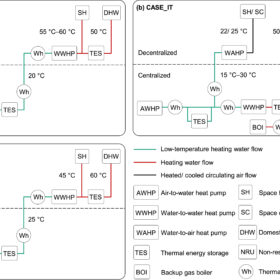
Researchers demonstrate technical feasibility of retrofitting PV-driven heat pumps in multi-family buildings
A research group led by Germany’s Fraunhofer ISE has conducted what it describes as the first empirical study on PV-assisted two-stage HP systems in existing multi-family buildings. Its findings show that substantial PV electricity exports result in greater avoided non-renewable primary energy use.
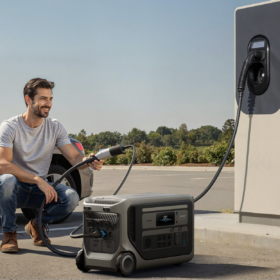
Anker Solix launches F3000 portable power station with US, Canada pricing
Anker Solix has launched the F3000, a 3.1 kWh portable power station with 3.6 kW output, dual solar inputs, and EV and generator charging. The system is expandable to 12.3 kWh and priced at $2,599 in the United States and Canada.
